

Building Trust and Staying Grounded in Plastic Surgery
w/ Dr. Narges Horriat of Grand Rapids
17 minute view/listen


Aug 2025
Available everywhere you podcast



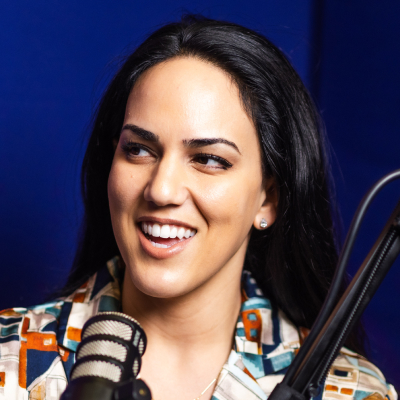
In this episode of Next Level Practices, we sit down with Dr. Narges Horriat to hear her remarkable journey: from aesthetic surgery fellow to becoming the first female associate at the Bengtson Center in Grand Rapids, MI.
Dr. Horriat shares how aligning with a practice that values natural, elegant, and sophisticated results has shaped her career, and how her identity as a young, female surgeon resonates with patients seeking subtle, athletic beauty. We talk about the growing demand for female providers, the evolving trends toward "yoga bodies" and minimalist results, and the role injectables and non-invasive procedures play in building long-term relationships with patients. Plus, we also dive into:
- The impact of AI in aesthetics, both as a clinical tool and a credibility challenge
- How younger surgeons can learn from the past without being stuck in it
- Why humility and patient connection are non-negotiables for success in private practice
- The growing skepticism around non-surgical procedures and a shift back to surgery
If you're a provider navigating your early years in practice or curious about where aesthetics is heading in 2025 and beyond, this episode is a must-listen!
Full Transcript
Dr. Narges Horriat
As a woman or man who's going to find a plastic surgeon is what aesthetic are you looking for, and finding that. And for me, like young, healthy, vibrant, athletic, um, not really big and in your face, but really subtle and sophisticated is my brand, and that's kind of what I put out for my patients, and I tell them that.
Max Baybak
We're here at the Aesthetic Meeting 2025 in Austin, Texas, and I have the pleasure of sitting down with Dr. Horriat from Grand Rapids, Michigan. Dr. Horriat, thank you so much for taking the time to sit down with us.
Dr. Narges Horriat
Yeah, absolutely. I'm so excited to be here.
Max Baybak
We were trying to do this last year because we had, um, Dr. Bengtson on, and he—at that time you had just joined him, I believe. Is that right?
Dr. Narges Horriat
Yeah, we were in the process of everything. So we were talking, and and then we, uh, fast-tracked to our contract, and here we are now. Now it's like a whole year later.
Max Baybak
It's a whole year later. So the kind of tradition that's emerged here is we have a number of our clients who have gotten into this kind of habit of just doing a check-in at this show, and they sort of tell us like where they're at in their career a year later, and it's an accidental trend that emerged. So it's cool one year later to kind of hear what people are up to. I hope that it can be a resource for other surgeons, uh, who want to kind of follow a career year by year, uh, in practice and sort of learn from that. So, yeah, I guess it was really fresh.
Dr. Narges Horriat
Yeah, it was—we hadn't signed the contract yet. We were still talking, but Dr. Bengtson had been, um, recruiting me for almost a year at that point. So, uh, this time last year, to answer your question, I was an aesthetics fellow, an ASAPS-endorsed aesthetics fellow at ACPS in Houston, Texas, and I was still kind of, um, looking at a couple different options of where I wanted to go, whether I wanted to stay, um, on with them in Houston or make a big life change. I'm from Southern California, so Grand Rapids, Michigan was kind of a big move for me.
But, um, that just speaks to the type of practice Dr. Bengtson has—Dr. Bengtson and Dr. Alfonso have, uh, built the Bengtson Center in Grand Rapids, and I'm their newest associate, and one of the—I'm their first female partner and associate. And, uh, yeah, it's been really, really great. So I started in August of this year and have just hit the ground running. Um, a lot of the patients are really excited to have a female surgeon.
Max Baybak
Yeah, I was going to ask you, how do you feel? I feel like, um, obviously with the patient population being so—I mean, I know it's skewing more towards men, but it's obviously so heavily skewed towards women. Does that give you an advantage? Is that—how do you feel? Tell me about that a little bit.
Dr. Narges Horriat
I mean, obviously, like, my partners are awesome and there's so many patients that love them as well, but some patients just have a specific desire to have a female physician or female surgeon, just from a comfort level, um, from a privacy level of just feeling comfortable. I mean, really, people are disrobing, uh, and trusting their body to a stranger at that first consultation. So I think that takes the edge off, and also I'm young and relaxed and down to earth, and so I really feel like I'm able to relate with my patients. A lot of my patients are females between the age of 20 and 50. So, I mean, I'm right there smack dab in the middle.
Max Baybak
That's so cool. I feel like if I put myself in the shoes of someone looking to do a procedure, I would want to be someone who I felt like—I felt comfortable with, but also I felt like really related to the body aesthetic that I'm trying to achieve. So maybe younger, same gender, and I feel like really understands what I'm trying to accomplish, and like no room for like something getting lost in translation. I don't know, that's just what I think. I don't know if you find that to be true.
Dr. Narges Horriat
That's actually an excellent point. So, a couple things on that. One is even my partners—like, I aligned with a group that was going to have a similar philosophy of surgery as I do. So we really push at the Bengtson Center natural results, really like proportional, elegant, sophisticated plastic surgery, not, uh, the big in-your-face kind of plastic surgery that some, you know, people want, right? And so I think that's so important as a woman or man who's going to find a plastic surgeon, is what aesthetic are you looking for, and finding that.
And for me, like young, healthy, vibrant, athletic, um, not really big and in-your-face, but really subtle and sophisticated is my brand. And that's kind of what I put out for my patients. And I tell them that. Of course, if someone comes to me and wants something different, and I feel like I'm not the right surgeon for them, I'll tell them that.
Max Baybak
When I first started getting into plastic surgery, you know, there was concepts or misconceptions about what plastic surgery was. And over the decade, 12 years that I've been in it, I've seen so many practices across the country. And we tend to partner with practices oftentimes in these places where people are not looking for what you used to think of plastic surgery. They're looking for that very natural. And I love that trend in general.
Dr. Narges Horriat
I was going to say, I think that we're going in that direction. Maybe some markets you have a little bit of everything, you know—like the LA, New York, Miami, you may see those trends that kind of will stay, um, the like traditional in-your-face Hollywood plastic surgery. But I think more and more, overall trends are going toward natural, um, smaller, elegant. Um, you know, we have the yoga boobs and the Pilates body, and, you know, we're not doing them big BBLs that we're seeing like before. It's a little bit more subtle and athletic, and I find myself attracted to that aesthetic, and that's the aesthetic that I want to put out for my patients too, and I think I just attract patients who want that.
Max Baybak
That's perfect. That's great. One of the questions I had on here was to ask you kind of about procedural trends. You touched on a few. Do you also—do you spend any time with anything non-surgical, injecting with your patients?
Dr. Narges Horriat
Yeah, I do. So—and I think every surgeon's a little bit different on what their approach is on that. I tend to—I like doing those things. It sort of breaks up my day, so to speak. I love operating and I like the dramatic change surgery brings, but at the same time, some patients just really aren't ready for those big things. And I don't—we have a wonderful med spa with awesome injectors and laser specialists and all this stuff, and I could send them to those providers, but I think patients, when they build that relationship with you, they may want you to do that for them.
So I do lasers, injectables, um, kind of the minimally invasive stuff, and, um, it builds that relationship. So I get to spend an hour doing a laser on a patient and talking to them about their life. And so then when they come back, you know, a year later or six months later, and they're like, "Actually, I do kind of want to do my eyelids, or I do kind of want to do my brow lift, or I've been thinking about liposuction now," that relationship is already there.
So I like doing the non-invasives as well. Um, but we have a big—you know, Dr. B and Dr. A also do that. You know, both of my partners also will kind of incorporate that into the mix. I probably, as I get busier and busier surgically, it'll be harder, but I still, for my patients who I operate on or who I see in consultation, will probably definitely offer that stuff.
Max Baybak
That's what I've seen the trend be. You know, earlier in your career, you do it, and like you said, you're building even more of a rapport with those patients, and then later in the career, maybe they don't offer it, but if you're already—if you're with— Yeah.
Dr. Narges Horriat
Right. If you're with that doctor or that surgeon for a surgery, then they'll take you on to do that.
Max Baybak
Um, what trends are you seeing kind of in 2025, or let's say in the last 12 months, across the industry as a whole?
Dr. Narges Horriat
Yeah.
Max Baybak
Whether good or bad, are there any particular trends that stand out to you?
Dr. Narges Horriat
I think the two things are—to not be crass, but like boobs and butts have changed in the way that things—and I think some of that is media and Hollywood, and, um, we've talked about it. It's kind of been a long time coming. I would say over the last year—I think it was a pretty big change in 2024. Um, but you know, with our Motiva implants now coming out that are ergonomic and a little bit more—uh, it's just kind of a different type of implant that we haven't seen on the market. It's been a long time since we've had a new implant. Obviously, Motiva is not new, but new to the US.
And so I think that has just added another layer of ability for plastic surgeons to use a different device that kind of offers something different. And so I think, you know, the big BBLs are going away. I think with the weight loss revolution, people are trying to lose weight, get thin, get fit, get healthy. Really, it's not just, um, bigger is always better. Even though we are in Texas, and they say bigger is better.
Max Baybak
They do. They do.
Dr. Narges Horriat
Um, I do think that athletic bodies are becoming more valued in some ways, but there are differences in aesthetic and cultural differences and geographic differences. So—but those are, I would say, broad strokes. That's what I'm seeing.
Max Baybak
Ah, that's awesome. And it's great to get it from—like I said, I've been asking a lot of the same questions of different surgeons all over the country and kind of seeing similar trends, though confirming what, you know, we've kind of already know, but it's nice to see that.
Um, do you think about AI and how it may impact your practice or plastic surgery in general, or is it still way too early days for that?
Dr. Narges Horriat
Well, we actually have a device called Lipo AI. So, um, that's a device that's laser liposuction. That's a newer generation of laser. I think laser liposuction was kind of a bad word when I was in training early on because, you know, there were some complications at some points, but now the technology is really developed. And what makes it AI is it shuts off at certain temperatures, and it reads the tissue temperatures and different things. So that's been cool. So I would say there's like that device component.
Um, I think AI is on a level that I can't even begin to speak to. I think it's really in your industry, and we'll see a little bit more of that coming out, um, as we go. But it is really helpful sometimes to like—I think I did it the other day when I was listening to a lecture and I didn't know what a really new procedure was. I typed it into ChatGPT and it told me the steps, and I was like, all right, so now I got to go verify, read the papers, and see if that's really what it is. But for quick and easy, it is kind of giving.
Max Baybak
I think what you said is a perfect illustration, because it's a good starting-off point for certain things to get a little bit more knowledge. It does require someone who has the ability to verify information and understand that they even need to do that. But if you're thinking—if you're approaching it with that critical thinking mindset, it can be a nice tool.
Dr. Narges Horriat
Yeah, it can be scary, though, because I will say, at our, um, residency program, uh, my co-resident did a study on—it was actually kind of interesting—on like cleft lip and palate surgery, and he did an AI, uh, study. And what it was showing was they did a ChatGPT, or like one of the AI, kind of generated, um, operative steps, and then did one that was, um, like the actual surgical steps, and then they showed them to a bunch of plastic surgeons, and obviously the plastic surgeon knew what the steps were, so they were able to see which one was which. They showed it to internal medicine, other subspecialty residents, like, um, you know, uh—like I said, internal med, like anesthesiology—people who wouldn't know what that operation was, and they actually found that it was hard to tell apart, because AI is so smart it makes it sound really, really interesting. Um, so—
Max Baybak
But were there inaccuracies, would you say, from a surgical standpoint, in the AI—
Dr. Narges Horriat
Oh, 100%. It was wrong. That's why I thought you were going—yeah. So the AI was like—it pulled different things from all over, and they were not correct.
Max Baybak
Wow.
Dr. Narges Horriat
But people couldn't tell them apart 'cause they sounded so legit. So I guess to my point, we have to be careful with AI not only from an information standpoint, but like—to really—in our industry, so much of what we do is visual, um, and photographs. And now all of these AI images can be modified, and I mean, we've had Photoshop for years, and we hope that plastic surgeons are not using those things, but patients—their results can be modified, and people are putting AI stuff out there. So for patients and people of the general public, when they're looking for information and doing research, you know, they really need to get to the source and, like you said, critically evaluate what the results are. Like, go to the surgeon's office, look at their before and afters, things like that—not just trust everything you see on TikTok.
Max Baybak
Can't trust at all. I do think, and I hope, that AI will actually be used to help detect the use of AI, which is an interesting sort of self-governing concept. Anyway, okay, I have just one last question for you, and I know we're kind of getting towards the end of the day here, but, uh, this is a bit of an open-ended question. But what do you see for the future of aesthetics if we go a few years, five years ahead? What do you think? Where does it lie? What does that look like?
Dr. Narges Horriat
Man, that's a tough question.
Max Baybak
I know, I kind of give you an open, hard one.
Dr. Narges Horriat
Um, well, you know, I'm early in my career, and I think it's interesting, but something that I've thought about a lot is, like, there really isn't anything new under the sun. And I've heard that phrase used by—like, when I talk about all these—oh, there's this new hot procedure, this new hot device—like, my partner Brad will be like, "Yeah, we did that like 20 years ago. It didn't work." And they just rebuilt it, right? And they tried something else. So I think there's evolution all the time. And I think, you know, there are certain things that evolve and change, and there's—you, like you said, we have to critically evaluate technology and new procedures.
But, um, I don't know. I think that things progress as they do, but they kind of follow patterns and cycles. And so it's why it's important to, like, learn the history of your practice or learn the history of your industry, because they always say we're, like, doomed to repeat the past if we don't know it, right? So, um, yeah, I don't know what the future holds. I think that's an exciting question, but I try and live in the present and, like, be a little nostalgic of the good stuff of the past and learn from the challenges or failures and kind of push ahead. But yeah, I'm excited to see what the next, you know, phase of my career and kind of what plastic surgery, uh, is going to look like in the next 10 years.
Max Baybak
Well, I think it seems like a well-balanced, you know, mindset where you're sitting, and I think there's a lot of what you said is really, um—it's very astute to talk about sort of learning the past. You come into something that's been going on for so long, and there's so much of that historical context that's maybe not there, and then you—which is helpful. I remember I went into business with my dad, and same thing—he knew so much that I didn't know, that he was looking forward to the future with the historical context behind in the rear view.
And I know from—we have another podcast we do, The Technology of Beauty, where we interview executives and entrepreneurs from the aesthetic industry who've built device after device, and they—you're right—they've tried the same thing, repackaged it up.
Dr. Narges Horriat
And sometimes it gets better—sometimes you do it and it gets better and it works, and then you re-envision it, you know.
Max Baybak
Yeah. And I was going to say, I think this—what you said is probably a very realistic view of what the future looks like. We're going to keep trying the same things, but with new incremental breakthroughs. Maybe AI plays a role in that. Maybe other, you know, biological breakthroughs, biotech breakthroughs come into play, where I think we'll start to get slightly better results at things that didn't work before. And then maybe eventually have an interesting thing where, um, non-surgical works really well for certain things, and then—but there'll be a gap where surgery will, of course, always be the thing that certain people need.
Dr. Narges Horriat
And I love thinking about that, like, on the technology side, but, like, also that's exactly the evolution of your surgical practice. So, like, for me, being early out, you know, in my career, that's how all of the giants in the field started. I love coming to these meetings because people talk about, "Yeah, 20 years ago I did this and I made this mistake, and I, you know, tried it this way and I critically evaluated my results, and this is what I saw and this is how I've changed." And so to see that and learn from other people and where they've been and what they've done.
And then someone actually—Tim Marten said it yesterday. He's like, "I hope I can share these things with you so that you don't make the same mistakes as I did, and that you make your own." And I really—I think that's a humble way to approach it, because, like, we all are gonna have challenges and failures. And having the humility to say, like, yeah, I'm confident in my work, I do really good work, I'm very happy with what I do, and my patients are really happy, but I'm no god, you know. I'm still working with my patients to get them the best result that they can get. And there are challenges and there are failures, and in those moments you have to be able to be like, yeah, okay, here—let's work through this together, you know.
Max Baybak
That's cool. I like your outlook, and I think that the fact that I asked you what's the future hold and you said, "I really want to learn from the people who came before us," is kind of your answer—is a really cool answer.
Dr. Narges Horriat
Sure.
Max Baybak
Well, I appreciate you taking the time to sit down. I took you—I stole you away for a little bit longer than I promised, so I'm sure you probably have to run, but thank you so much for taking the time.
Dr. Narges Horriat
Absolutely. I had a blast. I'm glad we got to do it, because I know we wanted to do it last year, and looking forward to many more Aesthetic Meetings to come.
Max Baybak
Maybe we can do it next year and get an update on where your practice is at then.
Dr. Narges Horriat
Perfect.
Max Baybak
All right. Thank you so much. Thank you.
Subscribe to Next Level Practices
Next Level Practices is the show where we discuss the ever-changing world of digital marketing and patient acquisition and bring you the latest ideas, strategies, and tactics to help you take your practice to the next level.