

From Systems of Record to Systems of Action
w/ Dean Bakes of Riviera
20 minute view/listen


Jun 2026
Available everywhere you podcast



Live from The Aesthetic Meet 2026 in Boston, Max Baybak welcomes Dean Bakes, Co-Founder of Riviera, for a discussion about artificial intelligence, automation, and the future of practice operations. As healthcare businesses face increasing complexity, Dean shares his perspective on how AI can help practices move beyond traditional software tools and create more efficient systems for managing growth.
Dean explains why many practices are overwhelmed by disconnected systems and how the next generation of software may help eliminate manual processes while improving patient experiences and business performance.
Max and Dean also discuss lead management, communication workflows, revenue optimization, and the role AI will play in helping practices focus less on administration and more on patient care. Their discussion provides a practical framework for understanding both the promise and realities of AI adoption in healthcare.
Full Transcript
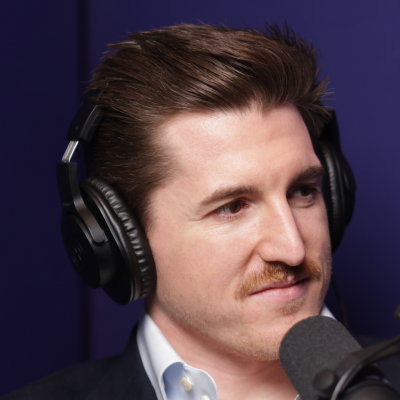
Dean Bakes
And so, to me, like, that's one of the biggest unlocks, where, like, a lot of systems, lead management tools, CRMs, a lot of them are systems of record, just like houses for, like, your data and, like, you know, lead management, who is this person. But really, where we see the future is these things will become systems of action. So, once they learn enough about your practice, they actually should be able to execute on things and take a lot of the administrative burden off of their teams.
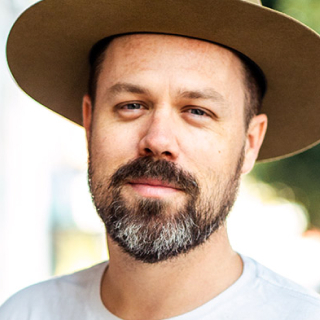
Max Baybak
We're back here in Boston at the Aesthetic Meeting, and I am sitting down here with Dean Bakes, co-founder of Riviera. Dean, how's it going?
Dean Bakes
It's going really well. Conference has been pretty awesome so far, super productive, and it's also been great to hang out with fellow vendors in the space. It's been a great time.
Max Baybak
Yes, we're one booth over from Dean and Riviera, and he and I just met, but our companies have crossed paths at previous conferences. Is this your first Aesthetic Meeting?
Dean Bakes
So, this is the second. We did actually Dr. Rady and Dr. Kassir's facelift course in New York City a few weeks ago, which was great, obviously. A little bit of a different size and scale than this. Like, this is definitely more of a, you know, a programmed conference, huge huge event hall, but but yeah. So, I guess technically my second. Um—
Max Baybak
So, second conference in the aesthetic space, but first time at the ASAPS annual meeting. Yeah. Awesome. Yeah, this is a core one we come to every year. We do a lot, but this is one that is, you know, when we evaluate every year which ones we're going to go to, but this one is always 100% locked in. We'll be here. This is the core meeting if you're—you know, if you're serious about partnering with aesthetic plastic surgeons.
Dean Bakes
I feel like we've asked this question to a lot of our surgeons, but also a lot of our partners as well, and I feel like ASAPS just kept coming up as, like, this unmissable. Like, you have to be there. It's the perfect show to make connections, and also build relationships. And so, yeah, it's been—honestly, I feel fortunate that one of my first shows has been this one. It's been great.
Max Baybak
Cool. Cool. Well, as I do on this podcast, we tape here live every year, and I like to speak to, you know, industry folk that I know or I'm just meeting and hear about their products and services because our clients are always asking us what they should be doing or what are, you know, if we know of solutions to problems that they're experiencing. And what we do often overlaps into a little bit of consulting and I like to point them in the right direction. And I like to—we talked for a few minutes before we started rolling the tape here, but I like to learn a little bit organically in real time.
Dean Bakes
Yeah.
Max Baybak
Uh, on the podcast, about what you do, and that's what I want to do here. And I know, looking at your booth here, um, you have it labeled as kind of an AI revenue—what is the wording again you use?
Dean Bakes
AI revenue system.
Max Baybak
Okay. And then, like, I was looking at your brochure here where it's, you know, Riviera is the one system that owns it all. So, I know with AI, lines are getting blurred a little bit in terms of what software does and can do. So, tell us—but I want to know, 'cause it sounds like you guys have your eye on really owning a lot in a practice. So, I want to hear about that.
Dean Bakes
Totally, totally. And to your point, yeah, I think AI is a buzzword that's been flying around a lot for the better part—better, you know, last two years, and I think a lot of people are having trouble kind of fighting through the noise and, like, what's actually AI, what's not. And, you know, for us, from our point of view, and I mentioned this to you while we were chatting, you know, the team that we put together, we all come from enterprise software and data backgrounds, and we actually spent the last five years building, like, an AI adjacent marketing business.
And we worked a lot with consumer brands. You know, they were oftentimes spending, as I'm sure you know with a lot of your clients, spending a tremendous amount of money, 50 to 100 million dollars a year, you know, with a full-time internal performance team, maybe they have multiple agencies that are helping them with their spend on different channels. And so we spent a lot of time helping them with customer acquisition, but also helping them manage all those disparate teams in a way where they could actually understand what's going on. And we saw a lot of those parallels in the elective healthcare space.
So, we started to dig into some of the—you know, some of our friends and colleagues are plastic surgeons, and we started to dig into their practices and realize, like, wow, a lot of the things that we built in this kind of previous era, what we were building is actually super, you know, relevant to what they're doing. And so, for us, like, AI, the biggest unlock in our minds is when, like, the earliest models came out, it was all about, like, next word prediction, essentially. So, if you ask ChatGPT a question, it's like it gives you a pretty great answer.
I think now where we're getting to is that these models are getting really great at reasoning. And so, if given enough context and enough data, uh, like, AI is actually capable of learning things and getting smarter day over day, and then it actually has the ability to execute things. And so, to me, like, that's one of the biggest unlocks, where, like, a lot of systems, lead management tools, CRMs, a lot of them are systems of record, just like houses for, like, your data and, like, you know, lead management, who is this person?
But really where we see the future is these things will become systems of action. So, once they learn enough about your practice, they actually should be able to execute on things and take a lot of the administrative burden off of their teams. Like, to us, that's the true promise of AI. And you need data to be able to do that, of course. And so, um, going back to your question, like, there's a lot of stuff going on with AI right now.
And I think, you know, for a lot of our practices, you know, if we showed up on day one and said, "Hey, like, we're going to give you a sales agent, and that sales agent is going to be just as effective as your PCC at being able to close a facelift." Like, it's not true. Like, it's not capable of doing that. Yeah. However, if you actually have, you know, a model that's training on your practice-specific data, ultimately over a certain period of time, you can reach statistical significance where you can actually say, "Hey, like, we can build you a sales agent. We can build you a scheduling agent."
So, I guess long story short, like, you know, our thought process is, like, the data is super critical, being able to train on that data, but then the whole unlock is, like, your team probably shouldn't be spending as much time as they are right now in these systems. Like, we should actually be giving you kind of, like, full-time employees that can do a lot of the work. Because, again, like, you should be providing great patient care, not necessarily worrying about did you tag that lead appropriately, or, like, did you answer every single phone call? We're all human, right? And so, um, that's kind of how we think about it, or try to think about it.
Max Baybak
I really like that, uh, system of record versus system of action. That's cool. And I do think, yeah, that future makes sense, and that is a very logical, uh, prediction. And I think what you said about sort of getting enough—I forget how you worded it, but sort of building up enough, uh, statistical—
Dean Bakes
Significance.
Max Baybak
Significance, kind of understanding of a business to then be able to build around them, which is really interesting.
Dean Bakes
'Cause, like, you know, one practice, you know, in San Antonio is very different than a practice in Beverly Hills. Like, everyone has a unique setup. Um, and I think, yeah, there's a lot of nuance that exists there. So, it's important to have that data and that training.
Max Baybak
Makes sense. And then so, with all of that in mind, what do you feel a—an AI revenue—sorry, one more time. AI revenue platform?
Dean Bakes
Platform, system, honestly, it all works.
Max Baybak
You've already kind of, you know, shed some light on what that means in your mind, but it sounds like it can mean a lot of things, owning things all the way from marketing through nurture, lead nurture, to sale.
Dean Bakes
Yep, exactly. So, a lot of, like—I kind of think about it in two specific buckets to orient, you know, surgeons. And, you know, there's, like, the demand generation side of things, which is what you work a lot on with your clients, making sure that their websites are beautiful, they're architected in the right way, they're showing up when people are searching for them on Google. Now AI search, right? So, making sure that they're being indexed appropriately.
Essentially, everything that we built comes in right after that step, and we call it the demand capture step. So, it's like, you're spending so much money on making sure that you are the authority in a specific procedure, in a specific geography. Well, now that you've spent all that money, you better make sure that you're actually capturing the people that are knocking on your door and getting them into the building. And so, that's the system that we built, is like, right after that, you've done all the hard work of getting them to the door, how can we make sure that they actually have the follow-through to come in and actually book the consultation, book the procedure?
And so, that's the system that we built. And so, again, we try to build an end-to-end system, everything from phones, VoIP, you know, every call transcribed, to the communications, like email, SMS, text, like, web form fills, people are reaching out to you, consolidated in one place, and then being able to actually have just a super intuitive interface for them to be able to understand what's urgent, like, who are the patients that I should be prioritizing, the context on those things, so that they can actually follow through and get them—of course, the thing we care about the most is surgical revenue. It's like, 'cause if you're not driving outcomes, then, like, what's the point of all these systems anyway? Um, so that's kind of, like, how I would think about, like, just the genesis of the system that we built.
Max Baybak
Awesome. Now, you said surgical revenue, and that leads me to a question of who you're targeting. Are you—are you guys—you're here at a plastic surgery meeting. Are you thinking about med spas and plastic surgeons equally, or are you looking at other spaces in medicine or outside of medicine? Where are you trying to go with this?
Dean Bakes
It's a really great question, and it's actually something that we talk about a lot as a team, because I think the short answer is, like, we believe in focus. Um, I think plastic surgery in particular is a very unique type of elective healthcare practice. It's very different than, you know, again, a $300 maybe Botox or, you know, lip fillers. Also very different than a $50,000 facelift. Those workflows are different, the sales cycle is different. It's a very high trust, high value procedure. And so, for us, no, our approach has been, let's start with cosmetic surgery, plastic surgery.
Max Baybak
So, almost exclusively plastics focused.
Dean Bakes
Um, we don't really work with any sort of, like, insurance-based elective healthcare clinics. So, like, everything's cash pay. Um, and I think that's been really important because, again, the workflows are very unique to that specific type of, uh, practice. Some of our, uh, surgeons do have med spas, of course, attached to their businesses, but, you know, our system currently isn't set up to do, like, things like inventory management or billing or anything like that, which is where usually, typically an EMR would come into play.
So, we can still definitely work with those practices, but I guess in terms of focus, we've really, like, how can we embed ourselves with, you know, plastic surgeons, understand, like, the intimacies of their businesses, because, you know, we want to solve their problems. And so, to start, you know, we're focused pretty diametrically in this industry. At some point in the future, I think, of course, we'd like to expand into other kind of verticals or adjacencies, but for now, it's, let's try to build the best platform possible for the specific skill set.
Max Baybak
That's cool. Now, you mentioned earlier, and this caught my ear, you mentioned working with direct-to-consumer brands on—you said something was an AI marketing or AI adjacent platform or something that you said.
Dean Bakes
Yeah.
Max Baybak
And I'm curious what brought you from there to plastic surgery. What's that journey?
Dean Bakes
It's been a—I mean, I have a very interesting CV if you were to look at it. None of it makes sense. So, I guess, you know, the through line for me and then for all of us, like, I think we all love to build things. We love to solve hard problems. I've really only been involved in very early stage businesses going from zero to one.
So, I started a business out of college, actually, in the apparel space. Um, I worked as a venture capitalist for a long time, starting mostly in early stage consumer businesses. So, beauty, CPG, apparel. Um, and then that kind of migrated into technology in, like, the mid, you know, 2015, 2016, 2017, when you started to see, like, Klaviyo really come to the surface. Like, all these different tech-enabled SaaS platforms that were helping consumer brands.
Max Baybak
Mhm.
Dean Bakes
Um, and so I spent a lot of my time there, and then ended up joining a startup, um, just through some mutual connections I made as an investor. So, the previous company that we built was an AI marketing business. It's called Disco, and we worked with, you know, large consumer brands that were trying to acquire customers more efficiently, spending a lot of money to do so. Um, and they had to do it mostly through these walled gardens of Meta and Google, and, like, it's just hard to navigate those fields. And so, spent a lot of time there.
And, candidly, in the last few years, I mean, we've all seen it, right? Like, ChatGPT launched in December of 2022 and basically changed the world forever. And so, we're sitting there and, you know, we're implementing, you know, different AI workflows in our business, and I think we all kind of just took a step back and, you know, maybe independently we're like, there's—something's happening here, right? There is a wave of a technological revolution that's happening, and it's something that I don't think we've ever witnessed.
And so, I think for us, like, it just got our gears turning around, like, okay, do we want to join the wave or get kind of washed away, like, in the wave? And I think, you know, all of us kind of have that entrepreneurial spirit, wanting to build things. And then—I know this is a long answer to your question—but our CEO Arjun, I do give him all of the credit, because he comes from a family of physicians. So, his wife is, you know, a pediatric liver transplant hepatologist at Mount Sinai, his dad owned a GI practice in New Orleans for decades, one of his best friends is a plastic surgeon that opened up his own practice a few years ago.
And so, that was kind of like the early proving ground of, like, kind of just innocently, like, just, like, take a look at my business, like, tell me what's going on. And that was really the thing that spawned it. We started to kind of get underneath the hood of, like, how some of these practices operate, and I think we realized, like, one, like, these surgeons have been training oftentimes 20 plus years to become the best at what they do, and a lot of them are just given technology that's an afterthought and really doesn't serve them and meet the caliber, I think, of expertise that they have. And so, I think we kind of started to connect the dots, and we're like, oh, maybe there's, like, something here that we can build to help solve these issues. And we kind of all quit our jobs and never looked back. So.
Max Baybak
That's cool. I was wondering what the link was in the story there of how you jumped from where you were to this industry, and that was a good story. That's interesting. And, um, I could see—I could see your—you're certainly right about the level of sophistication in the software here in the space, and looking around at this show and other shows that I've been going to for many years, but in the last few years you're seeing a lot of leveling up.
Uh, I think there's a lot to—speaking of walled gardens, you know, there's a lot of that here. Um, not just on the marketing side, as you were referencing with Meta and Google, but just the systems that these practices are kind of left to use, the options that they have, oftentimes don't talk to each other well. I think we're seeing that break down slowly. I'm really excited about—I've always been a big fan of, we need interoperability. The EMR of the future, I've always said, will have an app store.
Dean Bakes
100%. I agree.
Max Baybak
And some of them do now, but they really will learn to play well with each other, and you have to. And the space needs that to be served properly.
Dean Bakes
100%.
Max Baybak
And then to bring in AI to connect all that together and then take action with it, as you said. I'll leave you with this, or a question, really, as kind of a final thing. We're just doing sort of little mini episodes here. Um, I was talking with someone—it kind of goes back to the beginning of our conversation about what is Riviera and what is an AI revenue system. Uh, someone else I was talking to mentioned your company to me, and they kind of put it in the framing of a CRM. But then you and I were talking about it just before we started rolling the tape here of, like, what is a CRM anyway, right? And then the amount of overlap. So, it does sound like a lot of what you just told me kind of sounds like a CRM.
Dean Bakes
Mhm.
Max Baybak
So, how do you answer that question when people say, "Aren't you just a CRM, and what's the difference?"
Dean Bakes
Yeah, yeah. And I know it's—and, you know, that's why when you mentioned, like, "Oh, you said you're an AI revenue system." Um, you know, what is it exactly that you do? What makes it a system? What makes it maybe more than a CRM? And a CRM, in our mind, has been a little bit of a dirty word over the past few years. I mean, all of our experiences are with, you know, the CRMs that you probably know the names of, and I haven't really met someone that, like, thoroughly enjoys, like, getting trained on a CRM, how to use a CRM.
I think, candidly, the single point of failure that we noticed with any sort of lead management system is, like, the human in the loop. Like, we're all probably great at what we do, but we're human, right? We have families, we get tired, we sleep, we get sick, right? Some days are better than others. And I think that's what we noticed, is that, you know, systems are often only as good as the person that's operating it. And so, for us, you know, we wanted to build a system that essentially could help run your practice.
And again, one of the core tenets of that, and it's why we had to build—we do have, quote unquote, a CRM part of our platform. It probably looks and feels like a cousin of something you might have experienced with another CRM platform. Obviously, we tried to design it in a very innovative way, so it doesn't really look like anything that you've experienced, but—and there's things that we built around it to make it really intuitive and easy. Um, but there is a component of our platform that looks and feels like a CRM, but it goes well beyond that.
I think I mentioned to you, like, we built a phone system from scratch, which, like, how we've learned over the past six months, that's actually incredibly difficult to do. Um, but we needed that because we needed to be able to start to train our models on a corpus of data. And every phone call, every piece of communication, you know, obviously want to eliminate, like, work that PCCs and front office staff have to do. So, no more taking notes, like, basic things. You don't have to tag things in a CRM, you don't have to move it through stages. All that should be done automatically.
But on a deeper level, we need to be able to build, like, the data structures that AI can actually access and then train on and then ultimately deliver the promise of, like, you know—right now, easiest way I can describe it is, like, we're building the foundation of a house. Some of those pillars probably look like some of the stuff you'll see around here. A CRM, a VoIP system, a marketing automation platform. Um, but really where we're going is, like, we actually do envision a future where, like, those aren't the places where you're going to be spending a lot of time.
Um, but you kind of need—again, going back to the system of record thing, you kind of need the historical data, those things to train on, so that you can actually say, "Okay, like, now the next step is you no longer have to live in this system as much anymore. We're going to hand over the things that will actually do that administrative work for you." Um, so that's kind of how we think about it. Again, it's hard to get from a tagline. Um, maybe we need to do a little bit more of a branding exercise, but it's good.
Max Baybak
Well, honestly, it's—sure, that would probably be helpful. I think I'm pretty good at helping others get through those branding exercises and those challenges. Uh, and but I'm terrible at it with my own stuff, 'cause I know too much. And I'm like, "Well, it's a little bit of this and it's a little bit of that. No, don't oversimplify it."
Dean Bakes
It's because you have the vision, right? It's like, you're like, "I live and breathe this, and, like, don't put me in a box."
Max Baybak
Don't put me in a box, but you do need to be in a box for people to understand you. But the truth of the matter is, I think what you're up against is that—I think it's a fair thing that we're in a new world and the old terminology doesn't serve this new world. I think that's the reality of it. You know, I'll give you an example I was thinking of as you were explaining all of that, which is, long ago, even in the beginning of my marketing career, you know, people had marketing traditionally, and then digital marketing was a new thing that they might consider getting into.
Dean Bakes
Mhm.
Max Baybak
You know? And now, obviously, there are traditional legacy outdoor marketing channels that still exist, but marketing is almost synonymous with digital marketing now. It's not something that you might add and turn on and do. A CRM as a word is an oversimplification now, and no longer really serves, I think, the purpose that it used to as a term.
Dean Bakes
Mhm.
Max Baybak
And now businesses are not going to use software to manage their relationships as an option, and to manage—everything will be managed with some sort of a software or tech or AI layer. So, I think that we're past that word, that the word is maybe, as you said, a dirty word, because it just gets a little too fuzzy, too much overlap. And if you think of businesses as completely AI native, and every function, every process that they have is going to be touched by AI and software and systems, digital, you know, technology, then we need new definitions.
Dean Bakes
Yeah, I think so. I think so.
Max Baybak
And the way I'm thinking about it in our marketing agency is we need an application layer that—
Dean Bakes
Mhm.
Max Baybak
—brings all that data together so that we could now do all the actual system of action type stuff.
Dean Bakes
Orchestration and all that. Yep, 100%. That's great.
Max Baybak
So, I see what you're saying. There's a kind of—looks like that now, but ultimately you have a vision of really a system that can take action across—
Dean Bakes
They can do the work. Yeah, I think, to the point that you made earlier, a lot of surgeons we talked to, one, they're just overwhelmed, but, like, two, they're operating. They're operating every day. They're in the OR. They don't have the time necessarily to figure all this stuff out, or maybe even they want to, because, you know, they're trying to provide great patient care. And so, for us, you know, it's like, hey, let us help you run your business, and you can focus on operating on patients, right? Spend less time operating your business. I think that's the whole idea.
Max Baybak
'Cause it's not going to do that work. I think it's going to be quite a long time before AI is going to do that work.
Dean Bakes
I think, you know, before we have humanoid robots actually doing that work. I think—yeah, I think it's a relatively safe profession.
Max Baybak
So, fingers crossed that never comes, but I'm sure we'll see it. There are some—
Dean Bakes
We're all going to be in trouble, I think, at that point.
Max Baybak
Yeah, I've seen some startups even a few years back that were, like, robots injecting Botox. We'll see. We'll see.
Dean Bakes
I don't know if I trust it just yet.
Max Baybak
Not yet. Not yet. Well, Dean, thank you so much. This was awesome. I appreciate you taking your time to tell me a little bit more about Riviera. Where can people check it out if they want to learn more?
Dean Bakes
Uh, they can come to our website, runriviera.com. Um, so "run" and then the word "Riviera." And then, uh, you can hit us up on LinkedIn. My name is Dean Bakes. Um, founder is Arjun Reddy. And, uh, yeah, always down for a conversation.
Max Baybak
Awesome. Thank you, Dean. Appreciate it.
Dean Bakes
Thank you, sir.
Subscribe to Next Level Practices
Next Level Practices is the show where we discuss the ever-changing world of digital marketing and patient acquisition and bring you the latest ideas, strategies, and tactics to help you take your practice to the next level.