
Live at MSS 2026
w/ Dr. Johnny Franco of Austin Plastic Surgeon
23 minute view/listen


May 2026
Available everywhere you podcast



In this episode of Next Level Practices, host Erica Crawford sits down with Dr. Johnny Franco of Austin Plastic Surgeon to explore how innovation, branding, and patient experience intersect in today’s aesthetic landscape.
Dr. Franco shares his perspective on staying ahead in a competitive market while building a practice that truly resonates with patients.
Full Transcript
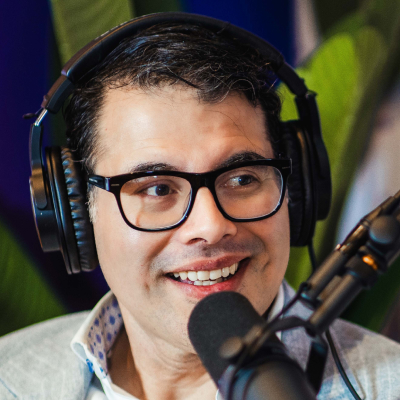
Dr. Johnny Franco
When somebody calls or reaches out, we so badly want to give them information instead of asking them for information. And that is a huge mindset that we've really worked in our office, because let them explain what their needs are before we tell them what they need. And I think people don't like to be told or sold.

Erica Crawford
Hi. So, we're joined here by Dr. Johnny Franco. I'm so excited to have you on the podcast. Welcome. We're here live at AmSpa.
Dr. Johnny Franco
No, this is incredible setup that you all have here. I love it.
Erica Crawford
Thank you. Thank you. Gosh, there's so many things that we could talk about. We've done webinars. We've done talks on stage together. We have so many subjects.
So, we did a webinar a few months ago. I still have it if anybody wants it. They've watched the recording, where we kind of jumped in really detailed into all of your Google ads, your meta ads, every sort of metric. And I want to talk about something that's a little bit of a follow-up to that, which is your conversion rates. Now, there's many different definitions of conversion rate, right? You have lead to consult, consult to surgery. You have different things. You have click on the landing page to submitting a form, right? There's different definitions of conversion rate.
So I'm going to separate them out into two different sections. The first one I want to talk about is your lead to consult. So not necessarily surgery, but you get, you know, x amount of leads, 100 leads come in and your staff works on the sales end and they convert. Now you have an insanely high conversion rate on this. Now typically in a practice we see anywhere from maybe 10%, sometimes lower, to 20% of leads being converted, meaning they get x amount of leads in the practice and they get converted. Now, keep in mind I'm factoring in with paid ads, not necessarily just organic, because those do convert a little bit higher percent. But you're converting about 29, 30% of your leads, which is very high, especially for paid ads. How do you do it?
Dr. Johnny Franco
Well, I think a couple things. One, um, super interesting, and the reason I love the webinar that you did is a lot of times people don't even know what benchmarks to go for. Uh, they don't even know what good is. Yeah. Uh, and so, you know, whether you're evaluating a marketing company, your own team, your staff, your workflow, it was really great that you were able to share, since you guys have so many clients, kind of what are some benchmarks, what's good, average, and bad, because I think sometimes you don't even know, you don't know what to strive for. Um, so I think that was super helpful. So, thank you for doing that.
Um, the other part, and the reason I know that you bring this up, is that there's two fold to this in terms of, uh, conversion when you're talking about lead to consult, right? So, one, people always say, "I'm getting bad leads." Uh, well, is that true? Maybe you are, maybe you're not. But because there's generating the initial, uh, content or contact, but then it's what do you do once it comes through? How long did it take you to respond? How did you respond? You know, and then did you follow up with that person?
And so I think that's some of the things where we've integrated a CRM, client relation management, uh, system. I think that's number one. Because if you're not even tracking where these leads are coming from, you don't even know whether you're following up with them, how long you're taking to follow up. So you don't even know if you can get better. You don't even know how you're doing this. And, you know, people talk about speed to contact. So, you know, I think that's huge.
You know, it's hard to have somebody hired 24/7 that's going to answer this phone. There are ways to do it, but it can be a little bit consuming. Uh, but there's a lot of ways to automate this and supplement those contacts. And I think that's some of the things that we've done with help of your team, with the help of our CRM team, to be able to do that.
Also, uh, things that you measure and track get better. I think when the team knows that we're checking to make sure every lead's been followed up, you know, I always tell our team, you know, we should never have the sun set on a lead. So, you can't leave the end of the day with leads still pending, because now it's been over 24 hours, that lead has gone somewhere else. You know, the time, if you take that much time to respond to a lead, they've gone somewhere else.
Erica Crawford
Correct. Correct. And your team, I mean, and correct me if I'm wrong, but you use AI and different features to help make sure there's an instant response. So, you never have a lead that's waiting.
Dr. Johnny Franco
No, 100%. We use, uh, AI to, uh, help with the initial response, especially if we're off hours, so that they were always responding to this. Also, we've used AI to help nurture these leads. I think that's what's helped with our overall conversion, is that, you know, in a perfect world, we'd be touching everybody seven or eight times ourselves. I'll tell you, before we were integrating some of the AI, uh, tools, uh, we were probably touching people two or three times. So, that alone has increased.
You've already paid for that lead. And by saying paid for that lead, whether it's a paid search or organic, you've paid with it either with money or time, right? And so one way or another, you've paid with it or paid with opportunity costs, because what are you doing in terms of that? So to not follow up with that person enough times, and in this day and age, if somebody took the time to click, to fill out a contact form, to reach out, if they took the time to call your office, I mean, you know, they have a high level of interest and you need to make sure that you're doing a due diligence.
And look, sometimes people are interested. They may not be interested at that second, but I know for me personally, if I've clicked on something, I at least have some level of interest. It may not be right now, but it'll be at some point. And you need to make sure that you're available when that time is right for them.
Erica Crawford
I couldn't agree more. You know, it's interesting talking, I get asked this on stage sometime, like what's an average conversion rate from — once again at this point, we're talking about lead to consult — and it varies so much. For example, what demographic you're in, right? If you're in a huge city like you're in Austin, right? That's a big city. If you're in Houston, if you're in Miami, if you're in LA, there's more people around. So somebody might submit three lead forms within a few minutes to each other to three different practices, right? So it makes it a little bit more challenging.
But also a big difference is what type of lead is it? If it's a referral, right, somebody, hey, my, you know, sister got her breast aug there and now I'm reaching out. Uh, your percentage of conversion should be really high. If it's organic from like SEO, typically it's a higher percent. But on ads is where a lot of people struggle. And even if the ads are good or not good, it can be around, you know, a 10%, 15%, 20%. But doing 30%, I think a huge part of why you're doing that, as you said, is back to the AI, you still have a strong human sales team. You are not just relying on AI, but you are utilizing AI to start the conversation, right? So then it could go pass over to an actual person who could carry it forward and to help you on the off hours.
Dr. Johnny Franco
And, you know, we practice a lot, because I think that's a spot where we can get better and better. Because, you know, the first level obviously is just answering the phone, you know, that's number one, and responding to a message. But then two, you know, how do you make that conversation meaningful?
You know, one of the things that kills me the most is when I listen to a phone call — and if you're listening to this webinar or podcast, uh, if you're not listening to phone calls in your office, you're missing out, because there's great, you know, teaching opportunities there. Uh, you know, I talked to our team, conviction. If you're not excited on the phone, why is this person going to be excited to come into your office? And so, I think that's hard. And a lot of times they don't have conviction or excitement because they're not confident. And this is where just practicing and helping with that confidence, that flow, I think, is super helpful.
I think also allowing, you know, when somebody calls or reaches out, we so badly want to give them information instead of asking them for information. And that is a huge mindset that we've really worked in our office, because let them explain what their needs are before we tell them what they need. And I think people don't like to be told or sold.
Erica Crawford
No, I couldn't agree more. There's so much sales technology out there and I feel like some people fail to fully utilize that in their practice because they're thinking of it more medically or aesthetically and they don't understand that it's still a sales process, and the best way to sell something is to ask questions. You let somebody talk themselves into a sale, right? You don't try to convince them of something. If they submitted a lead form, if they called you, they already want it. It's not at that point. You just need to let them talk themselves into it and explain why. Most talking you would be doing is really on why you versus somebody else. But really, you let them talk and you listen, and that's what people really want.
Dr. Johnny Franco
Because then you can answer the questions that matter to them. You know, and a lot of times trying to decide on a surgeon, trying to decide on timing. But if you ask a few questions like, what made you, you know, reach out in the first place? "Oh, I have a wedding in August." Okay, well, we got a time frame that we need to work on. And so, you know, that already moves the things and you're not the one that told them they need to get in right away. They told you they had a wedding in August.
So, you're like, "Hey, you know, Dr. Franco's typically going to recommend that you do your surgery at least two months before. So, that means, you know, we need to have your surgery done, you know, by the end of June so that you have, you know, uh, time to recover," and so forth. So you can see how you can back into that. He books out, you know, several months. So that means we need to get you in for a consult ASAP because X, Y, and Z. But they've already set their own time frame and you're working for them. So they don't feel like you're rushing them, right?
Erica Crawford
Yes.
Dr. Johnny Franco
Now you're just trying to help them on their needs. But you know, it's funny because, uh, we try to work on little things in the office. I think sometimes people get stuck on making big moves. Like a few things that we've worked on recently is instead of using the term budget, we use funds, you know, because people think about this like, hey, what do you plan to use in terms of your funding for this project, you know, or what do you want to fund with this project with? And so then because people think about funding as an investment, so they're investing in themselves.
People tend to put a negative connotation with budget, you know, and they also feel like there's a hard limit. You know, you may say, "Hey, I'm going to put, you know, 5,000 of funding into my retirement." Doesn't mean you're not going to put more later. It's a different mindset and that's been super helpful and made people be a little bit more flexible and see it as an investment in themselves.
The other thing that we've worked on recently is asking questions where the wanted answer is no rather than yes. People hate to say yes because they feel like they're committing to something. "Is right now a bad time?" "No. No, it's not."
Erica Crawford
I love that.
Dr. Johnny Franco
"Are you free right now?" "Yeah." You know, and most of us don't want to say yes and get trapped into something. So few little things. And the reason I'm bringing this up is just, if you're working on your flow, don't try and revamp everything. Pick one or two little things that you can help with.
Erica Crawford
Yes, I'm a big fan of that. I also feel, um, you know, back to the listening to phone calls. So sometimes we'll run into a situation where, you know, we're running ads for somebody, we've been running them for some time, they're struggling, we're struggling, so we say, "Hey, we're going to listen into some calls for you." I have not ever had a situation where my team went to listen into some calls when something doesn't add up. Meaning, we're seeing the leads, they look qualified, they're like, "Hey, I'm looking for a breast aug. I have $8,000." My, you know, you — people could write things in the things. You're like, "Okay, these are good leads. What's happening to them?"
I cannot stress enough the importance of listening in phone calls, because we have found some very crazy things over the years. Sometimes it's really simple. We found somebody running a tummy tuck ad and the person at the front desk asked the patient what their BMI is. Nothing wrong with that. But the way they asked the patient and how early in the conversation they asked the patient, it just —
Dr. Johnny Franco
How much do you weigh?
Erica Crawford
It was literally, "Hi, what's your name? Cool. How much do you weigh?" Like it was crazy. It was cra— there was no way. It was not extremely off-putting to the people, just to be very blunt. And I understand why they were asking. It just was how they were doing it. Right. Crazy.
One very extreme example, trusted staff, been there forever, apparently was getting some kickbacks from some other surgeon and was sending a certain type of procedure away to another practice. And like, that sounds extreme. Every — "that never happened to me." I promise you this client never thought it would happen to them. And because it was just one procedure, it was enough. It was enough to be like a person a day. For the record, we've even seen wild things.
Dr. Johnny Franco
You know, and even if it's not going to another practice, I'll tell you, as the business owner, I take a lot of pride in that, making sure all the leads are being distributed evenly, and we have a provider of the day, doctor of the day. And so the issue is making sure that on that day and unsolicited, like, "Hey, I'm open to seeing anybody," are they going to that right person? This is a really good way to build trust in your own practice, not just with the patients, but I think the education is huge. You're surprised, and I think sometimes you find some big gap where I personally need to do a better job, uh, helping our team.
Erica Crawford
Yeah. And then for the next part of this, I have to ask, so your team is also extremely skilled at these two things. One is you book most of your consults. So earlier we talked about the lead to the consult. Now we're talking about the consult to the booked surgery. You not only book most of your consults, but you kind of — it's for lack of a better word, I kind of hate this — but you upsell them, right? Somebody comes in for a breast aug, get a mommy makeover or tummy tuck. They might get a little lipo, but you get them everything that they need. And your team is very good about that. How have you gotten — what do you do in your consults that make that so great for you?
Dr. Johnny Franco
You know, we do what's called like a three-date rule. So, they should be touched three times before they're ever given a quote. And so, you know, uh, within 40 hour, 48 hours of booking that appointment, one of our surgical coordinators should touch them. They go through all the things that would be objections and start already talking about this, because I think the hardest thing is when people are surprised. When people are confused or surprised, they don't make decisions, right? You know, because our reflex is just stop.
Yes. And so I think the more educated they can be going in there — and that can be from time off, that can be from financing, that can be that way they don't get the shell shock of some of the things that we're going to offer and the pricing. And what's, uh, really helped with this is when I'm talking in a consult, I'm like, "Hey, I know we're going to do lipo. You've got some skin laxity. I think we need to do," you know, whatever skin tightening you want to talk about — Renuvion, Softwave, Quantum, doesn't really matter. It's whatever you believe in. I mean, and they're like, "Oh yeah, the coordinator said you might recommend that."
So, it's not new to them. They've already heard it multiple times. Makes that, uh, conversation more organic. The other thing, too, is when they hear the same thing over and over, they're like, "Well, I must really need this," because they've built that. If it's completely different from the first calls or shocking to them — they came in for liposuction, now you recommend things — it can be off-putting. And then that's when I think providers are afraid to recommend it. But the worst problem is that when you don't recommend something you think that they need and then they're disappointed after all this time and effort, and they're like, "Well, why didn't you recommend it to me?" It's like, "Well, I was afraid you were going to be, you know, sticker shocked." That's not our job to decide how they spend their funds.
Erica Crawford
Correct. Back to the funds. I love that. Okay, great. Well, you've built — how many providers? How many plastic surgeons do you now have?
Dr. Johnny Franco
Uh, we have four, uh, plastic surgeons right now. So, uh, if you're thinking about coming to Austin, let me know. Maybe looking for another one soon.
Erica Crawford
That's amazing. And then how many nurses, injectors, PAs, all that?
Dr. Johnny Franco
Uh, we got three injectors, an esthetician. So, a decent amount of team and slowly trying to expand. We're actually looking for another injector now. So, uh, you know, little by little, but you know, it's always a fine balance because we want to make sure that everybody's busy, everybody's in a good spot, and everybody feels good about it. And so, I think it's a little bit of a yin and yang for sure.
Erica Crawford
That's incredible. But when did you first open your practice?
Dr. Johnny Franco
Uh, we'll have our ninth birthday in two weeks.
Erica Crawford
That's crazy. So in nine years, and it's four plastic surgeons on top of yourself, right? Or is it four total?
Dr. Johnny Franco
Four total.
Erica Crawford
Four total. So four plastic surgeons, you got injectors, estheticians. That is a huge amount of growth. And this is frankly just you, right? It's not — there's no big investment. There's no — this is just Dr. Johnny Franco doing his thing. Is there any advice you could give to any other provider, plastic surgeon, even a med spa out there, for that looking for that same level of growth?
Dr. Johnny Franco
I'd say number one, the things, if I could go back in time, uh, I would have set the foundation a little bit better. Love the book Traction. I think building your standard operating procedures — and now with stuff like, uh, Claude and AI, this is much easier to do. Uh, I do think it's worth, you know, there's a couple, uh, great consultants out there to help build that foundation, you know, whether it's, uh, Amy Terry, you know, Yellow Telescope. Again, I don't have any financials, but there's a couple really good resources.
Don't think you have to do it all by yourself. I think setting that foundation, because it's hard when you're starting out. You just want to get busy. It's super easy to be busy and not be well-run. Uh, then you don't even know. You're making a lot of money — but you're bringing in a lot of money, but you don't know if you're making a lot of money. I think that's huge.
I think in this day and age of AI and social media, it's so much easier to get busy and get leads than it ever was before. Um, you know, with the organic search and these type of things, because it used to be those that had the most money could pay for a lot of content. And we didn't even talk about how much we spend on marketing, but you know, I think now with social media, the social media, uh, platforms, they have an interest of keeping you on there, just making a massive amount of content. If somebody's listening, Gary Vee has a book called Day Trading Attention, which I absolutely love, because I think there's huge opportunities for those that want it and willing to do time. And look, if you're not busy, you got time. If you got time, you can make content. So, you know, there's a huge, uh, chance there. And right now with the AI surge, making content very specific to a question I think is absolutely huge.
Erica Crawford
I agree. And, you know, I was going to do that as a closing point, but now I got to ask, you are willing to spend money in your marketing. And I will say this is something — you know, you go on all these conferences, right? We're here live at AmSpa, you go to ASAPS, you go to all these, and all these consultants will come up and they'll talk on stage, and to be honest, they all say a very similar percentages. Some of them will say 5%, 7%, 10%, 15%. But it's ironic when I see a lot of practices who are only spending 2%. You know what I mean? Like at best, at best. But you are willing to reinvest a significant amount. I'm going to let you say whatever you're comfortable with saying, but you have always put effort into your marketing, which is arguably should be one of the biggest parts outside of payroll and your P&L.
Dr. Johnny Franco
100%. And but the thing that I would caution people is, we're definitely willing to spend money. I'll tell you, we spend probably about, uh, anywhere between 70 and 100,000 a month on marketing. Uh, you know, but two, making sure that that spend is thoughtful and you're tracking it, because just spending money — again, if you don't have a CRM, if you don't have a way to track this, if you don't have a good process, because it doesn't mean anything to drive 5,000 leads. I mean, we get about 3,500, 4,000 leads a month, you know, but to drive those leads, if there's no process in place to follow up with them, then you're just spending money and you're going to be frustrated and upset. So, you've got to make sure that you've built that foundation, and that's why I'm talking about that and then building this through.
Also, a lot of it is sweat equity, because right now somebody asked me — and I do some stuff for ASAPS and in their kind of residence thing — and they're like, "Well, if you could invest in one device for somebody starting their practice, what would it be?" And I said, "An iPhone."
Erica Crawford
Yeah.
Dr. Johnny Franco
In this day and age, because you have the opportunity to tell your story and guide people, and that helps supplement the paid ads, because people want to see reviews. They want to see before and afters. They want somebody to be guiding them through their story. So, I think there's a lot of ways to do this. Even if you don't have a $100,000 to spend, you know, that private equity time of your investment is worth a lot.
Erica Crawford
100%. And even let's go back to when you were a single provider, right? Because now we're talking four plastic surgeons, 70 to 100k a month. You have a big machine. You also have the revenue that makes that make sense, right? Um, but even let's just say when you were by yourself maybe making four or five million, you were still willing to spend what, 30, 40k a month into your marketing.
Dr. Johnny Franco
Oh, 100%. Because for us it was, if you want to grow, you need to reinvest that money. So sometimes it's deciding like, am I going to buy a new car or am I going to invest in my business? And I think that's, uh — and I'm also, and my team will tell you, I'm super involved in the marketing in terms of creating content, because one, like, I want to know what's going on. Two, I want to make sure that the brand voice is right. And —
Erica Crawford
Yes.
Dr. Johnny Franco
And I'm not saying that you have to do it if that's not your thing, but you need to have somebody that you trust that's truly involved in this, because if you just hire a marketing company and you're not involved with them — it's a two-way street. If you just say, "Hey, here's money. Go do this," it's going to be really challenging for them. And if they keep reaching out and say, "Hey, let's make some videos. Let's do these things," if you don't give that time back, you're just asking them to do something out of the blue that may or may not be on the mark with what you do. And that's really challenging for a team like yours.
Erica Crawford
Yeah, it is very challenging. I mean, that's why it's so easy to work with you, right? We send you a list of here's what we need to make the ads work and here are the shots we'd like, and your team not only gives them, but then adds on three or four videos on top. You know, it's a collaboration.
Dr. Johnny Franco
And that's why I just want people to understand it's more than just spending money, right? It's one, finding a good partner. It's really being honed in on this. It's giving a lot of feedback — this is working, that's not. It's tracking those leads and then having a system to follow up with them, because I know you get it all the time where people like, "These leads don't work," or "They're not good leads," but there's no system. Well, did you follow up with them? You know, and then, you know, you have — people will do secret shopping, you know, and then if nobody follows up with that lead, you know, you can't blame — it's a bad lead if you never call them back.
Erica Crawford
Exactly. I think, um, I think it's hard for some people because, you know, they opened up their practices pre-pandemic, and everything that we're saying before 2020 wouldn't have really applied. You could take a day to respond to a lead. There was less competition. Um, it wasn't so fast and furious the way it is today.
And I think sometimes people who have been around for a long time, or how the practice has opened for a while, have not realized how much the shift has been in the last five, six years in aesthetics, and how utterly aggressive marketing has gotten, aggressive the sales process has gotten, and the sheer volume of practices that have opened. So we're in a very different time right now, and it takes a certain level of business acumen that wasn't fully needed about five, six years ago, which is just the hard truth of it all.
Dr. Johnny Franco
I've even seen the other part of that, the people who started their practices at the peak of like kind of this, uh, post, uh, COVID cosmetic craze that people were just coming in like wildfire. So, they didn't have a built-in system. They didn't think they needed to spend on marketing, and all of a sudden now, uh, it's changing. It has gotten super competitive exactly like you say, because I agree with you, and they're like, "Oh, shoot." Well, people were just coming in, and it's like, "Well, what are you doing?" "I don't know. People were coming in." And they never had to do these things. So, it's almost a learned new skill for kind of more newish practices.
Erica Crawford
Absolutely. And I couldn't agree more. Well, gosh, I feel like I could go on all day with you, but we are going to do a webinar soon. You and I, we still have to do a big part two to our paid ads webinar. So, we're going to make that happen. Um, is there any other last tips or pointers you'd give to our audience today?
Dr. Johnny Franco
I think just making sure you know your business. Um, you know, really outlining where you're spending money, where, uh, stuff's coming in, because I think it also helps you know where to spend that marketing, uh, dollars. Because, you know, are there certain procedures that are generating a lot of revenue for you? Are there, you know, what does it actually cost you to do that procedure? Because I think that lets you have an educated conversation with your marketing team, that whether that ad is worthwhile. If you're spending, you know, $1,000 on someone to actually book an appointment, but that procedure makes you 20,000, that's probably worth it for you. If you're spending $1,000, but you only make 1,200, that may not be worth it for you. And so, and some of those — your marketing team can know some general stuff, but they only know what you tell them from how your business actually runs.
Erica Crawford
Absolutely. Well, thank you so much. Enjoy the rest of AmSpa. We'll be hanging out, and then next we'll see you at Aesthetic Innovation Summit. We'll see you at the Aesthetic Meeting. We got all sorts of trips together.
Dr. Johnny Franco
I love it.
Erica Crawford
Awesome. We'll see you guys. Bye.
Subscribe to Next Level Practices
Next Level Practices is the show where we discuss the ever-changing world of digital marketing and patient acquisition and bring you the latest ideas, strategies, and tactics to help you take your practice to the next level.