
Live at MSS 2026
w/ Robin Dimond of Fifth & Cor
19 minute view/listen


May 2026
Available everywhere you podcast



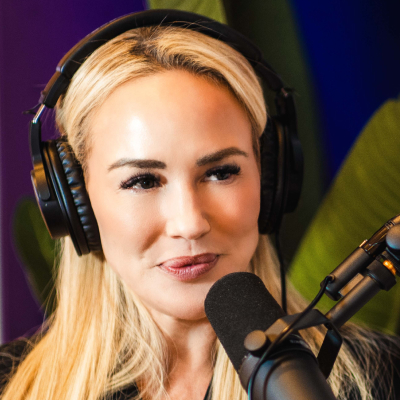
In this episode of Next Level Practices, host Erica Crawford sits down with Robin Dimond of Fifth & Cor to explore the power of public relations in the aesthetics industry.
Robin breaks down how thoughtful PR strategies can elevate brand credibility, secure meaningful media placements, and position providers as trusted authorities in an increasingly competitive market.
They also dive into the importance of community and collaboration, touching on the collective and cohort model discussed toward the end of the conversation. Robin shares how bringing like-minded professionals together can create opportunities for shared growth, stronger visibility, and long-term success in the evolving world of aesthetics.
Full Transcript

Erica Crawford
You know, we say we used to not do things on social media back in the day. Thank God social media didn't exist when we were in college. Now those things come back, and those are the — like the little ghosts in your closet that are coming up. And so if you don't have enough positive out there —
Robin Dimond
The negative starts rising pretty quickly. You thought something was dead and buried. Nope, it's back.
Erica Crawford
So we're at AmSpa, and I am joined here with Robin Dimond, the CEO and founder of Fifth & Cor.
Robin Dimond
I'm super excited to be here. Thank you.
Erica Crawford
Yeah, I'm excited to have you. Gosh, we have so many things we could talk about, but I want to talk about one thing in particular. I feel like we are in the largest rise of traditional PR, like, ever. Like, if you would have asked me a couple years ago, like, how important is traditional PR — and what I mean by that is, like, you know, your articles, your Vogues, your GQs, but also, like, your local Golf Digest and your wine and country and, like, your local PR — I would have said, yeah, it's kind of important. It helps credential you, and, you know, it's kind of good. It's okay.
And now, if you asked me, I would say it's one of the most important things, because it has a massive effect on AI search. And I just want to talk about it with you, because you are the queen of PR.
Robin Dimond
I mean, we love it. We are seeing this new synergy, and like — like you said, if you asked me a few years ago, I would have said, "No, that's something I learned in college." And now we're seeing a resurgence of it, and it is really helping. So, like, the sites that you're building — and, like, we're able to drive more traffic to them. We're able to help you with your GEO, your SEO, all of those things.
And it also highlights you in a different way. If you're saying I'm the best, it's great to have other people, other articles, magazines, all of those things saying that you're the best.
Erica Crawford
I love that. I keep trying to, like, get this little phrase to catch on — we'll see how I do. I call it positive mentions, because what AI cares about more than anything is the number of positive mentions. So, a bunch of Google reviews, Instagram — being active on Instagram — people talking about you, Reddit — it likes Reddit — but it also likes PR. Like, a very valued, um, article where somebody is talking about you, that has some weight, some medical credentials, something that makes a little sense for the industry — wellness, aesthetics — or something more like luxury style, like golf, wine, food. But a magazine of some sort, or something that has some sort of respect back to it, mention you.
Like, PR has a huge point, and AI really heavily leans on that and will cite that. And I think you've seen it a lot with your clients recently, where they're coming up in AI search largely due to the articles that you get out for them.
Robin Dimond
And we have a lot of joint clients, so it does take having the foundation of everything and then being able to push out there the organic pitches to get them mentioned. People also want to know the owners now. They want — like, you keep saying golf, and I love that you keep saying that, because I want to know that my plastic surgeon has the same luxuries as me, or they care about health and longevity, or they're a mom, and I want to know that — I know all about your daughter. I want to know, like, why you're doing this and what is that behind it.
And so hearing the stories and seeing it all in different articles, getting those — you know, what do you give back into the community? Yes. So a press release — it's not just the articles, it's also doing a press release of what you gave back to your community, why it impacted your business, why you do those things. That's so important nowadays for helping you rank in those.
Erica Crawford
Yeah. And you know, on the flip side of it, uh, if you're not — any form of negative PR, or things that would more easily be buried with time, for lack of a better word, right? Um, they have more of an impact now, because, hey, I can bring them back up. Unfortunately. And people — it's like, you know, we say we used to not do things on social media back in the day. Thank God social media didn't exist when we were in college. Now, those things come back, and those are, like, the little ghosts in your closet that are coming up. And so, if you don't have enough positive out there —
Robin Dimond
The negative starts rising pretty quickly. You thought something was dead and buried. Nope, it's back.
Erica Crawford
Yeah, it's wild. Um, I will say, what makes somebody a good candidate for PR? Because a lot of people go, "Okay, they have a plastic surgery practice, they have a med spa," but they're like, "Okay, but, like, what are we going to write about? What makes me — what makes it worthwhile for me to hire a PR company? What will set me apart? Like, what are you looking for in a person? What do you help them accomplish?"
Robin Dimond
I love this question. Thank you for asking it. I don't even know if I could have told you to ask this question. It is that they're unapologetically authentic. Okay? They're willing to give their opinion, whether it's positive, negative, something that's coming out there. They are able to respond quickly. So some of these journalists from Vogue will be like, "I need this article in the next 24 hours."
Erica Crawford
Yes.
Robin Dimond
So it is somebody who's ready to take their practice to a new level, who's okay being able to be on a call, and that also can, like, reinforce what they believe in — whether, whatever way you believe, it's totally okay. But that is the ideal candidate. If you're not ready to dedicate that kind of time — and we guide you and we help you and we get on those calls with you — but, like, if you're not ready to go out there and be a voice, then you're not ready for it yet.
Erica Crawford
Exactly. And then let's be straight with people for a second, okay? PR is a pay-to-play game. Let's just call it what it is. There is a reason you hire a PR company. The PR company has all the connections with the Vogues, the GQs, even the smaller local magazines, but a portion of what you're paying is going to those magazines. None of them are for free. It's terrible to say, but it's —
Robin Dimond
They're not.
Erica Crawford
They're not. Nothing is for free in this world anymore. I know. And —
Robin Dimond
So, if you're sitting there thinking, like, "Oh, I'm paying this PR, we're putting a wire service in there, we are guaranteeing these different blocks on that" — that is pay-to-play. Yes. A lot of people come up to me and they're like, "I want to be in Forbes." And I'm like, "Me, too. I mean, do you have the money in the budget?" So, there's a way. Now, there are journalists out there, and that is what you're paying for, too — the time to go and reach out to those journalists and say, "Hey, we have this article, or we have this insight or this opinion on a facial plastic surgeon or a dental." That is the stories that we can get organically, but it is pay-to-play. And I'm so happy you said that.
Erica Crawford
Well, yeah. I think it's funny, because some people I will talk to, and they'll get frustrated because they'll see a doctor down the street from them, or a provider, injector, who has amazing press, and they go, "Well, that person's not that great, and I'm really good." And I'm like, "Okay, but they're paying that game." Unfortunately. I would argue and say, look, there are some articles that are free. When — what's his name — Dr. Steven Levine was the Kris Jenner facelift, uh, doctor in New York City, when he got mentioned in People, I promise you, he did not pay for that, right? He did Kris Jenner's facelift, and he went viral, and it went in magazines.
But for the people who are — a lot of those Vogue articles, a lot of those GQ, a lot of those Forbes, I would argue that 90% of them are paid. I don't know — am I shooting too high here?
Robin Dimond
No, you are right on cue. I would say probably 90, 95% are paid to play. Now, once you start getting featured, that is when the other articles come out. And that's where that 5% of, like, they saw you here, and so now they want to highlight you.
Erica Crawford
Yes.
Robin Dimond
But you have to get started.
Erica Crawford
Yes.
Robin Dimond
It's like being a speaker at one of these things. They're like, "Oh, I see so-and-so on every single stage." Well, that person took every, you know, 7 o'clock stage time so that they can get the main-time stage time. There was the time and the effort to get it. And, oh, now they are paid to be a KOL, but they were not one before.
Erica Crawford
That's so true.
Robin Dimond
So, you have to have that years of that — of, like, then people are seeking you out, but until people know who you are — no matter if you're the best breast surgeon out there ever, no one knows that.
Erica Crawford
You know, I love that you said that, because I find that true for myself. I do speak at a lot of these conferences, right? The Aesthetic Meeting, AmSpa, these various things. And when I first started off, I mean, I was the worst times — the worst times. I had to battle it out. I had to pray for —
Robin Dimond
You did. You're like, "I'm speaking by the bathrooms. I hope you —"
Erica Crawford
"I hope you come there." It's a side room. It's not a main hall. And I took anything I could get. And now the truth is that I get asked to speak more than I can accept. Um, just — there's only so much travel I could do in a year, and it's wonderful. But it did take a lot of grinding — years of grinding — to get to that point.
Robin Dimond
And I love that you say that, because they're the small ones — that you want to be featured in your hometown one.
Erica Crawford
Yes.
Robin Dimond
Because first of all, that gives you credentials and credibility. Yes. You want to be that national place that everyone flies into, but you got to be known locally, too.
Erica Crawford
Yes.
Robin Dimond
What community? I want a student to have written about you at a university, because now that is feeding into the next one. And I think — I love that. Like we said, the bathroom talks — there's five of us, come and see me, and I'm making it a big deal. Those small articles lead to the big ones. And that small stage time leads to a sold-out room that people want to hear you say those things.
Erica Crawford
Absolutely. And it wants — credentials you, because AI has this viewpoint. And look, this can change, and I'm honestly not even saying it's correct, because it's actually something that scares me about AI, which is a whole another conversation —
Robin Dimond
Which we can definitely talk —
Erica Crawford
We can definitely talk about. Uh, but AI — that's why I go back to positive mentions, because it's about the velocity, the speed, how often somebody is mentioned, how many places they're mentioned. It doesn't go, "This doctor has the best before-and-afters, so this is why I'm recommending them to you." He goes, "This doctor is really famous, and people talk about him a lot on Instagram" and whatever.
And I have seen — I've seen with my own eyes, because I've been in this industry a long time. I know what good work is. I know what doctors are the best in every city. I mean, I've been in this industry a long time, okay? And I have seen it with my own eyes — ChatGPT or Grok or Gemini make recommendations. Uh, sometimes valid, great providers, but I've also seen some names on there where I go, "Okay, but that —"
Robin Dimond
He does the worst belly buttons, you know, for a tummy tuck. You know, it's terrible to say that, but ultimately it comes down to being willing to play the marketing game a little bit and doing the PR and putting in the work.
Erica Crawford
Now, I would say career-wise, though — I'm curious — you say PR is not necessarily a day-one activity. It is something — you have to be somewhat starting your practice, you have to have been somewhat putting in the work. You're through your first couple years. You put in the paid ads. You put in some of the SEO. You've gotten enough where you could actually have a conversation and have articles and have speaking spots. So, you do need a couple years under your belt, and then you hire a PR company.
Because it is also something, frankly, that's — it's, you know, it's — be at least probably four, five, 10 grand. PR is not an expensive effort, right? It's up there, and a lot of PR companies do cost in that 10-grand range. I'm sure you could get something around the four or five or — but it is not inexpensive, right? So you have to be at the point in your career to bring that on, but it is a necessary thing that you need to do.
Robin Dimond
It's the next level. So you need a website first.
Erica Crawford
Yes. First — well, actually, you need a brand first. So you need a branding. We know some great branding agencies. We will drop their name right now. Um —
Robin Dimond
Great branding. You need that first. Then you need a website, because where are we driving people? I could do all the PR in the world — I can get you on Vogue — but if there's no good website, or I get the spinning wheel of death, we're not ready. No.
Erica Crawford
And then we want those layers, like you said — paid ads, organic. Do you have organic social? Do you have paid? Do you have paid Google ads? All of those things are super important. And you're thinking about PR is when you also have SEO.
Robin Dimond
Yeah. I need Influx to give you that base of SEO so we know what words you want to rank for. And so it is something — it's that extra layer. It's the maintenance program here that you're going to be adding on.
Erica Crawford
And you also have to know, PR is also podcast.
Robin Dimond
Yes. And people don't talk about that. It is getting on stage. It is being that speaker. It is not just an article. And if you're trying to get in Forbes — yes, we can pay enough money for you to be there. But if there's nothing else, or no other article — I'd rather be in 200 articles than one that I paid for.
Erica Crawford
Absolutely. It's also the next step. So you're in a city, right? SEO is very localized to your city. Yes, Google ads is only to the radius that people are willing to drive, but it is very localized, right? Might even be a couple hours out people — is for plastic surgeon. For an injector, non-surgical, to me, much less — it might be a 5, 10 mile radius, right? So, most digital marketing is very localized. It can't be any other way, just because of how Google works, how some of the AI things work.
But when you want to get fly-ins, when you're going, "I don't want to just be famous in Pittsburgh, I want to be famous everywhere" — from Tampa, whatever city you're in — then that is when your social media and your public relations, your PR, come into place. Because to be famous to the point of people willing to fly in for your services, that is the next level. It is a non-negotiable to have an active social media and PR presence. And those things are — they're very tied in to each other. Those two things are —
Robin Dimond
It's like someone saying they don't have a phone number or a website anymore. That's where we are. So if you don't have a — if you're like, "I should get on this thing called social," I'm like, you should have got on it 15 years ago. The organic social — and also, where are you going to have those stories? If we get you in Vogue, how — where are you going to put it? We want everyone on your social, and it's not just Instagram or TikTok. We want it on your LinkedIn, because we want to make you look like an authority in the space. We want device companies coming to you. We want product companies coming to you and saying, "Hey, this is the person who's leading the industry." And so making sure it's on all of your socials.
Erica Crawford
Yes.
Robin Dimond
And it's like treatments, you know — if I just get Botox in one place, okay, I'm going to have movement all over. I need it everywhere. It's an omnichannel approach of leveraging skincare and all of those things. And it makes you look like that industry expert, and it does take it. The other thing we're not talking about is PR in other languages.
Erica Crawford
Yes.
Robin Dimond
We are so focused on being this. But if you are near — in Texas, and you have a Spanish-speaking population, why in the world are you not putting out a press release in Spanish?
Erica Crawford
Yeah.
Robin Dimond
You will rank faster with Google than anything else, because no one else is putting that out. So, we love writing articles. We love writing that kind of PR release — press releases — in other languages, too.
Erica Crawford
I love that. So, it's so funny — one of our strategies that we do as a company, um — obviously it has to make sense, like the right city for it — but we will very often do Spanish pages and Spanish content, and even sometimes a second, entirely Spanish site if it's very heavily Spanish-speaking, for a lot of our clients. It's very quick to rank for it. It brings in a lot of traffic — in some cases, like, up to 20% of all their leads were Spanish. Like, it's really worthwhile to do that strategy. So I couldn't agree more. And even for our clients, like, more, like, in the, uh, Montreal area, like in Canada — French as well. It doesn't always have to be Spanish. It's whatever just makes sense for that demographic, right?
Robin Dimond
We have a huge demographic in the Korean industry. So, we write a lot of copy that way.
Erica Crawford
I love that.
Robin Dimond
Over in California. And that's super important. So, know who your demographic is and how you're reaching to them. Also, the other thing about, like, PR — put things in simple terms.
Erica Crawford
Oh my gosh. Yes.
Robin Dimond
Oh my gosh. If they cannot spell blepharoplasty, don't put blepharoplasty. Okay? We want to rank for eye lift, eyelid, like, all of those keywords. It's the same thing you want to rank for SEO — we want to do in our podcast.
Erica Crawford
I love that. It's funny — um, like I said kind of at the very beginning, this was less important a couple years ago. It really was. I would have said that this is like — but if somebody came to me and said, "Hey, is PR a must?" I would have said, "No, it's an option." But it has changed so much with AI, because AI is going to grow. We are at the very, very beginnings of AI, and it's only going to get bigger and bigger, and it is something that AI heavily leans on.
So if you do not have a PR company, it's time. It is a growth strategy. It is not a day-one strategy. I can't have you spending your SEO and paid ads money on that — not when you're not ready. But when you go, "Okay, I have a website. I have some SEO. I have some decent — I'm getting some organic traffic. I have some ads. Okay, but how do I get better AEO?" — right, AI search — "How do I get better reach? How do I get people to know about me? How do I come up in Claude and Grok and ChatGPT and Google's AI Overview?" You're going, "What's my next level?" A PR company is 100% a must as part of that.
Robin Dimond
Yes.
Erica Crawford
Okay. Thank you. Well, is there anything else you want to tell our audience?
Robin Dimond
I mean, we are kind of doing something together.
Erica Crawford
Oh, yes.
Robin Dimond
Yeah, we probably should talk about the collective.
Erica Crawford
Let's talk about it.
Robin Dimond
The co— cohort.
Erica Crawford
It's our — it's our aesthetics collective cohort.
Robin Dimond
A collect— That's how new it is. We're still talking the title, so bear with us. And what I love, and what this industry is changing, is finding people. So people will be like, "Oh, you both do marketing — why are you talking to each other?" And we're like, "No, because it takes all of these partnerships." And I love coming together with industry experts like you guys, and I'm staying in my lane, and coming together with Pinpoint and working with Skytale, and we have all of these five companies coming together.
Erica Crawford
Yep.
Robin Dimond
To really do a cohort for practices, and where it's going to be exclusive. So they can ask questions, and there's so much importance to this.
Erica Crawford
Yes.
Robin Dimond
And I think it's going to be groundbreaking to sit down with eight other practices and say, "Here, let's put it all on the table."
Erica Crawford
Kind of like a founders club. Like, it is, okay, let's come out here and let's give you the industry expertise that you need to know, because the world is changing so fast. I don't think three years ago, when we were someplace in Vegas before, we would have said the exact same thing. These things are changing overnight, and it's not your job to stay on top of it. It's your job to find other people who can stay on top of it.
Robin Dimond
Absolutely. So, if you want to know more about the cohort, just email us. It'll be [email protected]. We'll tell you all about it, but it's basically going to be an educational group of five companies that work well together, that know this space, and we're going to be having it sectioned out. Each cohort is only going to have eight practices in it. And it's going to be based off of the size of revenue that practice — because the education that I'm giving to a $1 million practice versus a 4 million versus a 10 million, or a single-provider practice versus a 10-provider practice — it's really different.
And it's really hard for us sometimes to do some of this education that we do at these conferences or podcasts or webinars. It's — even here, we're talking about PR, and I'm not talking — if you're sitting here listening to PR and you're just starting your practice, it's like this whole podcast doesn't apply to you fully yet.
Erica Crawford
Don't listen to it yet.
Robin Dimond
Not yet. You know — to us. Yes —
Erica Crawford
Come back to us. The cohort, though, will help you — the collective will help you be in the correct bucket and get the education you need for you and your practice. And that is something that is very much lacking right now, which is specific education for where you are at, at your practice level growth, or what you're trying to get to. So, it's exciting. Coming soon, a lot more information. We're very excited about it.
Robin Dimond
All right. Well, I thank you so much for having me on this, and I really appreciate — I can't wait for our new stuff that's coming out.
Erica Crawford
Yeah, me too. Thanks, Robin.
Robin Dimond
Yeah.
Subscribe to Next Level Practices
Next Level Practices is the show where we discuss the ever-changing world of digital marketing and patient acquisition and bring you the latest ideas, strategies, and tactics to help you take your practice to the next level.