

Live at MSS 2026
w/ Sam Pondrom of Byrdadatto
28 minute view/listen


May 2026
Available everywhere you podcast



In this episode of Next Level Practices, host Erica Crawford sits down with Sam Pondrom of ByrdAdatto to unpack the critical role of legal compliance in the aesthetics industry.
Sam shares practical insights on navigating complex regulations, avoiding common pitfalls, and building a practice that is both growth-focused and fully compliant.
They also dive into the nuances of marketing compliance, especially around sensitive and highly scrutinized topics like GLP-1s. Sam explains how practices can approach these conversations responsibly while still communicating effectively with patients, highlighting the importance of aligning legal strategy with marketing efforts in today’s evolving landscape.
Full Transcript
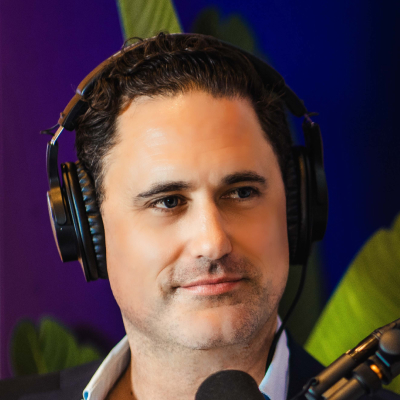
Sam Pondrom
It's that there are a lot of variables, and as we account for those variables, the answers become pretty black and white overall. Uh, the trick is, do you understand the variables and do you know how to sort through them?

Erica Crawford
So I am here with Sam Pondrom. He is attorney at ByrdAdatto. I am so excited to have you here. Welcome to the podcast, Sam.
Sam Pondrom
Thanks. It's, you know, I always love having the opportunity to have these conversations. I think a lot of times you get in these situations where you feel like you're sort of talking at people.
Erica Crawford
Yes.
Sam Pondrom
And you get tuned out. And so when we can do something like this where, you know, you and I have a conversation, but ultimately people can opt in for the content — all for it.
Erica Crawford
I love it. And I feel very lucky to have you here because I do not imagine what would this — this would — no, you know, I'm not even going to ask you, but it would cost a lot to sit down for your legal advice and get it. And right now, we're giving everybody your legal advice for free, which is fantastic.
I do have to say, a little plug: I love ByrdAdatto. I love Sam. I love all the lawyers there. Absolutely know what they're doing. You know, for a company like Influx, we specialize in medical aesthetics, wellness. So all of our clients are pretty much, you know, wellness, med spas, plastic surgeons, and it's a very specific niche, but there are far more legalities about medical marketing, um, than there are in any other industry, right? It's just a very legally tight industry and you have to have a lawyer that knows the space really well, and ByrdAdatto is fantastic with that.
So with that said, I'm going to ask you a bunch of legal questions, and they are going to be what they are as of right now, April 2026. Just going to say that, 'cause laws do change. Um, but let's start with GLP-1 marketing.
Sam Pondrom
Good.
Erica Crawford
So, I will say we probably do more GLP marketing, GLP-1 marketing, than almost any other company out there. But we do get a situation where we have a client who gets a cease and desist. They get scared and they just tell us to just stop all GLP-1 marketing. Now, what are your thoughts on that?
Sam Pondrom
Yeah, I have many. Um, so as you can imagine, those — you know, Novo was the first wave and then Eli followed up. Eli seems to be more consistent with the cease and desists. Um, ultimately the scare is what they're looking for.
And I think the way to look at those is sort of twofold. Um, one, you got to respond. Uh, I highly encourage people to respond. Um, but two, I think ultimately being direct and saying, "Hey, you know, we see your concern. That's great. We're good," is kind of how I've done that. I mean, I've probably written 50 of those responses personally.
Um, the important thing though is to sort of read the subtext there. And ultimately what they're looking for — and just like everything else, it comes down to money. They've lost a ton of money on people being able to compound what should be a protected drug. And so the deployment of those cease and desist letters was essentially a way to at least scare off some of the direct providers.
Erica Crawford
Right.
Sam Pondrom
The other thing to remember though is all legal dollars are not created equal. And what I mean by that is if you go after individual practitioners, it's going to cost these manufacturers a decent amount of money, but it's very much whack-a-mole. You may stop a provider —
Erica Crawford
But you've expended a lot of resources.
Sam Pondrom
And ultimately what's going to happen is those patients — you may have stopped that provider — they're going to spread out elsewhere.
Erica Crawford
Exactly.
Sam Pondrom
And somebody's going to fill that, you know, deficiency in the market. So where we really actually see them spending money, and we see the litigation, is with the actual supply side. And they've, you know, gone pretty hard after the, uh, compounding pharmacies, and I believe right now it's the 11 largest compounding pharmacies that both Novo and Eli have suits with.
Um, but I think ultimately, going back to your question, the letter is not something you should ignore, but it's also something you should take in context and realize that the overall risk probably isn't where you think it is. And there's a variety of ways to address that risk effectively.
Erica Crawford
I always like to use this little analogy. It's slightly inappropriate, but it kind of fits, right? If you're — here we go — if you're the DEA, right, Drug Enforcement Agency, you don't care about the guy on the corner selling some drugs. What you really care about is the cartel, and all your big stings and all your undercover agents and all of those things are about big organizations, cartel or large drug organizations within the US, right?
So you, as in the individual practice, even though it seems big to you and it feels big to you because it's what you're selling and what you're doing in practice, but in the grand scheme of things, to Novo, to Eli Lilly, you're just the guy in the corner and you're just not that much of a priority. So it feels big when you get a cease and desist, but you're not that big to them. They're really trying to go after the pharmacies.
Sam Pondrom
Yeah. And it's a very apt analogy. And in fact, early on where we did see some actual follow-ups to these demand letters — quite, or the cease and desist — they would send demand letters and say, "Hey, who's supplying you? Where are you getting this from?" Like —
Erica Crawford
They want you to snitch. That's all they want.
Sam Pondrom
It was a rollup is all it was. It was the exact same format as these, like, "Hey, we're going to bust some street-level peddlers." Yeah.
Erica Crawford
And figure out where the supply is coming from.
Sam Pondrom
It was the exact same thing, except they very quickly learned it's easy to determine where the supply was coming from.
Erica Crawford
Exactly. Which brings me to my next question. Well, first off, what allows an individual provider to be safe? For us at Influx, we have three kind of basic rules, and tell me your thoughts.
One is that we never mention the brand names. If we have a GLP-1 comment, and we will very openly talk about semaglutide and tirzepatide and we will use those words — we will say it's semaglutide, we will say it curbs appetite — but we will never compare, mention, we will never say the words "even same active ingredient as Ozempic." No. The words "Mounjaro," none of those words are coming anywhere close or anywhere on that page of content. The FDA is also not coming anywhere, because it's not FDA approved, it's a compound. And then if we go a step further, we would even make a point to say it's compounded. Typically speaking, if those things are in, we feel like we're fine. We feel like the content is as risk-free as it can get.
Sam Pondrom
Yes.
Erica Crawford
From a content perspective. Just content.
Sam Pondrom
Yeah. Um, and I'm glad you made that distinction, because ultimately, like, there are other items at play there, but yes, from a content perspective, I think you've really nailed it. Um, there's always, like, these interesting misconceptions that bubble up.
Erica Crawford
Yeah.
Sam Pondrom
Uh, the use of semaglutide and tirzepatide, like those actual words.
Erica Crawford
Mhm.
Sam Pondrom
There was a long time where people would say, "Oh, I can't use that." And you're like, "Well, no, it's a naturally occurring compound. People can't trademark that, uh, because of its broad applicability." So what we're concerned about is very much, you know, the actual trademarking side, so brand names. And then we're also worried about what we always describe as being false, deceptive, or misleading.
Erica Crawford
Right.
Sam Pondrom
And if someone listening to this is worried about advertising in general, if they follow that little bit — false, deceptive, and misleading — that's going to help them avoid a large number of potential issues that head their way. And so that's why, for example, when you're saying, "Hey, we don't even benchmark to FDA. We don't bring it up." And that's a great idea, because we see this a lot where people will invoke that name, but do it in sort of a roundabout way. And ultimately, it's sleight of hand, right? They want you thinking, "Oh, the FDA, we're good here." Even though — where you nailed it —
Erica Crawford
Compounded drugs quite literally by their nature are never FDA approved.
Sam Pondrom
Correct. So yeah, that's a sleight of hand we see people get in trouble with.
Erica Crawford
The most common thing I've seen written is people will say things like "same active ingredient as the FDA-approved Ozempic," and, like, we don't play with that wording, especially when we run paid ads. Paid ads, we lean heavily on testimonials, because then it's just the patient talking about their experience on the compounded GLP-1 with X practice, and it's a really safe zone. So, say a little less, add more testimonials onto your landing pages or your Meta video ads, and you're generally speaking in a pretty safe space.
Um, but you can market it. I wish people would be slightly less fearful to market it, because it's fine. And I would argue — and here's my big question for you — do you think that Novo or Eli Lilly are going to win any of this? Do you think they're going to ever get to a point to trademark semaglutide?
Sam Pondrom
No.
Erica Crawford
I don't think so. It's like trying to trade — it's trying to do like ibuprofen and Advil. I just don't think it's possible.
Sam Pondrom
Yeah. And I think that's the thing is, ultimately at the point in time where we're at, like, the USPTO is savvy. Like, they understand these things, and we see rejections from them all the time where they're like, "That's too broad. That's too generic. That is something that really, for lack of a better term, belongs to the people," right? It's not something that somebody can come in and say, "Oh, this is ours," when it's, as we said, just a naturally occurring compound. It's the active ingredient, yes, but they can't say that's ours. It's the whole, you know, drug and delivery system that goes with it that ultimately they can have some control over.
Erica Crawford
Exactly. And do you think by extension of that, compound pharmacies will continue to be able to compound it, even if it's just by adding B12 or whatever they decide to throw in it next?
Sam Pondrom
Uh, oh man, that's a tougher one.
Erica Crawford
I know it's tougher.
Sam Pondrom
I think — I have to be very careful here. They probably — and I'm going to say probably — shouldn't be compounding it, period.
Erica Crawford
I understand that. Um, so assuming that they can —
Sam Pondrom
Uh, I think the coverage isn't in the, you know, B12 or B6 or glycerin or whatever. I think the coverage is in the fact that the explosion of GLP-1s was such a unique set of circumstances that it's the whole "once you open Pandora's box, you can't put it back together," you know, or put back in it.
And it's almost like they just have to give up this battle to win the war, because I mean, we've seen almost no movement on the litigation side. Uh, the compounding pharmacies have just straight up said, "We're not going to slow down." They're sort of loosely availing themselves of the medical necessity exception to compounding, um, or to exclusivity, I should say, the ability to compound. And you know, I have very strong opinions about that. The summary level is they're not meeting medical necessity, but as we've seen, like, there's just not a lot that can be done.
Erica Crawford
No. Oh, and I would argue and say, let's say it finally — the litigation is done. Somehow they finally get to stop compounding it. It'll be irrelevant, because there's new GLP-1s. There's so many in FDA trials, so much more coming out, that it's going to — next thing, go on a shortage list, next thing to be compounded. Like, it's kind of, this train has left the station. There is always going to be an option for compound GLP-1s in my opinion, whether it's semaglutide, tirzepatide, or something else entirely.
Sam Pondrom
Yes. And I think there's an interesting point there. I think the injectable versions that we know by, you know, the big four sort of names are — I think they're the ones that will always sort of be in this state.
Erica Crawford
I agree.
Sam Pondrom
Because I'll have people come to me and say, "Oh, hey, what about retatrutide? I can get my hands on retatrutide or whatever else." Um, and ultimately they are looking at those as if the regulatory environment is going to be similar.
Erica Crawford
Okay.
Sam Pondrom
And I don't think that's the case. I think people see what happened as a sea change in the regulatory environment. Whereas I think if you really took a step back and were, you know, dispassionate about it, you would say this was just a weird set of circumstances.
Like, when's the last time we had a global pandemic in which that created these shortages, where a drug that had already been on the market for a couple of years at that point — and depending on the formulation, longer — all of a sudden went from relative unknown to all anyone could talk about? And it's just, we're not going to see that again. And I think when people look at these new drugs coming onto the market, it should be back to business as usual, not, "Hey, let's try to compound the heck out of it."
Erica Crawford
So right now, in the unforeseeable future, pharmacies are going to be compounding. Our practices don't need to worry about it. Just be cautious about the, you know, the wording. Don't give false advertising. Go heavily on the testimonials and the ads. That they can market and they should market, because GLP-1s are big and they are only going to get bigger than what they are now.
Sam Pondrom
Yeah. Yeah. And I think that's the thing is, when we're talking about the GLP-1s and we're talking about the actual marketing side of things, we know the barriers or the boundaries, and playing within those boundaries is actually fairly straightforward to do — especially if they have somebody like y'all who have been doing this, who understand those boundaries and, you know, keep up with the sort of current state of things.
And I do agree with you. When I would talk to people about advertising, especially early on, you know, they would say, "Oh, I don't want to do any." And I'm like, "Well, that's not the answer." Yeah. You know, um, and for a while, word of mouth was sufficient, but —
Erica Crawford
I'm with you.
Sam Pondrom
I think if you're smart about how you advertise it, the risk will be sufficiently low to where it's not going to bring any undue or additional scrutiny to you.
Erica Crawford
I agree. And, uh, you know, honestly, we start with GLP-1s, but I really want to talk about peptides in general, like BPC-157. Because GLP-1s was just the beginning, because then people go, "Wow, this is amazing. Look at my weight loss. I feel much better. What else is there?" Right? And it's opened up so many different peptides, and the legalities on those are much, much different than GLP-1. So let's talk about it. What can people do? What can't they do? What are the regulations? Tell me as much as you can tell me about a peptide like BPC.
Sam Pondrom
So, yeah, it's a good question. And I think it's funny to say this at this point, because I feel like we've been tangling with GLP-1s for so long, but they're actually pretty settled at this point, right? You know, like, we're —
Erica Crawford
We're pretty good with those overall.
Sam Pondrom
And now we are moving into this sort of non-GLP-1 frontier. And I do agree with you. I think BPC is an excellent proxy for discussion for the rest of the group.
Erica Crawford
Yeah.
Sam Pondrom
And the important thing with peptides is to remember that we kind of can't lump them all together.
Erica Crawford
No.
Sam Pondrom
And when we're talking about peptides, we're basically just talking about short amino acid chains that trigger our bodies to do some specific function. And what's happened is, because of what we learned from the GLP-1s, demand has outstripped the research aspect of it. And so it's kind of jockeying for position as to, like, how we're going to treat these things.
So, uh, a quick kind of high-level primer on the FDA piece. There's really kind of three buckets. And there are, you know, peptides that are a part of other drugs or are drugs themselves for other uses, and so we have, like, off-label use. Some of them are orphan drugs, which are kind of — they're unique animals — but at some point in the past they've been approved, and so we have, you know, known data there, we have scientifically valid data there.
And then we have this, uh, bulk compounds list, where basically the FDA has come out and said, "Hey, here's a bunch of peptides." And through the history of our work, we've seen that some of these are relatively safe and effective, and they have essentially came up with three categories. And two of the categories, one and three, generally you can play in, I would say subject to state law. Uh, category two is the one you have to be careful of. And that's where BPC actually falls, and some of the other common ones, um, like GHK-Cu.
And, um, it's an interesting space because even if we're looking at the FDA levels and we're saying, "Hey, this isn't approved," and for category two they've been nominated as having some risk of harm — but then you look at the background data and there's just not really data. And it's weird. It's almost like the problem isn't bad data, it's just no data. And so you have these kind of anecdotal, like, "Hey, there may be some risk of harm here." And then you have other anecdotal evidence where people are like, "It's a wonder drug. Look what it's done for me." And so you get this sort of clash of anecdotes. And the biggest problem right now is that no one has taken the time and spent the money to run these through, uh, appropriate trials to get them down that road towards human use.
Erica Crawford
Gotcha. That makes a lot of sense. And so, for the practices — because we do have practices with these peptides.
Sam Pondrom
Yes.
Erica Crawford
Um, I feel very different about how we as a company write the content. We generally keep it a little bit more muzzled, because there's not a whole lot we can say legally about these, right? For GLP-1s, I could at least honestly say they help with your weight loss, and we could say things. There's testimonials. We're in a much more safe area, whether the — even though the compound is not FDA approved, it's — we're good, right?
This is not the same category for the rest of these peptides, right? So it's just completely different. Um, even NAD+, right? NAD+ is in a way better situation, where I do feel I could write longer content. I don't even know where NAD+ is, actually. Where is that? How do you — I actually don't even know.
Sam Pondrom
I don't know off the top of my head. I would have to look. Um, but yeah, it's further along than BPC. I'll just say that much.
Erica Crawford
And it's been around for a good long while.
Sam Pondrom
A good long time.
Erica Crawford
It's gotten popular recently, but it's been — and it's safe to write longer content. With BPC, it's like, this is what it is. Come talk to us for more information. We can't say a whole lot about it.
Sam Pondrom
Yeah. And it does put you in a tough position. And there are practitioners that are extremely vocal about peptides. There are a lot of patients that are extremely vocal about their demand for peptides. And we have to be a little bit careful of, you know, the tail wagging the dog.
Um, but I think the interesting space that it puts you in is there's all these, you know, approval-side potential issues, but they're just asking you all to market. And so the question becomes, how do we market this while, you know, not hitting that false, deceptive, or misleading? And I think you're right. I think ultimately staying factual and doing kind of the who, what, where sort of advertising, um, and then backing that up with good, forthright conversations from the practitioners, good written informed consent.
Erica Crawford
Yeah.
Sam Pondrom
And good, you know, state law analysis for the legal bases for utilizing this treatment — which obviously, like, you know, not a part of what y'all are doing.
Erica Crawford
But even for us, we could just talk about the condition. Yeah.
Sam Pondrom
Right.
Erica Crawford
People — you could do a whole wellness or regenerative medicine campaign on Google or Meta. You don't have to say anything about the peptides. You don't have to say, "This is what we're giving you." You're saying, you know, "You feel low on energy, you feel sluggish, you sometimes get a brain fog," whatever the thing is, "we have things that could help you, come reach out to us."
That's a wonderful thing about marketing, is that you either market by the treatment, meaning people are searching for exactly what they want, or you can market by the condition. And both of them are very valid, and it just depends on, frankly, the search traffic and what people are looking for in your city. It depends, but there's a way around that. Now, for a practice wanting to add in BPC, what suggestions do you have in terms of the best legal process for them?
Sam Pondrom
Talk to counsel. Yeah. And so I always say this. I'm like, look, I would love it if you talk to us. Just pick your favorite healthcare counsel. Make sure they're, you know, decently well versed in it. But it's a complex area. Um, one thing that I hear a lot is people say, like, "Oh, it's a gray area." And you're like, "It's actually really not." It's that there are a lot of variables, and as we account for those variables, the answers become pretty black and white overall. Uh, the trick is, do you understand the variables and do you know how to sort through them?
Erica Crawford
Absolutely. Okay, that's super helpful. Is there any other subject in wellness, regenerative medicine, aesthetics? Anything new on the market that we should be keeping an eye out for? Any other advice on — trying to think of anything we might have missed.
Sam Pondrom
I think, you know, peptides, and as we had talked about kind of earlier in MSS, the whole PDGF injectable — um, I think they are really good sort of microcosms of this broader regenerative, uh, longevity-style movement.
Erica Crawford
Yes.
Sam Pondrom
Um, where ultimately it comes down to, you know, demand outstripping the science. And I think a lot of the conversations end up becoming very similar, but you just have to tailor them a little bit depending on what you're trying to do. And it may very much depend on whether it's, you know, a peptide or whether it's a biologic or, you know, whatever it is, and just making sure that, like, on the practice level, you have someone backing you that understands that and can walk you through that.
Erica Crawford
Absolutely.
Sam Pondrom
And I think the other thing to understand probably is there's no way to completely derisk this.
Erica Crawford
No.
Sam Pondrom
And so if you are risk averse, it's probably not a space for you. And if you are — you know, if you embrace risk, or at least can tolerate it — we still need to have a good, strong conversation, because there are definitely ways you can go off track very quickly.
Erica Crawford
I agree. And I would argue — this is just for me personally — it's worth some risk. I remember early on telling people, get GLP-1s, get GLP-1s. This is just the beginning. It's going to blow up. I knew it. I knew it would. And a lot of people were hesitant and they thought it would just be a trend. Um, and I was like, this is not a trend. This is a massive change for us. And it's funny, because I hate to almost use this analogy, but it arguably might be one of the biggest medicines that we've had since —
Sam Pondrom
The invention of an antibiotic or something.
Erica Crawford
I — you know, it really is that big. And for some people, weight loss, this is a matter of life and death for them, right? Like, it is very medically necessary. So I'm not talking about it purely on a cosmetic level, right?
Sam Pondrom
No.
Erica Crawford
Um, so for me, GLP-1 is a big thing, and it's changed the world, and it's going to only go further, right? Um, and I would argue and say that peptides, we are at the beginning of that as well. And it's worth putting it into your practice.
Even if you've been solely aesthetics and you're just doing lasers and injectables, having a wellness component doesn't have to be huge, but having GLP-1, some peptides, maybe some sexual health, I feel like that is a smart move. It's worth hiring the counsel. It's worth going through the headache. It's worth doing it, because regenerative medicine, which really everything can kind of fall in that bucket a bit, is here to stay. And factually, uh, it's much further along in other countries, right? Like, comparative, you know, we have some — some not all, but we have some more regulations than, let's say, like South Korea or something like that, right?
Sam Pondrom
No. And it's an interesting thing to say that in the last probably two decades, people have become much more aware of and in control of their own health.
Erica Crawford
Yes.
Sam Pondrom
Which is kind of a ridiculous statement. You're like, "Yeah, you should be in control of your own health." Um, but I think, you know, in the sort of traditional practice of medicine where, um, you know, you go and you speak to expertise and they do what it is they're supposed to do — that definitely will always have a place, but I think in this case, the big change is not that it's reactive, it's proactive.
Erica Crawford
Yes.
Sam Pondrom
And people are trying to get ahead of these things and trying to head off the need to go for, "Hey, I need a diagnosis," and it's more about, "Hey, I have a history of this," or, "I have, you know, general symptoms," like you were saying, brain fog, fatigue, you know, whatever it is. How can we address these, and so that I can continue to take care of myself without being dragged down?
Erica Crawford
Exactly. You couldn't have said it better. So is there any other last advice or anything you would tell our audience before we end off?
Sam Pondrom
I think my biggest thing is, even in areas kind of like what you're talking about, where you should embrace these things. Um, even if it's something that you don't necessarily want to offer, you should still be aware of it. And the other important thing to remember is that even if something is not perfect from a regulatory standpoint, there isn't, like, a single tick box. And so if we can get nine out of the 10 boxes we need to tick, you're in a good spot, you know?
And there's a lot of things that — even if we're talking about, say, a BPC-157, um, where there's questions about the actual, like, FDA regulatory side, and we know we're not going to get that box, we can still go through and get all these other boxes that are absolutely tickable on the, you know, for every treatment or procedure, whatever. And so I think sometimes people get discouraged by the what can't be done.
Erica Crawford
Yes.
Sam Pondrom
And forget to look at, like, "Hey, there's a way to integrate these." And a lot of it comes down to, you know, due diligence and communication.
Erica Crawford
Well, thank you so much for coming on. I know people are going to be very interested in this. So this is Sam. Thank you again. ByrdAdatto — absolutely fantastic. Our favorite legal group. Love you guys. Thank you so much.
Sam Pondrom
Thanks for having me. I appreciate it.
Subscribe to Next Level Practices
Next Level Practices is the show where we discuss the ever-changing world of digital marketing and patient acquisition and bring you the latest ideas, strategies, and tactics to help you take your practice to the next level.