

Live at The Aesthetic Meet 2025
w/ Dr. Gregory Albert of Boca Raton
15 minute view/listen


May 2025
Available everywhere you podcast



In this episode of Next Level Practices, recorded live at the Aesthetic Meet 2025 in Austin, Dr. Greg Albert of Boca Raton returns to the podcast to share insights on the changes he is seeing in aesthetic medicine.
From the rise of facial surgery in younger patients to the evolving role of AI in both treatment and training, Dr. Albert reflects on how patients are becoming more informed, and more discerning. We also dive into the potential return of facial implants, his work with professional athletes, and how future tech like simulation and robotic assistance could transform the field of aesthetics.
Full Transcript
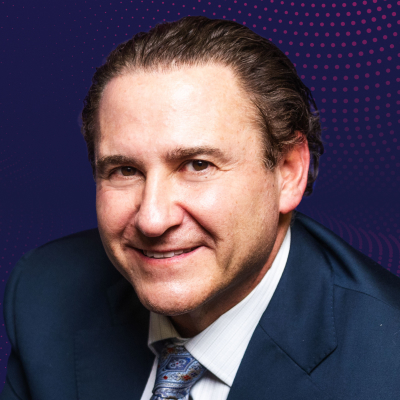
Dr. Greg Albert
Yeah, artificial intelligence is really interesting. I do have a device, Lipo AI, which uses artificial intelligence to make the light laser lipoing safer. So, it'll modulate the heat so you're less likely to burn the skin. I mean, that's probably not what you were thinking about when you said artificial intelligence, but it's everywhere.
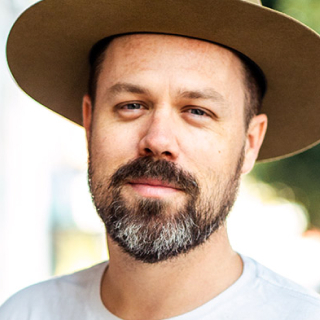
Max Baybak
We're here at the Aesthetic Meet 2025 in Austin, Texas, and I have the great pleasure of sitting down with our friend and client, Dr. Greg Albert of Boca Raton. Dr. Albert, thanks for sitting down with me.
Dr. Greg Albert
Thank you for having me.
Max Baybak
Of course. Now, we've done this last year and now we're keeping up the tradition, which has been fun. Had a handful of our clients who were on last year jump into the podcast chair again this year. And it's great to get like an update, another year in practice. What are they seeing?
And so, I'd love to ask you a few questions from your point of view in your market, what you're seeing. But first, will you just give us a little update? Tell us about your practice, what you specialize in, what you focus on.
Dr. Greg Albert
So, we're in Boca Raton, Florida. Um, we're growing, ever growing. We're hiring. Um, adding surgeons. Um, Dr. Becker recently came to the practice. Well, it's been actually been two years now.
Max Baybak
Wow.
Dr. Greg Albert
And, um, that's been great. And we might have another surgeon coming down from, uh, New York. And we have another surgeon that's coming down, uh, operating one day a month. So, it's been great.
Max Baybak
That's great. What's the experience? Have you figured out— do you feel like you have a handle on kind of bringing on an associate, in that whole process now?
Dr. Greg Albert
No, it's very— that's complex. No. And, um, I mean, everybody that's done it, it's difficult. It takes a lot of give and take, a lot of, uh— well, kind of like a marriage. Compromise.
Max Baybak
Kind of like a marriage.
Dr. Greg Albert
Working together. Um, but it's great, the camaraderie. You can't— we're all alone in these private practices, and, you know, the guy next door, you're maybe friends with, or they're not friends with you. Um, so having someone to bounce ideas off.
But it is kind of funny. I mean, I surround myself by older guys, or at least older-looking guys, I think, still, maybe. Um, so I kind of get away with, uh, "Hey, Doctor— you— Dr. Becker, Dr.—" I won't name any other names, 'cause I know Dr. Becker's not here. Um, I feel comfortable asking them their advice because they've been doing it 20 more years than me.
Max Baybak
That's cool. So it gives you a peer group.
Dr. Greg Albert
Yeah. Yeah.
Max Baybak
Okay. So here are the kind of questions I laid out, like I mentioned, that we're asking different surgeons and wanting to get their point of view on. First one is, uh, what are you seeing in terms of procedure trends? You know, maybe different than last year or over the last few years.
Dr. Greg Albert
Yes. You know, I do endoscopic minimal surgery. I love doing the midface lift endoscopically. Small incision right here. And what I'm seeing is the girls are coming in at 20, 30 years, and they see something in their face that they don't like, and they're not afraid of surgery.
Social media, reality TV— they'd rather have surgery than have fillers. And they're educated. They know about 90% of it. It's the 10% that they get in trouble with. Um, so I've done a couple of endoscopic midface lifts in women who are in their 20s. And, um, I tell them no, and then I have them come back. Um, but they're determined, and they're jumping into surgery.
So, it's a new world where, um, they're more educated. We still have to do just that— get them to the finish line, if you will. Um, but it's— if it's feasible and they have reasonable concerns. Now, I think we're also going to go back to, um, uh, facial implants, like cheek implants and chin implants, because that generation doesn't like the filler look. They know what they're looking for. It's different.
Max Baybak
Do you think we'll have a return to the facial implants?
Dr. Greg Albert
I believe so.
Max Baybak
Interesting. Do you feel like with the endoscopic technique that it— do you feel like it gets a better result in a younger patient, where there's less skin laxity and it's more in the— and there's more to be done only in the muscle, or no?
Dr. Greg Albert
Yeah. So, um, the sub-SMAS midface lift is perfect for a younger patient. Yeah. Um, because it goes deeper, it lifts the whole fat pad above and below the muscle, and it gives you that nice lower concavity. Lifts up the buccal fat pad.
Um, you know, I think the consumer is so educated, they know the difference even between a buccal fat pad removal and what I do, a buccal fat pad lift, basically. So, they still need to be educated. That last part is the most difficult part, because they want to self-diagnose themselves, but I insist on the patient saying— tell me what they don't like when they look in the mirror, as opposed to "I want something."
Max Baybak
That's a cool approach. It's a similar one we have— like, our chief technology officer always says the same thing. "Don't tell me what you want me to do. Tell me what you're trying to solve," right? And then I will make sure. And it is cool that patients are more educated, but I think what you're saying is they need to understand that they don't have all the education. It's good that they're more educated.
Dr. Greg Albert
Yeah. I mean, it's not "not on demand"— it's like, I'll take this, I'll take that, I'll have a Happy Meal.
Max Baybak
Yeah.
Dr. Greg Albert
But the energy and, uh, motivation is just growing.
Max Baybak
That's interesting. So, you really have people in their 20s coming in for that midface lift.
Dr. Greg Albert
Yeah.
Max Baybak
Right in the middle of their 20s or later 20s?
Dr. Greg Albert
25, 27. Yeah. And they're difficult patients to do because, you know, they're looking at minute one-millimeter, two-millimeter improvements, but they're happy.
Max Baybak
Yeah. I can only imagine that— I mean, if they were looking for something extremely minor, maybe, but I can imagine that that might be a tough sell to get them to set their expectations correctly.
Dr. Greg Albert
Yeah. Well, it's like when I'm standing over one of my hockey players or football players and I'm saying to myself, "What am I getting myself into?" Because it's a professional athlete, they have to get back to work. A younger girl— I can't, you know, she can't walk around with a, you know, an unbalanced face.
Max Baybak
Yeah. Tell me about what you were talking about with the athletes. Touch on that for the people listening, what you were referring to.
Dr. Greg Albert
Yeah. So, I treat hockey players and football players— Miami Dolphins and the Panthers— which, um, you didn't ask me about the Stanley Cup winning.
Max Baybak
Oh my gosh. I don't follow hockey well enough. Wait, who?
Dr. Greg Albert
It's the— we won the 2024, uh, Stanley Cup. Game seven, won by one.
Max Baybak
I really should know this, but I'm an awful hockey fan. So, congrats. A belated congrats.
Dr. Greg Albert
I know now you'll watch.
Max Baybak
Yes, I will.
Dr. Greg Albert
And we're playing right now.
Max Baybak
That's exciting. So, so you have an official affiliation with these different teams, uh, where the athletes come to you.
Dr. Greg Albert
Yes. So, um, it was funny. I was watching, uh, one of the games the other night, and, um, two guys on different teams— my guy Sam Bennett, and we were playing the Bruins— uh, Zadorov. Both guys were fighting. Of course, I fix their faces. That's what I do. So, I'm thinking to myself, this is so surreal. Two guys that I fix their face are fighting each other.
Max Baybak
Oh my god, that's funny, actually. That's funny. Okay. Well, that's really interesting insight on the trends. How about on an industry level? Are there any major trends you're seeing in 2025, or over these last 12 months, good or bad, that you see kind of coming into the space on an industry level?
Dr. Greg Albert
Good question. I mean, there's so many things that go through my mind. I think it's important for surgeons to have open minds, and, um, I've— I never really thought about threads or things like that. And, um, it's funny, when something's around a long time and it's gotten refined over the years, you kind of go— once you, you know, you said "I'm not going to do that," but it sticks around, and it kind of— I guess it kind of echoes what I do in my practice. It's got to be tried and true. It's got to be reliable.
And so, um, I think the threads are interesting because there's a subset of patients that just don't want surgery. You know, my patient coordinators have to remind me, "Dr. Albert, they don't want to have surgery, ever." What do you mean they want— there's some that don't. So, they're going to want it.
I think the good thing, as I was saying before about the younger patient, they're jumping both feet in for surgery. So, it's just growing.
Max Baybak
So, both sides of it— there's more options for those who maybe are never going to consider surgery, and there's more people jumping both feet into surgery. But what you're also saying is you try to stay a little bit immune to the trends until something is really tried and true.
Dr. Greg Albert
Correct. Yeah, I've done that, um, most of my career. Um, I just— I don't want patients to be misled. I wanted them to be educated, and, um, I say the same thing now, like I was saying before— you know, uh, what bothers you, what's the solution, and this is what the solution is going to do.
Max Baybak
That's awesome. Do you think about AI at all, and how it may come into your practice or play a role in what you do?
Dr. Greg Albert
Yeah, artificial intelligence is really interesting. I do have a device, Lipo AI, which uses artificial intelligence to make the light laser lipoing safer. So it'll modulate the heat so you're less likely to burn the skin. And, um, it actually has a feedback so that it lights up green, the tip, when it's cool, and then it turns red when you're maybe delivering too much heat. So, um, I mean, that's probably not what you were thinking about when you said artificial intelligence, but it's everywhere. Um, I mean, it's limitless with that. I mean, it's hard to grasp.
Max Baybak
Yeah, it is. That's exactly why I like to ask the question, because I mean it in any way that it could possibly be implemented. I want to ask this question every year. You know, I come back and ask the same questions: what are you seeing? Where is AI? Because I think it's really incredibly early days. Even marketing, which it's encroached on the most, is still really not nearly as dramatically altered as I believe it will be by AI today. It is still relatively, uh, a minor change. It's a lot of change, but it's minor compared to where I think it's going to go.
I think the next place we're going to see it in— hand pieces and devices. We're already seeing it. You brought up a good example. I think it could be used in training, actually, particularly for non-surgical devices, to make sure— you could have an, you know— these companies think about so much about training and they invest so much in training, some of them, and they make sure that they're trying to put people in your practice that are well trained. You could have AI models that know how to use devices, that are at a reference that you can, you know, query for best practices on this device. But in theory, you could also feed data back in after each case, or have it monitor a case with a camera and then give you, you know— that's an insight I got, actually, talking to people here today. And I'm not telling you that this should be what's done. It's just where my gears in my head are turning.
Dr. Greg Albert
No, it definitely brings solutions to the table, but what I've learned is it's a little biased. It's like any research or any book you might read, there's always a little slant. There's going to be a bias or an opinion.
Max Baybak
A bias towards what data it was trained on, essentially, right? And I think there's no avoiding that. And I think that's an extremely important part of AI, is to understand what it was trained on instead of thinking that it's somehow infallible, that it's not right.
Dr. Greg Albert
I completely agree with you.
Max Baybak
All right. So kind of final question here, and I know the conference hall is closing out here and people are heading off to their evening functions, so I want to let you go. But when you look ahead, what do you see in the future for aesthetics? I know it's a broad, open-ended question, but I'm curious from your vantage point what you see.
Dr. Greg Albert
Yeah. So, um, like I mentioned before, um, facial implants. Um, I'm developing a chin implant that goes all the way around, because I find that, um, the patients are desiring that stronger, you know, mandible jawline. Um, I think we're going to have 3D artificial intelligence kind of putting in— I mean, it doesn't— like Mr. Potato Head. You put a part in and you see what happens. So you're really going to have accurate predictions of what you might have after surgery. You know, now we're kind of just brushing the surface, but you can get really, really specific.
Max Baybak
Um, so AI treatment— uh, sort of procedure preview. There are other devices that do it now, as you mentioned. I'm kind of blanking on the right term for this.
Dr. Greg Albert
Yeah. Well, they've been working on it for 20 years, and it's really— nothing does what I just said. No one. You could put a breast implant in, but you can't put facial implants.
Max Baybak
To truly simulate facial aesthetics, and maybe all the other repercussions of— or ripple effects of, you do something here and where else it may impact.
Dr. Greg Albert
Right. That's right.
Max Baybak
Yeah. So, it's just simulation technology. I mean, I think that's a— I wouldn't say low-hanging fruit, because it's probably challenging, but that seems like low-hanging fruit from a consumer demand perspective, use case for AI and aesthetics.
Dr. Greg Albert
100%. I think also probably, uh, maybe we'll have some robotic, um, assistance.
Max Baybak
Yeah, not taking sutures out.
Dr. Greg Albert
Well, maybe to taking sutures out. I always tell patients that the hardest part of the procedure is taking the sutures out.
Max Baybak
Interesting.
Dr. Greg Albert
It's easier to put them in.
Max Baybak
No one has brought that up, but I'm certain that you're accurate. It's a question of timing, I suppose. When will that come to fruition?
Dr. Greg Albert
We'll see.
Max Baybak
We will see. Well, thank you so much, Dr. Albert. I appreciate you taking the time once again to sit down. Uh, I enjoyed our chat this year. Really insightful stuff, and I hope our audience will get a chance to hear it soon, and I know that they'll love it as well. Thank you so much for taking the time.
Dr. Greg Albert
I'm going to get the real Dr. Albert. That's not me. It's hard. AI.
Max Baybak
He got me. That's funny. Yeah, that's the other thing. We're going to start going, "Is that guy— was he really on the podcast?" Right? Or were we just off sipping mai tais while we're getting AI content generated for us?
Dr. Greg Albert
It is scary.
Max Baybak
It's going to be a whole new world. Well, thank you so much, Doctor. Appreciate it, and, uh, I look forward to seeing you here next year.
Dr. Greg Albert
Thank you, Max, as always.
Subscribe to Next Level Practices
Next Level Practices is the show where we discuss the ever-changing world of digital marketing and patient acquisition and bring you the latest ideas, strategies, and tactics to help you take your practice to the next level.