

Live at The Aesthetic Meeting 2023
w/ Dr. Stephan Baker
15 minute view/listen


July, 2023
Available everywhere you podcast



Dr. Stephan Baker, an internationally renowned top cosmetic plastic surgeon, is highly experienced and has a reputation for exemplary patient care.
An institution in the Miami plastic surgery community, Dr. Baker takes an honest and compassionate approach to each case. His profound care for his patients is evident in his commitment to optimal safety, personalization, and gorgeous results. Though Dr. Baker is well-established as one of the world’s top plastic surgeons, his tireless dedication to helping patients achieve their goals ensures that each procedure he performs is an opportunity to advance what is possible in plastic surgery.
Full Transcript
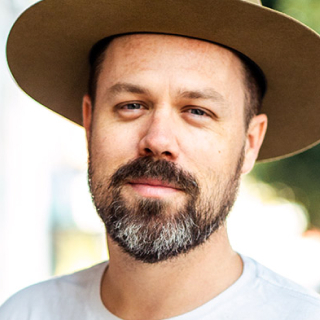
Max Baybak
Hello, hello out there. Max here, co-founder and chief growth officer at Influx Marketing, and today we're at the Aesthetic Society meeting here at the Miami Beach Convention Center. This is the annual meeting of the American Society for Aesthetic Plastic Surgery. Every year I walk the aisles and I end up spending most of my time chatting with industry peers and marketing-minded physicians, and I always walk away really feeling like I have my finger on the pulse of what's happening in our space.
So this year I thought it'd be fun to take it a step further and have those same discussions that I always find myself having, but do it in a podcast format so that I can bring them to you at home. So if you're like me and you want to be dialed in on what's happening within the world of patient acquisition and digital marketing for aesthetic practices, follow along, and I hope to bring you some valuable insights through these conversations that you can use to take your practice to the next level.
Can't take myself seriously. All right, let's roll with it.
All right, we're back, and I'm now joined by Dr. Stephan Baker, who's practicing here in Miami, Florida. He also happens to be a client of Influx. And Dr. Baker, thank you so much for joining us here today.
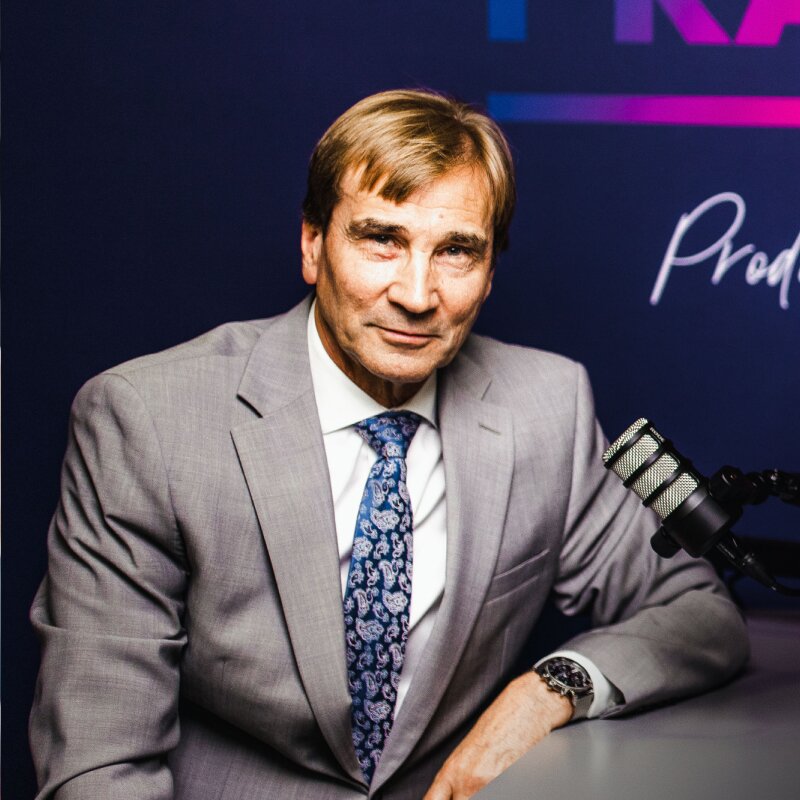
Dr. Stephan Baker
My pleasure.
Max Baybak
So we're right in your backyard here.
Dr. Stephan Baker
Sure.
Max Baybak
But it's not where you're originally from. Miami—
Dr. Stephan Baker
In the western part of Germany, before the wall fell, in Frankfurt.
Max Baybak
From Germany. Wow. And then you came to Miami by way of Manhattan?
Dr. Stephan Baker
I came to college. I was adopted by an American, gave me the opportunity to come to America. So I tried out American college life for a year. One year became two, then four, then applied to medical schools, ended up at NYU in New York. Did my medical training there, and then spent five years in general surgery, and then that took me till 1989, and then I came to Miami for plastic surgery residency with Dr. Millard.
So after I was here for about six months, I started liking the environment more than any place else I've ever lived, and I'm still here.
Max Baybak
And here we are, 30-plus years later. And I'm guessing Miami's changed a little bit since—
Dr. Stephan Baker
Uh, extremely, I would say. I mean, '89 was kind of like a small town, Miami— on Miami Beach there was really nothing going on. I mean, you know, the whole Ocean Drive thing was one-lane road. News Cafe was already there, but other than that it was just a quiet, quiet place. Nothing happening. You didn't even know you're on South Beach, you know. Nobody would know that. South Beach became South Beach later on.
Max Baybak
Yeah.
Dr. Stephan Baker
So it's just a beautiful place, beautiful beaches, and, uh, you know, in the early '90s we had the modeling industry down here, so Europeans, Germans, Italians, French— they were shooting down here. Gianni Versace moved here in 1990, built a Versace palace. Uh, that brought a lot of people down here, and then, I mean, it just started growing. Lots of New Yorkers, lots of New Yorkers. I mean, when I was out here on Miami Beach I would constantly run into people I knew in Manhattan.
Max Baybak
Oh, really?
Dr. Stephan Baker
So, you know, restaurants, clubs, and all that was kind of, you know— there was just a ton of people coming from New York, because it was a beautiful place.
Max Baybak
It is, it is. And there's been a whole new wave of growth.
Dr. Stephan Baker
Yeah, it's just tremendous, tremendous growth in the real estate market. Now we have big finance move to, you know, South Florida. They all live on Miami Beach. I mean, you know, billionaires. So, you know, really wealthy financial companies. That brings a whole slew of attorneys down— your big attorney companies, because, you know, they all need attorneys, attorney services. So one thing leads to another. And now we got tech happening. Tech is coming. I mean, everybody's here, you know. And everybody's— now we got the Grand Prix now, I mean—
Max Baybak
That's right.
Dr. Stephan Baker
You know, with F1, that does— you know, that's already a big statement, you know.
Max Baybak
No kidding. Lots of things going on. Okay, so this is your town now.
Dr. Stephan Baker
Has been for some time, yeah.
Max Baybak
Yeah, I know. But you're doing well.
Dr. Stephan Baker
Yeah.
Max Baybak
You're practicing here. Will you tell us a little bit about your practice, your focus?
Dr. Stephan Baker
Well, it's been for probably 30 years now aesthetic surgery, you know. My main things are face-lifting surgeries. I do a lot of, also, you know, rejuvenation-type surgery for after pregnancy, so tummy tucks and breast lifts, breast reduction. So those are my principal things that I do.
Max Baybak
Excellent. So as you know, and as we discussed a little before you came here, um, this podcast is about marketing.
Dr. Stephan Baker
Sure.
Max Baybak
And digital marketing.
Dr. Stephan Baker
Yep.
Max Baybak
But marketing wasn't always digital.
Dr. Stephan Baker
Nope.
Max Baybak
And being as you set up practice here in 1989, I'm sure you remember a time when marketing wasn't digital. I would love to pick your brain as a surgeon, as a person who's on the ground seeing these changes in the marketing world.
Dr. Stephan Baker
Well, I think the big change has really been social media. Uh, prior to 2005, marketing was, you know, the usual marketing. I mean, you'd see billboards on the highway, you'd see newspapers, magazines, et cetera. But, you know, once you got to social media, which makes marketing available to anybody who has a cell phone, uh, things kind of exploded. And if you just scroll through Instagram or Facebook, any of those platforms, you'll see non-stop plastic surgery, which just lends itself— it's a visual medium. Uh, there's a lot of interest, you know, especially, you know, in places like Miami, I'm sure West Coast, New York, and all those kind of places.
Uh, so, you know, marketing prior to social media was probably— it was always kind of like an important thing, but it wasn't an essential thing. So my marketing efforts really didn't start until social media came about, even probably more later than that, because fundamentally, as a physician, I'm against marketing. That's just never sat straight with me. I think you do good work and patients talk, and a referral of word of mouth I think to this day is the best referral. Most of my facelift, uh, you know, patients— you know, they talk. It's a certain group of people that do that type of surgery, and one person has a good experience, safe experience, and they tell somebody else, and they tell somebody else, and that's kind of how it works.
But if you ignore the internet marketing, the social media marketing— you don't get on, you know— you have to be out there. You have to exist on the internet. So, unfortunately, it's really not an option anymore, but it's really sort of an essential part of, you know, conducting the business side of your practice.
Max Baybak
Absolutely. I think, um, what you just touched upon— obviously things are different today, but I've been around a little while, and I remember when I first, a little more than a decade ago, started doing aesthetic marketing, there were internal struggles and debates from surgeons about, you know, is this ethical, should I be marketing. And you're right, there's no better marketing than word of mouth, and there's no better patient that you'll get than from the ones— yeah, yeah. But many surgeons, and I think this is kind of what you're getting at, have been sort of pushed into marketing because everyone around them is doing it. And at a certain point, unfortunately, the consumer maybe doesn't understand the nuances.
Dr. Stephan Baker
It's incredibly confusing for people, right? So I mean, as a prospective patient, there's so much information out there, and so much information is confusing.
Max Baybak
Yeah.
Dr. Stephan Baker
Especially if you don't have a medical background. I mean, how do you— this is— it's like that for other industries too. I mean, how do you find a competent lawyer? How do you find a competent financial advisor? I mean, unless you're in the industry, you don't really know what questions to ask. Uh, so it's all pretty darn scary for patients. But, you know, you have to have a presence in that space so that people can access you, you know. If you're just hiding in your office, nobody knows you exist. That's not enough.
And it used to be different, you know, in the past, because, you know, the numbers of people doing this type of surgery was a lot smaller. Uh, you know, now you have plastic surgeons, you have ENT surgeons, you have cosmetic surgeons, you know, you have all kinds of people that are in this market space. And so it's really important to have a presence and a differentiation. But what's very important to remember is that you've got to produce the result. You can't just tell everybody how wonderful you are, how great your work is, if you can't produce the results, you can't produce a happy patient. Marketing sooner or later will have its, you know, downfall. It can't solve those problems.
Max Baybak
Yeah, I mean, you've got to do this— you've got to know what you're doing to get the job done, because at the end of the day the patient wants you to do a job for them, and if you do it well, then you'll thrive long term. And if you don't, well, you know, that's the other side of social media, you know. If you don't do well, there's a real backlash.
Dr. Stephan Baker
It's a double-edged sword.
Max Baybak
No question.
Dr. Stephan Baker
Totally.
Max Baybak
So when you first set up practice, how would you acquire patients?
Dr. Stephan Baker
Uh, initially, it's just, you know, what I call the good old-fashioned way. I just ran initially to ten different emergency rooms, uh, so I just saw a lot of, you know, trauma patients, hand patients.
Max Baybak
Okay.
Dr. Stephan Baker
Yeah, and I spread my name by doing good work on those patients. I got known in the emergency rooms and patients started referring.
Max Baybak
Okay.
Dr. Stephan Baker
You know, "I saw this guy do this." So it's sort of like a very organic growth kind of thing. It's not a fast process. I mean, today I think, you know, doctors try to jump into the space and, you know, immediately get some fancy name for internet marketing, and then, you know, "the doctor so-and-so," "Doctor This." And, you know, it's sort of like, I guess, the new way maybe to procure patients. So it's certainly not, you know, what my mentors did. I mean, my mentor Millard was vehemently against marketing. He said, you know, marketing— you know, it turns the bum into a hero, but he's still a bum.
Um, so, you know, I kind of grew up under that influence, so I was very close-minded about marketing. But it was a different generation, so, uh, you know, you have to adjust with the times. And, you know, obviously, uh, you know, like I said, social media has just changed so much in so many industries.
Max Baybak
Yes. And you can't even imagine marketing, you know, without it these days.
Dr. Stephan Baker
No.
Max Baybak
Yeah. So that was a reconstructive practice you were building, running around to ERs.
Dr. Stephan Baker
Yeah.
Max Baybak
Were you able to build an aesthetic practice kind of—
Dr. Stephan Baker
Well, that comes gradually, yeah. So patients know you did a good job, you know, with putting that finger back together and fixing the tendon injury, putting that facial fracture together, et cetera, et cetera. So then they said, "Well, you know, I know this guy." And then, you know, patients started looking for you. They said, you know, "This guy has certain competence, he has training." And then they come in for cosmetic things. So that was a very slow organic growth, but a very solid growth, and, you know, it's kind of reputation building. You know, back then we didn't have reputation management and all that in the same sense. Yeah, you had to build it, you know, from the ground up. So things today, it's, you know, a much faster pace, you know, and everything sort of quote-unquote managed. So— different worlds.
Max Baybak
Different worlds. So speaking of different worlds, when social media sort of ushered in a new generation or a new paradigm—
Dr. Stephan Baker
Yeah.
Max Baybak
—what was the first thing you did when you finally embraced marketing?
Dr. Stephan Baker
Well, I mean, I asked around. Uh, you know, first of all, I looked around what other people were doing.
Max Baybak
Okay.
Dr. Stephan Baker
You know, so you have to always sort of benchmark yourself against, you know, competitors. Everybody has competitors. And, uh, you know, I was sort of hesitant. I'm still not a huge fan of social media, frankly, because there's just so much, you know, confusing— let's call it confusing, and not disinformation or misinformation.
Max Baybak
Okay.
Dr. Stephan Baker
Out there. Uh, I mean, everything's sort of glamorized and sensationalized, and, you know— so I just have a lot of hard time with a lot of those things, because at the end of the day I'm a total patient advocate. I mean, I will not do something unless I believe it benefits the patient. Like I said, I call that old school.
Max Baybak
It shouldn't be old school. Hopefully it's not old school.
Dr. Stephan Baker
That's what I think. I mean, I think if you're the patient, at some point you want to make sure that the doctor has your best interest at heart.
Max Baybak
Yeah.
Dr. Stephan Baker
Not, you know, adding ten thousand procedures on top of whatever else and doing things they don't need, operating on patients that shouldn't have surgery. You know, so there's a lot of conflict that I have with those things that I see in the industry, you know. But again, you have to adapt.
Max Baybak
Okay, so you adapted, and you have a flourishing practice, but without having to really be fully committed to social media programs like you—
Dr. Stephan Baker
You know, there's a bare minimum we have to keep.
Max Baybak
That's true. But it sounds like you're not all in on it, clearly.
Dr. Stephan Baker
No, no. I mean, what we do with social media is basically put up before and afters.
Max Baybak
Right.
Dr. Stephan Baker
And it's helpful. Someone can— someone—
Max Baybak
I feel that somewhere in the patient acquisition journey they vet your authenticity through going through social media, so you need something.
Dr. Stephan Baker
Yeah, you have to be there. If you don't exist, you don't exist. You don't exist, you know. So, uh, yeah, it sounds silly, but it's true, you know. But always, you know, this sort of, you know, romancing the patient and trying to be social with the patient, getting them to like you, and, you know, I think that's just— you know, there has to be a boundary between professional, you know, things and personal things. And, you know, I don't want the patient to be my best friend, and, like, you know, vice versa. I mean, yeah, you want to have a good rapport with your patients, but you've got to get the job done. You're working for their results, for their best outcome, you know. So, so much over the social media— what I see in the videos is just like, you know, schmoozing up to the patient, and, you know, like, yeah, yeah, you know. It's like, come on. It's not professional.
Max Baybak
I understand.
Dr. Stephan Baker
But that's how I think.
Max Baybak
I understand. So, but I think there's a lesson here, because we talk a lot about how you don't have to have a social media presence to the level that some of these people have in order to have a very successful practice.
Dr. Stephan Baker
Yeah.
Max Baybak
Uh, that may change, but as of now, uh, you can do very well with minimal social media presence. I think that's kind of a key takeaway here.
Dr. Stephan Baker
I think so. Yeah, I mean, but again, like I said, I have a lot of patient referrals.
Max Baybak
True.
Dr. Stephan Baker
As patients, uh, but you know, they will tell you that they saw your photos on Instagram.
Max Baybak
Yeah.
Dr. Stephan Baker
So they look. Everybody looks. So you have to be there.
Max Baybak
And I think it's a very appropriate thing to show your work, isn't it?
Dr. Stephan Baker
Yeah, I mean, with certain, you know, things blocked out sometimes. It requires you to be discreet, of course.
Max Baybak
But I think that's important. Patients want to see results.
Dr. Stephan Baker
That's right. You know, you've got to be there. And if you don't exist, you don't exist, you know. Unfortunately, it's true.
Max Baybak
So, before we wrap up here, this is the kind of final thing I want to ask you. Is if there's other surgeons that are in your shoes, maybe not so sure about marketing in this way, um, or embracing it— I know we're well into the social media era, I'm curious what's coming next, because it's all about to change, I feel like, again.
Dr. Stephan Baker
Well, change never stops. Change is the constant. That's life.
Max Baybak
So do you have any advice you would give to surgeons on maybe how to warm up a little bit about this and, uh, and our— and our, kind of, I'd say, embrace it?
Dr. Stephan Baker
The big advice I would say is stay professional.
Max Baybak
Okay.
Dr. Stephan Baker
You know, be professional, be ethical, you know, get good at what you're doing, because at the end of the day, that's what matters, you know. You've got to get good at certain surgeries. You can't be good at every surgery, but be good at the surgery that you are offering, and give your best to that patient, and do the patient right. Don't do things that the patients don't need because you make more money on it. Tell patients that shouldn't have surgery they shouldn't have surgery. And, you know, just be their advocate. You don't have to be their friend, but you need to be their professional advocate. And I think that's part of the mantra of being a physician. So I always think of, you know, being a physician first, plastic surgeon always second. Shouldn't be the other way around.
Max Baybak
It's very sage advice, and a very, very patient-centered approach, which is— that's how it should be.
Dr. Stephan Baker
It's worked, it's worked. Yeah, and I'm very happy. I feel great about my practice, and, uh, you know, I sleep at night.
Max Baybak
Wonderful. Well, thank you for sharing your wisdom with us and sharing your time with us. I appreciate you coming on the podcast.
Dr. Stephan Baker
Appreciate it.
Max Baybak
We should do it again sometime.
Dr. Stephan Baker
Pleasure.
Max Baybak
Thank you again.
Subscribe to Next Level Practices
Next Level Practices is the show where we discuss the ever-changing world of digital marketing and patient acquisition and bring you the latest ideas, strategies, and tactics to help you take your practice to the next level.