

Navigating the Future of GLP-1s and Wellness
w/ Dr. Jonathan Kaplan
19 minute view/listen


Jun 2026
Available everywhere you podcast



Live from The Aesthetic Meet 2026 in Boston, Erica Crawford welcomes Dr. Jonathan Kaplan for a conversation about the technologies, treatments, and trends reshaping patient care. As both a practicing plastic surgeon and the founder of DrWell, Dr. Kaplan brings a unique perspective on the intersection of aesthetics, wellness, telehealth, and healthcare technology.
Dr. Kaplan and Erica unpack the ongoing evolution of GLP-1 medications, the regulatory landscape surrounding compounding pharmacies, and the growing role of personalized wellness therapies. Dr. Kaplan also shares his thoughts on peptides, patient education, long-term treatment strategies, and why many of today's most important healthcare innovations are only beginning to reveal their full potential.
Full Transcript
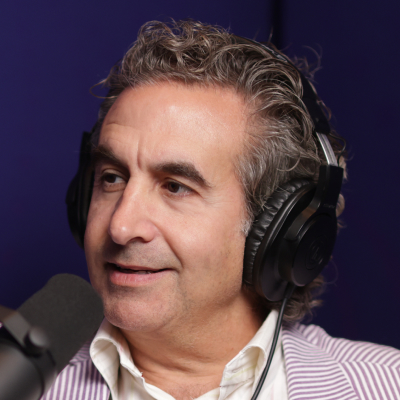
Dr. Jonathan Kaplan
This is kind of the new frontier, making pretty people feel as good on the inside as they look on the outside. It's not a fad. GLP-1s are not a fad. Peptides are not a fad. Now, maybe not every peptide is going to be around forever, but there's some that people are swearing by, and it's like eventually they'll be better studies, but right now there's just not really good clinical evidence.

Erica Crawford
I am here live with Dr. Jonathan Kaplan, who's also the CEO of DrWell, founder.
Dr. Jonathan Kaplan
Yes.
Erica Crawford
I'm so happy to have you on the podcast today live at The Aesthetic Meet. Welcome.
Dr. Jonathan Kaplan
Yeah, well, happy to be here. It's been actually a great few days. We had our DrWell corporate retreat here in Boston for the last few days. Uh, you know, obviously leading right up to The Aesthetic Meet. And uh, we uh did it over at the Four Seasons. It was pretty fancy.
Erica Crawford
Nice. I like it.
Dr. Jonathan Kaplan
A great retreat. We had some great speakers, uh, including myself, and uh, but also uh, we went to the uh Boston Red Sox game last night.
Erica Crawford
That?
Dr. Jonathan Kaplan
It was great. It— The rain held off and it was like this just nice cool weather. The Red Sox lost, but for us the purpose was to go to Fenway Park, and just— it was incredible.
Erica Crawford
You did purposely go to Fenway Park. You know, you don't have to be a Red Sox fan to go, you know.
Dr. Jonathan Kaplan
Exactly. Exactly. So, no, it was a lot of fun. We got some merchandise and uh, so I have something to take home to the kids.
Erica Crawford
Were they playing, uh, Philadelphia?
Dr. Jonathan Kaplan
Philadelphia, exactly. And actually one of the uh speakers at our retreat is this uh guy, Dr. Steven Klein. He's an addiction medicine specialist and he's one of the people that's on the forefront of using GLP-1s for alcohol use disorder. He came and spoke at the retreat. We're doing some collaborations with him, working with him to get an investigational new drug application with the FDA for our GLP-1 squared combination semaglutide tirzepatide.
Anyway, he's from Philadelphia. He flew in from Philadelphia yesterday morning to speak at our retreat, and he showed up to the game in a Phillies, uh, Phillies jersey. And they won.
Erica Crawford
That is beautiful. I love it. Speaking of GLP-1s, let's talk about all the recent, uh, 503A, 503B drama.
Dr. Jonathan Kaplan
Yeah, so for the 503Bs, you know, that's the pharmacies that are able to make bulk compounds of medication, you know, when there's a shortage, when there's not a shortage, they can make like a bulk compounds of like generic drugs. But if there is not a shortage, then they're not allowed to make commercially available drugs.
Erica Crawford
Right.
Dr. Jonathan Kaplan
And so that's why the 503B pharmacies, which are the ones regulated directly by the FDA, really have no legal pathway to have been making the GLP-1s since the shortages ended, you know, over a year ago.
Erica Crawford
Yeah.
Dr. Jonathan Kaplan
And the FDA, I guess the FDA was busy with a lot of other things, but then they finally have reached out to several of these 503B pharmacies and let them know that you got to stop doing this. And so Pro RX, BPI Labs, which are the big two of the big ones that I've heard of, they had to stop making GLP-1s. And so now everybody's rushing over to work with DrWell to find— because we have access to 503A pharmacies that are legally allowed to make alternative personalized formulations of GLP-1s. So, still can't make the commercial— you can't make a copy of the commercially available ones.
Erica Crawford
Got you. So 503Bs are out, 503As— well, they were always in.
Dr. Jonathan Kaplan
They're still in. They're still in. And so you can— that's why you can see them getting like, you know, formulations with B12 or B6 or glycine. People talk about how they're personalized, and I think it's probably better to say they're customized, cuz personalized is a little— I feel like we're lying to each other. You're not personalizing 100,000 doses of medications for your patient.
But the thing is, the reason— but it is a very legitimate, bonafide reason, that one of the ways GLP-1s work is delayed gastric emptying. So there's some less absorption of B12, B vitamins, cuz intrinsic factor isn't released adequately or isn't able to bind adequately to food cuz of delayed gastric emptying. So there's a potential for people to have a B vitamin deficiency. So that's why you add it in as an injectable with the medication.
People are worried about lean body mass loss with GLP-1s. Everybody knows about that. And so that's why you add glycine. It minimizes lean body mass loss. Or you just really work out. That's one way to minimize lean body mass.
Erica Crawford
You know what's funny? Cuz GLP-1s— everybody talks about the side effects of GLP-1s, and I'm like, they're just the side effects of massive weight loss, right? All of these things— it doesn't matter if it's a GLP-1. It just happens to be that GLP-1 leads to massive weight loss. But if you did gastric bypass surgery or something else and you had massive weight loss in your life, or you just went really hard on your exercise and diet and had a massive weight loss, the side effects are going to be the same.
Dr. Jonathan Kaplan
I agree. And one of the ones that's really mostly associated with GLP-1s is like blindness, that really rare NAION, which is the non-arteritic anterior ischemic ophthalmic neuropathy, NAION, N-A-I-O-N. That has been associated with GLP-1s, but the truth is that's really similar— and it's not the same pathophysiology, but it's similar to diabetic retinopathy— in that as people's sugars get better controlled, they have an increased risk of diabetic retinopathy, and that NAION. So, better control. So you think, "Oh, your sugars are getting worse controlled. Why wouldn't they get—" Anyway, it's opposite of what you think.
But even semaglutide, or what's the— people are going to associate with NAION, even that is really something about controlling your sugars better is leading to some of those ophthalmic issues. However, keep in mind that even that one, NAION, is like 0.2 to 0.4% over 20 years if you have type 2 diabetes. So it's extraordinarily rare. Anyway, but so yeah, going back to your point, it really is associated with just massive weight loss and controlling your sugars.
Erica Crawford
Controlling your sugars.
Dr. Jonathan Kaplan
Yeah. So, but that's what's going on with the 503A, 503B. But the big talk— and I just did a course about peptides. And before anybody thinks I'm like one of these influencers that's like talking about, "Oh, you got to do BPC-157," you know, gym bro— the thing I always say is that with peptides, at best they work, at worst they do nothing. And so I think they're dangerous.
They're— you know, there's these— you know, peptides are really proteins, but people are now just associating these uh short-chain amino acids as being specific type of peptides that replicates some of the normal processes in your body, like NAD, or BPC-157's found in stomach acid, helps with wound healing. Um, and I think that's one of the reasons the FDA is evaluating it now to make it compoundable again.
Erica Crawford
Yes.
Dr. Jonathan Kaplan
And they've taken it off the category two list, which means it's— which says you can't compound it if it's on the category— just, they've taken it off of that. They haven't put it on the category one list, but because there is this upcoming PTAC meeting in July where they're officially going to move it over to category one theoretically, cuz RFK Jr. is a big fan of peptides, that some of the 503A pharmacies we work with are taking the calculated risk saying that, okay, they've taken it off category two, there's not going to be an enforcement. We're going to make uh peptides. So now DrWell's able to source peptides, non-research grade, from 503A pharmacies for our providers. So that's been exciting.
Erica Crawford
Which I think is great because there's a lot of peptides out there. So when somebody asks me how I feel about peptides, how do I answer that question?
Dr. Jonathan Kaplan
Exactly. You got to try it.
Erica Crawford
You got to try it. And there's also some that I cannot attest to. I've not tried, or I've not seen others try, and might do nothing, or might be a waste of your money, or might not be. But I can take something like BPC-157. Now, I haven't personally tried it, but I do know of several people who have, and they swear by it. And uh, those people, they typically I would say are, uh, 40 and up.
Dr. Jonathan Kaplan
Yeah.
Erica Crawford
And do some— it's some sort of— some sort. Maybe not an athlete is an overstatement, but they at least go to the gym. They had a bum knee. They had a bum ankle. They had something that wasn't physically, uh, great, right? And they swore by the BPC for that ankle or that knee that—
Dr. Jonathan Kaplan
And—
Erica Crawford
You used it— back?
Dr. Jonathan Kaplan
And I'm like into boxing, kickboxing. I go, you know, a couple days a week with a personal trainer. I'm also doing like hot Pilates, yoga, and things like that. And I would say that with the BPC-157, and if you combine it with TB-500, that's the Wolverine blood— that, I feel like maybe my muscles are not as sore the next day. I'm able to work out five, six days a week and not as sore.
And then with NAD, I feel like that raises my energy level when I'm working out, that I can maintain a higher level. Now, is it placebo? Is it just in my head? Maybe. But I know that I'm not— it's not, as far as I know, it's not making me like sick.
Erica Crawford
Making you sick. Also, I'm just going to say something. There's nothing wrong with the placebo effect.
Dr. Jonathan Kaplan
There's nothing wrong with the placebo effect.
Erica Crawford
Very validly and medically shown that how you are psychologically and mentally, it can affect your body. It can make you heal. It's a magical effect.
Dr. Jonathan Kaplan
And with this audience that we're with today at the aesthetic meeting of aesthetic plastic surgeons, that if you're— you know, if your whole career has been about making people pretty on the outside, this is kind of the new frontier, making pretty people feel as good on the inside as they look on the outside. And so I definitely think it's— it's not a fad. GLP-1s are not a fad. Peptides are not a fad. Now, maybe not every peptide is going to be around forever, but there's some that people are swearing by, and it's like eventually there'll be better studies, but right now there's just not really good clinical evidence.
Erica Crawford
No, I don't think it's a fad at all. I remember a lot of people when GLPs were first being popular— and not first being popular. They've been around for a long time. They're just safe for weight loss.
Dr. Jonathan Kaplan
That.
Erica Crawford
Okay. I knew a lot of people who thought it was a fad. And I, from day one—
Dr. Jonathan Kaplan
You knew it.
Erica Crawford
Like, absolutely. This is not a fad. So did you. I was like, this is huge. This is arguably— as some people might disagree— our next antibiotics. I mean, obesity causes a lot—
Dr. Jonathan Kaplan
Well, I've always said it's bigger than penicillin.
Erica Crawford
Yeah, it's either bigger or it's the biggest medicine since penicillin. At least that.
Dr. Jonathan Kaplan
I sort of jokingly say it's bigger than penicillin, is that penicillin was only good for bacteria. GLP-1s are good for reducing cardiac risk factors. It's good obviously for reducing your appetite. As I've talked about, it's going to get indications for alcohol use disorder and other— like even maybe a meth addiction, other addictions. So yeah, it's— and the fact that it's chronic kidney disease, uh, fatty liver.
Erica Crawford
Well, cuz it fixes the visceral fat, right? So—
Dr. Jonathan Kaplan
Yeah, so that's an interesting thing that's coming out about a peptide, is tesamorelin— tesamorelin, and however you just want to, uh— it's like that actually is a peptide that's actually got FDA approval behind it. And it's for HIV lipodystrophy. So people with like fatty— a fatty like visceral fat, what you're talking about on the inside around the intestines, depending on what audience is listening to us. Um, tesamorelin is FDA indicated for visceral fat. So people who are losing weight on GLP-1s, they still may maintain some of that visceral fat. Other people it may take care of it.
But uh, that's one of the stacks that we're now offering, uh, with DrWell. We just revamped our entire platform. It's like this beautiful— it's a work of art. And what we've done is we've really focused on making it possible to do more stacks, meaning that you send a patient a link, they pay for a stack that includes a GLP-1, uh, BPC-157 and tesamorelin for visceral fat, and maybe hair force one. So four different medications. You send them a link, they pay once, and what happens is that auto-generates four different prescriptions in the back end of the DrWell system. Then the provider logs in, submits those four prescriptions, and they're distributed to four different pharmacies potentially, because you might be in a state where only that pharmacy can ship it to you. So that's something that people cannot do with an EMR or whatever.
Erica Crawford
Absolutely.
Dr. Jonathan Kaplan
So anyway, so that's something we're doing more of, is tesamorelin for visceral fat in addition to their GLP-1.
Erica Crawford
Wow.
Dr. Jonathan Kaplan
So that's— and again, I love an FDA-approved drug.
Erica Crawford
It's a lot easier.
Dr. Jonathan Kaplan
I— yeah, exactly. I don't feel like I'm selling snake oil, and I just— I love the data. And even if people have a distrust of the FDA, that's fine, but there's one thing to be distrustful of the FDA that does all of this research, versus why go the opposite direction and have distrust and then trust something that has no data?
Erica Crawford
Yes, yes, yes. I couldn't agree more. Um, you know, one thing— this is a little bit of a— I don't know if it was a debated topic. I'm curious what you guys think. Do you feel— and I've talked to a lot of different plastic surgeons, a lot of different medical providers, cuz obviously not just plastic surgeons that do GLP-1s or provide them— um, do you feel that GLP-1 always has to be a life commitment?
Dr. Jonathan Kaplan
So that's, uh, really interesting. That was the first thing I thought of when you said that people were thinking GLP-1s were a fad and you from the beginning knew. One of the things I felt like I knew from the beginning is that people are really preoccupied with whether you take it for the rest of your life, because I think people were just thinking about it in the terms of weight loss. And so, while maybe for weight loss, maybe you don't need to take it forever, but I think that's not necessarily— you shouldn't have to put that kind of undue risk on yourself saying I got to get off in six months. You may take it forever for weight loss, but you might not necessarily have to take it every week for the rest of your life.
But in addition to that, the cardiac risk factors, the fact that we're taking aspirin a day, which that is not even recommended as much anymore.
Erica Crawford
No, no.
Dr. Jonathan Kaplan
So I do think that people will choose to take these the rest of their life, but not just for weight loss. I think there's, uh— while one study came out about semaglutide not actually working that well for Alzheimer's, that was oral semaglutide and they didn't do it— it wasn't injectable.
Erica Crawford
For sure.
Dr. Jonathan Kaplan
So I think people will be taking it for many more other things for the rest of their life, and choosing to.
Erica Crawford
I think you're right. I think it depends also on what caused them to need the weight loss, or what got them to the GLP-1 in the first place. Like, uh, you're my GLP-1 doctor. I know you can't say anything— hip. I'll happily say that, right? And uh, I like how you dose it, cuz you dose very much based off the person and where they're at. But for me, you know, I got pregnant. I gained 75 pounds when I was pregnant. As soon as I was done being pregnant, I wanted to lose the weight real fast, right? So I used the GLP-1 to lose the weight real fast, but I don't still take it, right?
I have what I call emergency doses in my fridge, right? And uh, I think my— yeah, yeah. I took my— my last emergency dose was after Christmas, right? So Thanksgiving, Christmas, I did a little 2.5, but that— you know, we're now in May. Yeah. And then— and I would say last year probably was similar, where there was maybe once a quarter or once every six months or so an emergency dose here or there.
And for me, you know, like I said— and I know that it's here for 10 years, Dr.— hearing this, because I just keep the vials in my fridge, and maybe some of them are expired, and I dose myself at this point. But I have, you know, I have the materials, right? That's, uh, that's all me. It's on anybody else, right?
Dr. Jonathan Kaplan
And that's definitely something I think we're getting past, to think that you have to go up in dose every month. I know that's the name brand drug regimen, but yeah, people are definitely— it's the coolest drug in that sense, because you're so used to your doctor saying, "Okay, like, take this medication this often, this dosage." Like, you know, take two Tylenol. But this is so personalized. You just— people know it. They get this personalized— they get this very intimate relationship with their GLP-1, and they know what their body needs or doesn't need.
Erica Crawford
Cuz I would— somebody argue that too. You can lose less weight at too high of a dose, too. It's such a funny thing. It really depends on your own body. You find a sweet spot and you're like, "Okay, that's my sweet spot." And that's what it be. And that's why I've never been— I'm a fan of telehealth, don't get me wrong, but if there's not like a bit of personalized care that goes into it— they're not, like, the huge, huge big brands. Cuz there's no personalized care that goes into that.
Dr. Jonathan Kaplan
Definitely not. That's not their business model.
Erica Crawford
It's not their business model. But for telehealth for a practice like yours or DrWell, like, that's fantastic, cuz there does need to be some personalization. There needs to be some communication back and forth, because, um, you know—
Dr. Jonathan Kaplan
Exactly what we're doing is we're taking that technology stack that makes it so easy to enroll with a DTC platform, but putting it in the hands of providers, because you're not going to go out and build that technology. So we're basically allowing you to help— we're leveling the playing field so that your customer service interface is as good and as slick and as easy to enroll as the DTC platform, but of course they're connected with an actual medical practice.
Erica Crawford
Way to do it. And that's, you know, I definitely, you know— everybody has friends, family, etc. on GLP-1s at this point, right? One in eight Americans, uh, which is wild, right?
Dr. Jonathan Kaplan
Um, I'm always like, "No, no, bro. No his and hers." Cuz you just— they're not going to help you get your dose right.
Erica Crawford
And also—
Dr. Jonathan Kaplan
You have to just— you don't want to— as much as we like to rapidly lose weight, there is a health concern about, are you getting the amount of protein and nutrition you need? There is a certain point where, like, the deficit— ultimately the calorie deficit, right?
Erica Crawford
Right.
Dr. Jonathan Kaplan
Um—
Erica Crawford
But—
Dr. Jonathan Kaplan
There's too much, right?
Erica Crawford
Forget that the way these really work best for your entire life, lifespan, healthspan, is working out, eating a high protein diet. So there's definitely those reminders that you get from your medical practice, your provider.
Dr. Jonathan Kaplan
Exactly. And making sure that you eat the protein to help at least— the muscle loss is going to happen and— by the way, you mentioned pregnancy, and I— not to get into whether you were taking them before or after pregnancy, but that's— fertility specialists are starting to recommend it ahead of time because it's improving the quality of the egg and the number of eggs. It's really fascinating.
Erica Crawford
I have an argument that is not going— no OB is going to back me up on this. Every one of them is going to say, "No, you need to stop it before." I personally think you should take GLP-1s until you find out you're pregnant. Meaning, a lot of doctors are out there telling you to stop them three months, six months, etc. before. They tell you to stop before you start trying.
Dr. Jonathan Kaplan
They're basing that on animal studies, and they don't—
Erica Crawford
Have—
Dr. Jonathan Kaplan
Yes, they don't have any prospective human studies, which of course they're not going to have a prospective— but I believe there is actually enough retrospective data now showing that all these people—
Erica Crawford
All those Ozempic babies.
Dr. Jonathan Kaplan
All the Ozempic babies, they got pregnant because they didn't think they were— well, Ozempic baby can mean two different things. It can be either because you got pregnant because your birth control pill wasn't effective because of the delayed gastric emptying. But the truth is, what I've found to be more common is that they weren't on birth control because they thought they were infertile, but it was really due to obesity. They would lose weight, they became more fertile.
And uh, so there's enough retrospective data now, I would argue, that shows that all the people who got pregnant by being on a GLP-1, and then once they stopped in that first trimester, that there's definitely clearly no statistically significant increase in major congenital malformations. So—
Erica Crawford
So, too. I would— you know, like I said, I would argue that you don't need to stop it until you find out that you're pregnant. I would almost slightly argue that it's not the end of the world to use in your first trimester. I don't know. That's it. That's a— now I'm talking about something that's really controversial.
Dr. Jonathan Kaplan
Right, right. But the other thing that makes it less controversial is that the FDA has already come out and said that if you're taking a GLP-1 for type 2 diabetes, that it's okay— but it's a discussion between you and your provider— but they absolutely didn't say you've got to stop it if it's for type 2 diabetes.
So that's kind of— that reminds me a little bit of the breast implant fiasco in the '90s, you know. Oh, we can't use this because of connective tissue diseases, while the whole time they were allowing people to use silicone implants in breast cancer reconstruction. They're essentially saying, "Oh, well, you've got cancer, so it doesn't matter if you get lupus." Um, so this is the same kind of thing, that if they're allowing it for type 2 diabetics, that they're obviously making a risk-benefit ratio determination, but if they were causing tons of major congenital malformations, they would have stopped it. They would have stepped in and stopped it, exactly.
Erica Crawford
This is not Accutane, you know.
Dr. Jonathan Kaplan
Right, exactly. No— oh wow, that's a great— that's a great comparison. That's a great comparison.
Erica Crawford
It's just not—
Dr. Jonathan Kaplan
That's when you— that's— you definitely don't do that. You don't do that. You don't do that.
Erica Crawford
Well, man, we could talk forever, but it's been so great having you on. And uh, we're definitely going to get another webinar in the books— we'll get one on the books.
Dr. Jonathan Kaplan
Looking forward to it.
Erica Crawford
We'll do it. All—
Dr. Jonathan Kaplan
That's awesome. Great talking to you. Thanks for having me.
Erica Crawford
To you. Okay, bye.
Subscribe to Next Level Practices
Next Level Practices is the show where we discuss the ever-changing world of digital marketing and patient acquisition and bring you the latest ideas, strategies, and tactics to help you take your practice to the next level.