
AI, Patient Flow, and What's Next
w/ Angela Chatterfield of Elite Med Listings
27 minute view/listen


Aug 2025
Available everywhere you podcast



In this episode of Next Level Practices, we sit down with Angela Chatterfield of Elite Med Listings to get her hot takes about the world of aesthetic medicine.
Angela shares how she's using AI tools to help plastic surgeons streamline their practices without sacrificing patient care, and we dive into her candid thoughts on contact management, why she thinks the traditional "funnel" is dead, and how the future belongs to aesthetic practices that embrace technology without losing the human touch. Angela brings decades of experience and a refreshingly blunt perspective on how med spas and plastic surgeons can thrive in a changing industry, so if you're a provider navigating AI, marketing, and patient expectations in 2025, this one's for you!
Full Transcript
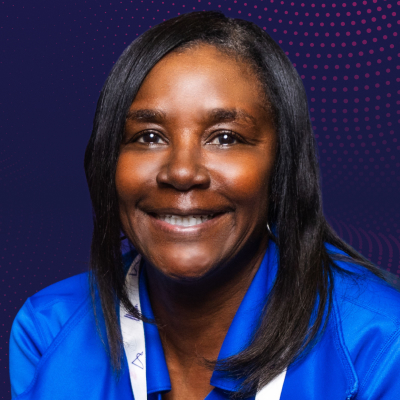
Angela Chatterfield
We all know viral doesn't necessarily equate to money. So, we have to find better ways to do business. And really, it's still the old tried and true, right? The best way to do business is to be the best at what you do and do it well.
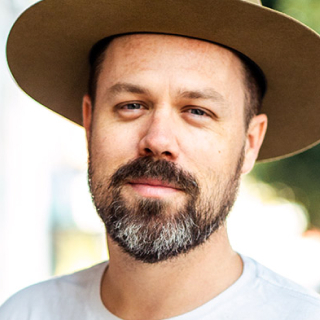
Max Baybak
We're back here at the Aesthetic Meet 2025 in Austin, Texas, and I'm sitting down with my friend Angela Chatterfield from Elite Med Listings. Did I get it right?
Angela Chatterfield
You did.
Max Baybak
How you doing, Angela?
Angela Chatterfield
I'm doing awesome and amazing. Thank you for asking.
Max Baybak
Yes, of course. Some, uh, I haven't seen you in a few years. So when you just walked up — she just walked up and I saw her and I said, "What are you up to?" And I said, "Actually, never mind. Sit down and tell me, and don't tell me out here in the aisle. Tell me on the podcast." So tell us what you're up to.
Angela Chatterfield
Super excited. Um, we have, uh, you know, we always have always been in contact management. So I'm, you know, I'm always big on patients need to be screened, they need to be qualified, they need to understand what they're coming in for. So, what I've done over the last few years is really, um, gear myself up for AI because I knew AI was going to be really awesome for doctor's offices if they were willing to embrace it, because one of the biggest costs is always going to be employees. And this is not about cutting employees. It's about maximizing who you have.
So, what we did with AI is we now offer an AI bundle which includes AI voice, which AI voice can be programmed however we customize it. So it could be, for example, right now in some of my offices we use it as kind of a screener. So it asks height, weight, do you smoke? You know, a little bit of, oh great, when are you thinking, considering your surgery? Reminds them that cosmetic surgery is typically not covered by insurance. How are you planning to pay? And then once that information is gathered it says, hold one moment, I'm going to have you speak with our senior patient coordinator. Boom.
So depending on the situation, a lot of times in offices especially now, um, they may only have one person. So when the patient coordinator is in with the doctor, those calls are going to voicemail and voicemail is so 1990s. Only 30% of the people will ever leave a voicemail. They're just not going to do it. So doctors are losing, um, patients all the time and just don't know it. Um, so I'm super excited to offer that. That's part of the bundle. So it's AI.
The other part of the bundle is a chatbot. So I know everybody, oh, I have chat. And we had chat too. We used to do live chat where we would actually be the people on doing the chat. Um, the chatbot is even better because the chatbot has, um, like for instance on my site we have about, oh, almost 5,000 FAQs. So there's a lot of questions patients ask over and over again that, depending on how your receptionist feels, we don't know what answer they're going to get. It doesn't matter how many. I've been in this industry since 1994. I've done countless trainings and every time I leave it's good for about two days. So, you know, it's just not realistic to think that they're going to give the same answer all the time.
So, what I love about the chatbot is we can always continue to train it to — if somebody asked a question and we don't know it, we add it to it. So, we keep training it. And machine learning is awesome and amazing because it retains what you teach it and it does the same thing all the time. So, I love that. So, it includes a chatbot for the website.
And then the last thing it includes — well, the second to last thing — is review manager, and that's also AI. So, it's responding to reviews on Google. And the biggest, I don't want to call it fight, but issue that I've had with, uh, plastic surgeons is them understanding you need to respond to the reviews. And what I get, the pushback I get is, "Well, what about HIPAA?" And I'm like, "What about it?" You're not going to respond, "Hey, Betsy, why'd you say I did your lipo horrible?" Of course, you're not going to do that. What you're going to say is, "Well, I'm not allowed to respond directly to any patient issue, I can let you know that whenever you have liposuction, blah blah blah blah blah." You educate.
So everything in plastic, from my perspective, is you need to educate, inspire and influence — everything that comes out of your mouth, every contact you have. So contact management has changed, Max, because now everybody's a contact. And one of the biggest drawbacks of plastic surgery is you just don't know where they are in the, what I call, funnel, which is a fake funnel, I call it. People don't buy in a funnel. And now consumers have more power than they've ever had. They can block you. You have to ask permission to send them anything. I mean, come on. What happened? I mean, we have to, you know, you can't send them an email. I can see that you're calling me. They have all the power. The only way you get the power back is understanding where they are in the process, not a funnel. And understanding that it's not always going to go around. Sometimes it goes across, sometimes it goes sideways.
Max Baybak
It's not a linear funnel, let's say.
Angela Chatterfield
Exactly. You don't know where they're going. So, to that point, the last thing that it includes in the bundle is a feature listing in our directory. My baby, so excited about it. It's called themedchat.com. We have our own theme song, our own dance and everything.
Max Baybak
Oh, I want to hear the theme. I want to see the dance.
Angela Chatterfield
Dot com. That's where it's at, you know. So, yes. So, we're so excited about it because it's patient-facing.
Max Baybak
Cool.
Angela Chatterfield
So, we have the only directory that includes the American Society of Plastic Surgeons, the Aesthetic Society, and the American Board of Cosmetic Surgery in one platform. Now, some doctors said to me, "Well, I don't want to be in there with the cosmetic surgeons." Well, guess what? You're on Google with them. Duh. It's not for you. It's for the patient. And the patient doesn't know the difference. So, we often complain that we're so mad they don't understand the value of the board certification. Whose fault is that? That would be ours.
Max Baybak
Yeah.
Angela Chatterfield
And when you tell them in an appointment, their eyes glaze over because we haven't made a big deal out of it in the right space. So, the nice thing about the directory is it's free to be listed. It's free to have your listing confirmed, which would be a basic listing. It doesn't go by name. It goes by geography, because think about it: if I already knew that I wanted to contact you, I'd be contacting you. So, it's by geography and it helps people find the right doctor. But, you know what's really super is if they're featured, which they get with the AI bundle, they can put pricing, promotion, we change it, we talk to — we talk, they can call us, we know you, so we can talk about you. So, it's a great bundle. So, I'm super excited. So, that's —
Max Baybak
Okay, that's so cool. You're up to a lot. I have so many questions. So, the way that Angela and I first became acquainted was we had a mutual client. As she mentioned, she's in lead management. Is it contact management?
Angela Chatterfield
Contact management.
Max Baybak
I think of it as lead management, but you're being more embracive with the word contact management. We had a mutual client that was using her services to help follow up on certain leads that came in through chat. I think with that client, they had made the decision to just do one channel and they were answering their phones, but you could do it all, which I later learned. And I got to know her and, you know, we always are looking at people who are providing services that our clients could need and, um, try to help refer to useful, helpful services that augment what we do.
So, we got to chatting and I said, "Oh my gosh, we have to do a podcast." And it was when I was just starting this podcast, which, you know, admittedly sometimes I'm inconsistent. In the very beginning, I was extremely inconsistent and I never got around to editing and putting out our episodes. So I was so glad when you sat down here that we could kind of do an update on it. But what she was doing at the time, it was — and I was so interested to interview her because there was a lot of thoughtful implementation as to that whole patient journey.
Angela Chatterfield
Yes.
Max Baybak
You had worked in practices.
Angela Chatterfield
Yes.
Max Baybak
You had run call rooms. You created your own call rooms. You created phone rooms for other people. You've been through many different waves of technology. And now here you are looking at AI. And I noticed that you were very thoughtful about implementation of all these things. And how do you create a web that can capture a patient and keep track of them throughout, uh, all the different touch points or resting points that they may be at? You customized or built your own software to do all of this stuff, which is really cool. So that's what she's talking about here with the AI. So the first thing we're talking about was that phone and then there's chat and then there's the directory.
Angela Chatterfield
Yeah. And there's the review manager. So everything is contained in a dashboard. They get their own dashboard. They can look at everything and see what's happening. Um, if somebody calls in, they see everything about who called. It captures all that information. They can add to it. So, it really gives you an opportunity to take them through the process, because one of the biggest mistakes I think plastic surgeons make is thinking that they can do that through their EMR. And even though they say they can, once you blend the two, now you have to abide by what HIPAA says. And it is very limiting when it comes to marketing.
Let's face it, marketing is however you can get them. You know, if you got them at a wrestling match, good. Doesn't matter where you got them. But you can't do that when I have to be constrained to worrying about you checking all these boxes so that I'm protecting you and you're not a patient. Yeah. You're a contact, you know. So, even when we used to get — I remember, Max, when we used to get photos, um, way before people were getting photos from people who were prospective patients. And I remember doctors going, "But Angela, you can't do that." I says, "Who?" These are the same people that put their picture on Facebook. Their naked butt. They're not a patient.
Max Baybak
Yeah. Yeah.
Angela Chatterfield
Yeah. And they're like, "Oh, now everybody does it." So, we were kind of the first to really get in and really understand that if we get in early, and also if you invest the time to really qualify and screen the patients — our calls were typically 22 minutes — then you have the 0.05% no-show rate that we had.
Max Baybak
That's cool. And you have the 70% close, because you had a whole pre-consult phone process, right, which I really liked. That was really cool. And you were telling me back then how the attendance rate, or whatever you want to call it, the no-show rate was dramatically improved because you do that, right?
Angela Chatterfield
Very low. And even when people, when doctors, some of my offices would come back, and because the patient would say, "Well, Elite scheduled" — I mean, not the patient, the patient coordinator would say, "Elite scheduled them." But, you know, I track everything. That's the thing, guys. I'm teaching these docs, track everything. So it only happened once. As soon as I say, "Look," then they go, "Okay, you're right."
Max Baybak
Yeah. Okay. So with the — you're saying you're actually using AI voice on phone as the first point of contact and then figuring out different —
Angela Chatterfield
You can use voice, you can, because we don't know where — this is the point. This is why I did the directory. I did it for the patients, but also I did it because you don't know where they're going to look. I mean, I don't know if you remember, remember my favorite job that I had and where I came from — Yellow Pages.
Max Baybak
Oh, you did tell me about that.
Angela Chatterfield
And I was the sales director. I mean, I made a lot of money and it was a great business and I understood. And what I loved about the Yellow Pages was that people were only there for one reason. They weren't being distracted by the grandbaby's picture or somebody influencer.
Max Baybak
Well, Google's the closest thing we got now.
Angela Chatterfield
Right. Right. But you know what the difference is? When I would go and sell Yellow Pages to a roofer, I sold them under roof. I sold them under gutters and downspouts. Now Google broke it down so bad that you had to guess which word they were going to pick and pay for them all. So what happened was everybody pays more.
Max Baybak
Yeah. No, you're right. They sliced it and diced it.
Angela Chatterfield
Yep.
Max Baybak
So you're finding voice work. So when I call, I'm talking to an AI voice and then it'll route me to the right person at the appropriate point, if that's how you want to set it up.
Angela Chatterfield
You can also set it up that it makes the appointment. It depends on — I can. Yep. I can customize, I can make it all the way through. Yep. I can customize it however the doctor wants.
Max Baybak
Or you don't want to use AI at all.
Angela Chatterfield
Or if you don't want to use AI at all and you just want to get the directory, that's fine, too. They can just buy a featured listing.
Max Baybak
Well, but will you guys — you offer a call management service with no AI where a human can pick it up?
Angela Chatterfield
No.
Max Baybak
Or you're not doing that.
Angela Chatterfield
I don't do that anymore.
Max Baybak
Because that's what you were doing at the time. So, oh, so you don't do that.
Angela Chatterfield
I still have some legacy accounts.
Max Baybak
Okay.
Angela Chatterfield
But I'm not doing that for a lot of reasons. I mean, the reality from a business perspective, it was very hard to scale because every time we got new clients, I had to go train. A lot of training, which again, the AI — yes, I had to train, you know, five patient coordinators.
Max Baybak
Yeah, I do think AI voice will come into a place where it's good enough, and perhaps they're going to tell me it already is. I've seen some that are really close, but I'm being a little bit picky. Also, where the industry, our clients, particularly plastic surgeons, are okay with it, and that's a meeting point that's tricky. It's a real precise bullseye to hit with those two things converging. But I also think right around the time it hits, we're also going to see that the patient population just doesn't use the phone very much.
Angela Chatterfield
That's exactly right. And I will say that's why we did the bundle, because even with our directory, they can call us too, 'cause I have patient coordinators that can talk to them, but we still get eight calls, maybe seven. The chat, crazy.
Max Baybak
Yep.
Angela Chatterfield
I also have a cost estimator on the website. So they can do a cost estimator. That gets activity, but very few calls. But the chat —
Max Baybak
But even the chatbot has to be set up and trained in a way that matches our audience. Everybody can do chat, but everybody can't do chat.
Angela Chatterfield
Well, what you want to make sure of — so one of the things, for example, is some doctors have chat on their site and the first thing they do is pop up and ask me contact information. People hate that. Yeah, we program our chat usually to answer the question and ask for your first name, then answer your next question and, "Can I have your last name?" You know, so it's very conversational and it's also very, very, uh, relational to the patient. Yeah. You know, if I ask your height and your weight, no matter what you say, I'm going to say, "Thank you so much for sharing that." Most people, if you're not in this industry, they don't know to put that in there. But it's very important. If I told you I'm 5'4" and I weigh 280, I want you to say, "Thank you for sharing that."
Max Baybak
Yeah. Not next.
Angela Chatterfield
Yeah.
Max Baybak
Yeah. Keep that human conversational touch there. Can you train your AI specific to each practice? You talked about 5,000 FAQs.
Angela Chatterfield
Yes, I do.
Max Baybak
Those may be general ones.
Angela Chatterfield
Some. So those FAQs that I have are in the Med Chat, which is my directory website, so that I needed to have a lot. But when I go into a doctor's office, I really try to dive into what is important to them. So for example, I have some doctors who won't do surgery on anybody over a 34 BMI. I have other ones who say, "No, I'm willing to go a little higher." I have some that will do medical clearance on patients even if they're 45. I have other ones that say, "No, I don't do it." So it's all different. So once again, I took all of my things that I was already doing. So, you know, we always used to put in the ops manual, because we had all these doctors. So, we had an ops manual with each tab for a doctor. Now, it's AI. So, what's cool is I can help more doctors.
Max Baybak
Absolutely.
Angela Chatterfield
I was so limited before. I couldn't really help doctors and I had to charge them a lot of money because I couldn't make a living otherwise. Now, this is very inexpensive. I mean, very inexpensive. And what I always say is, we don't have a choice in our industry if we don't find ways to do business and lower the overhead.
Max Baybak
You just have to.
Angela Chatterfield
If you don't lower the overhead, we'll be out of business. Because, I mean, here's my example that I give because I'm in it so long, right? So when I started in, uh, plastic surgery, we used to charge $4,500 for breast augmentation. We had our own surgery center and it was saline implants. There are places in the country right now you can get a breast augmentation for $5,500 with silicone implants. You do the math. 1994, 2025, right? Who do you think loses in that story?
Max Baybak
The doctor.
Angela Chatterfield
Exactly.
Max Baybak
Not the implant company.
Angela Chatterfield
Exactly. Yeah. And that's why we need to find ways on our own to reduce our overhead.
Max Baybak
Right. Yeah. Very, very good sort of zoomed out view of the whole industry. That's interesting. And speaking of that, I kind of want to — I'm asking each of our guests here because I want to hear from their unique perspectives what they're seeing. So, are there any major industry trends you're seeing in 2025, or let's say the last 12 months, good or bad?
Angela Chatterfield
Yeah. Wow. You know, so, couple things. One, we already talked about it, right? To me, the most important: the consumer has all the power.
Max Baybak
That is so huge.
Angela Chatterfield
And I think our response to that can't be love them to death and just love up on them and tell them how great it is and get a concierge and have someone give them water. No.
Max Baybak
Wow.
Angela Chatterfield
It's summed up so much because it doesn't change their response, right? If I have all the power, just because you're nice to me, I'm still acting like somebody who has all the power.
Max Baybak
You just lost your water.
Angela Chatterfield
So, we have to find good ways to respond to that. So, that would be, to me, the biggest trend, because that affects us the most. I know most people think I would say AI. Your patients are already using AI. The ones that are going to beat you, that you're not going to see, are the doctors that say, "Hey, I'll embrace it." The ones that don't, you'll be Sears and Kmart.
Max Baybak
Yeah. Yeah, that's cool. That's a good take. I like that. What do you see for the future of the aesthetic space?
Angela Chatterfield
I think what people would like to believe is that, um, things will just get better. I mean, I still have this, you know, a lot of doctors still tell me, "Well, you know" — they still remember their COVID days. And I'm like, stop it. That's never going to happen again. Let's just put it into perspective. You had people with money they didn't earn, no place to go. I mean, I literally had people calling me that wanted a breast augmentation that couldn't even spell augmentation. So, I knew that that was a fluke. Enjoyable one, but it was a fluke. When's the last time someone got five offers on a house? So, let's just know that that's never going to happen again.
But what will happen is we'll just pivot and we'll adjust. I moved my business to AI because it could serve more for less. So, it cost a lower point of entry for doctors to work with me and for me to be able to help them. So we now know that patients — good enough is good enough. So what I think has the future of aesthetics is going to be us pulling ourselves, what I consider, out of the gutter, because I think that we've allowed ourselves to be so commoditized that I just can't tell you we'll do a better breast aug.
How many breast augmentation pictures could you look at? I mean, at some point you have to say, what can I do to be better? And being better doesn't mean dancing in the surgery center with two implants on your head. That might work a couple of times, but it's not going to work forever. We all know viral doesn't necessarily equate to money. So, we have to find better ways to do business. And really, it's still the old tried and true, right? The best way to do business is to be the best at what you do and do it well.
Max Baybak
I agree. And we really make an effort at Influx to help people because, like you said, I can't tell you that I'm the best. I can't tell you that it's going to be better. What we try to do is show. And when the patient comes to the website, when they come into the practice, they already know, because the social proof is there, the credentials are there, and there's other things we can do. Designing a really beautiful online presence, having a really well put together online presence that just sort of makes it so there's a tacit understanding that I'm dealing with someone. It's through branding and there's a lot that has to happen there to make that happen. But that's something that we try to do, because the minute you have to say it, you're not a luxury brand anymore.
Angela Chatterfield
No, but I like what you just said because it is branding, but I call it subtle branding. And I think your subtle branding is so superb, because pushing it in their face — I mean, and I will tell you that the one thing I've always loved about you, Max, is, you know, my favorite phrase: you keep it real. And even though it's not the popular answer, because there's, you know, we're at the show and there's lots of marketing people that are going to tell you before and afters are where it's at. And Max has never said that to me. Not once. You know, I don't know if you know that. You've never said that. Which is one of the reasons why I loved you, because that's not where it's at. How many, like I said, how many breast augmentations can you look at?
Max Baybak
You know what's so funny? When we look at the analytics, it is the number one place that people spend time on a website. But you know what I care about more? Getting you to the website.
Angela Chatterfield
Exactly.
Max Baybak
And getting you to make a decision to click, you know, from that homepage into the next thing. I do, because that's a given. And I can't do much on that. I need that, you know, and I can't — just like I can't market someone who does poor work, or I can't market a product people don't need. So, we're trying to partner with great doctors, great surgeons, and I'm leaving that up to them. We do give them coaching on how to do an excellent before and after. And we have lots to say on that, but it's not where I spend my time. It's not where my head's at.
Angela Chatterfield
I know. I like that though, because that is what they've been told all their time. Oh, go on Instagram. Have — you know, the lifetime of a photo on Instagram is 20 seconds. So, even though they sit there and say, you know, on the website though, which I love, you're right: get them to the website, they're going to spend more time there because they're parked looking at how you — you've been very strategic about how, like you said, you coached them how to put them there, how they should. That's the deal, right? A lot of these, um, a lot of marketers now are saying, "Oh, websites are dead." And I never thought that. I knew more. I knew that Max wouldn't say websites are dead. They're not dead, because where else are they going to go?
Max Baybak
Yeah. Also, it's self-serving to say, you know, it would — there's a lot of things that we see coming and changing right now and people are scared. AI is one of them. And it's very easy to also say, well, I don't think websites are going to die because I'm a marketing company. I don't want websites to die. I have a hotter take, which is that I think marketing is going to die entirely, almost. But not as we know it.
Angela Chatterfield
As we know it. Thank you. You took the words right out of my mouth. Yes.
Max Baybak
And I don't think websites will stay the same. But I know absolutely with total certainty that there will always be good reason to own real estate of your own in the digital sphere. And it will change what it looks like.
Angela Chatterfield
Yes. Yes. And you're stupid if you don't think it will, but you will never — we were in church right now, I would say amen.
Max Baybak
I love this. Speaking of keeping it real, that's you. That's Angela. This is why I was excited to sit down with her today. 100%, um, websites will change, but it is always going to be a must to own your own piece of real estate.
Angela Chatterfield
Absolutely.
Max Baybak
In the digital arena, if you will.
Angela Chatterfield
Absolutely.
Max Baybak
And yeah, before and after photos on Instagram and all these places, fantastic. But your overall brand is what I always tend to be focused on. Those things are important, too. It's funny you say I've never said that. I'm like, it's true. When we talk about analytics, I do go look — we do a talk where we sort of break down trends and we look at where people are spending the most time on their websites, across all of our websites, hundreds and hundreds of websites. Where are we seeing? And we see a lot in — people spend time there. But I just see that as, we talked about a funnel and it's not a linear funnel, but I see that as a later point in the funnel.
Angela Chatterfield
Yep. Um, and look, and let's face it, I mean, we have a different consumer now. Remember, they have all the power. So, they don't have a problem looking at a bunch of pictures. It doesn't mean they're going to buy from you, right? And I think that that also is a big change, right? So, even when I said I admire you so much for not saying that — because so, I have a podcast, and it's a patient podcast. I mean, it's all about the patient and we talk to the patient. And I say, "Angela keeping it real," and we talk about before and afters all the time.
And when you look at it from a patient perspective, if I'm looking for a plastic surgeon and I've looked at 10 websites and 10 before and after photo galleries, I don't remember whose. And what I often say to patients is, it's no different than if you're on Match.com — they don't take the worst picture and put, you know, this is me after I had the flu, right? They pick the pictures, right? So, how would I be confident and say to a patient, judge your decision solely on before and afters? It's a factor. It's not the factor.
Max Baybak
Yeah. And I think it might be a big deciding factor. It's helpful when you can see in a before and after gallery someone that you feel like represents you ethnic-wise, age-wise, gender-wise, procedure.
Angela Chatterfield
Consistency.
Max Baybak
Yeah. Those things.
Angela Chatterfield
That's what I tell them. Look for consistency. And also remember, they're not consecutive photos of their surgeries, right?
Max Baybak
Yeah.
Angela Chatterfield
So, it's not to down them. And I don't want to leave this podcast with doctors thinking, "Oh, she said before and afters suck." No. If you don't have good ones, you're in trouble. You do need them. And I think everything you said is so true. It's not the thing, it's a thing.
Max Baybak
Well, I think as a marketing company, I think if you're saying that, you might not have enough of a strategy to surround great before and after photos with. That's the only thing I would say, really.
Angela Chatterfield
Oh, wow. Max, you ought to write a book.
Max Baybak
Okay. Maybe one day. Maybe one day. I don't know. Um, here's my last question for you, because I've been trying to kind of ask certain questions and get different points of view. Well, you know, I had an AI question, but we talked about AI, so I think we're good on AI. I was going to ask kind of how you see AI affecting the industry, but you're embracing it wholeheartedly already. And doctors, you're afraid. I mean, you're doc— I mean, I was going to say you're right. Doctors are afraid.
Angela Chatterfield
They are. But what else? I mean, we've been in this long enough. What aren't they afraid of? We've always had a situation where they're afraid. Everybody — it's not them, it's everybody.
Max Baybak
They take a cautious approach, maybe even more than some, and for good reason. And they sort of dip their toe in a little bit more cautiously, and make sure that everything's making sense before they go all in. But then when it's all in, everyone's all in.
Angela Chatterfield
Well, and what we have to understand is that, especially now, we've always kind of said, "Oh, they're patients. Don't call them customers. They're patients." And we kind of danced around the consu— but now I 100% they're consumer patients. And if you are treating them any differently and you're in a cash pay business, good luck on that one. You will die. We have to treat them what they are: consumer patients. They make consumer decisions.
Max Baybak
Yeah.
Angela Chatterfield
And if you're not embracing AI and everybody else is, you'll get swallowed up. Walmart does all of them. They make all these consumer decisions before they pick you.
Max Baybak
Right.
Angela Chatterfield
And if you think that they walk in and have a different idea, they don't. They think they're the gynecologist.
Max Baybak
Yeah. They're not going, "Oh, this is like—"
Angela Chatterfield
No, because we don't take insurance. We automatically put in that cash box. We don't have a choice.
Max Baybak
Mhm.
Angela Chatterfield
We do not have a choice. If we don't embrace it, it will pass us by.
Max Baybak
No. And I think the current and next generation of surgeons are really thinking about it that way. But it wasn't that way not even that long ago.
Angela Chatterfield
You know, it's funny, because I just did a, uh, a podcast about informed consent. And what I talked about was when we started, we used to literally have a video room. You had to sit in the video room. You had to watch a 15-minute video that came from the American Society of Plastic Surgeons. For each procedure, you had to initial it, and then the doctor saw you and then you went in and got undressed. Guess what hasn't changed? The procedure hasn't changed. The risks haven't changed. But we skip all those steps.
Max Baybak
Yeah. Interesting. Very different.
Angela Chatterfield
It's very different.
Max Baybak
Okay. Last question for you here is, what advice would you give just to the industry as a whole?
Angela Chatterfield
We have the best industry. We're so blessed to be able to work in an environment where we really do get to call the shots. We really get to say, "No, you're not a good candidate. We're not curing cancer here. No, I'm not going to do surgery on you." And other medical specialists can't do that. So, we really do get to pick our patients. So, as we widen the net, we don't widen the net and say, "I'm going to lower the bar." No, we widen the net and say, "You know what? You can do this. It may not have been what you thought you were going to get when you walked in the door, but this is what I can do for you."
And if we embrace patients and help them understand that we don't expect them to know what they want — it's our job to help guide them. Remember: educate, inspire, and influence. Let's start doing more. I think doctors have been told, "Oh, you're supposed to educate." No, they didn't come to you for education. They get that on the internet. They don't need you for that. What they came to you for is inspiration and influence. Help them. Influence doesn't mean you're robbing them. It means I'm helping you to feel — that's what we do, right? Feel good about who you are. Know that when you walk in the room, you might be 65 years old, but you're the hottest looking person in the room. It doesn't matter that you're hot for 65. You're hot, period, right? That's what we get to do. Who gets to do that?
Max Baybak
Yeah, we have the best business in the world. Yeah, that's cool. Well, thank you so much, Angela. I appreciate you sitting down. I could talk with you for a long time. I like picking your brain, but I think, uh, this has been a good little snippet. Hopefully people have gotten to know a little bit more who you are, and why I do think — you said I keep it real, I would say that you deserve that trophy 100%. I knew you would be a fun interview, so I appreciate you sitting down.
Angela Chatterfield
Sweet. Thank you so much.
Max Baybak
Thank you, Angela. Take care.
Angela Chatterfield
Thank you. Bye-bye.
Subscribe to Next Level Practices
Next Level Practices is the show where we discuss the ever-changing world of digital marketing and patient acquisition and bring you the latest ideas, strategies, and tactics to help you take your practice to the next level.