

Redefining Aesthetics as Preventative Healthcare
w/ Dr. Armando Davila
14 minute view/listen


Jun 2026
Available everywhere you podcast



Recorded live at The Aesthetic Meet 2026 in Boston, Erica Crawford sits down with Pittsburgh plastic surgeon Dr. Armando Davila for a thought-provoking conversation on the future of aesthetics, wellness, and preventative healthcare. Together, they explore why the industry's biggest opportunity may not be the next trending treatment, but a fundamental shift toward proactive care and long-term health optimization.
Dr. Davila challenges the common perception that aesthetic medicine is purely cosmetic, arguing instead that skin health, appearance, and wellness are deeply connected. He shares his perspective on why the best aesthetic outcomes have always been natural-looking, how social media has distorted public perception of plastic surgery, and why "aging gracefully" doesn't have to mean ignoring available tools and treatments.
Whether you're a practice owner, provider, or industry leader, this episode offers valuable insight into where aesthetic medicine is heading—and why the future may be less about beauty and more about helping patients live healthier, more confident lives.
Full Transcript
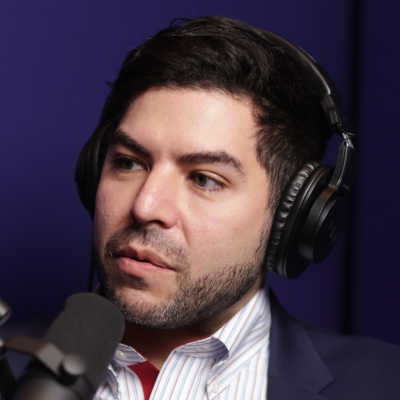
Dr. Armando Davila
The biggest problem in all of health care — let's step back from aesthetic medicine, all of health care — is that medicine was designed to treat a problem that was already there. I think the next big thing in medicine is getting ahead of reactivity. Being proactive.

Erica Crawford
I'm here with Dr. Armando Davila and we are here to talk about things aesthetics.
Dr. Armando Davila
Yeah, things aesthetics. Well, should I get started?
Erica Crawford
Yeah, well, let's see. Well, first off, I want to talk about, like, what do you think is the hottest thing in aesthetic medicine, or what is not the hottest new thing in aesthetic medicine right now?
Dr. Armando Davila
Not the hottest thing. The, you know, the not hot thing, I think, is obviously, uh, the overdone, right? And I think that's pretty obvious to everyone, and one of the things I see on social a lot is, the minute someone looks overdone, right, and or feels like they obviously had, quote, plastic surgery, plastic surgery becomes a naughty word. It's a bad thing, okay?
Uh, Anne Hathaway's hot right now, okay? Because of Devil Wears Prada, everyone's like, "Oh my god, Anne Hathaway looks beautiful. She hasn't aged a day, blah, blah, blah." It's like, you think Anne Hathaway hasn't had something done? Okay, it doesn't have to be surgical, it doesn't matter. Like, she has been maintaining herself —
Erica Crawford
Mhm.
Dr. Armando Davila
— and now everyone says, "Oh, that's awesome," right? And they give her accolades for that. And so other actresses, other actors go, "Well, I guess I should do what Anne Hathaway is doing," which is, sorry to break it, guys, plastic surgery, right?
Erica Crawford
Right, absolutely.
Dr. Armando Davila
And so, um, that's the misconception, which is it becomes a naughty word when it looks bad —
Erica Crawford
Mhm.
Dr. Armando Davila
— and it looks — when it's great, no one wants to say the word out loud, but that's what's happening. And so I think that's the problem or the worst thing in aesthetic medicine right now. And so, you know.
Erica Crawford
Absolutely. And some people here — uh, we know we're here at The Aesthetic Meet, right? — are saying it's kind of like a new thing to be, oh, be more subtle, don't be overdone. It's a big thing. Uh, what's your take on that?
Dr. Armando Davila
Yeah. My take is that that's kind of BS, right? Like, it — people, talented people in this industry, uh, especially board-certified plastic surgeons, people who know what's going on — there's never been the goal of, like, let's make this look — let's make someone look weird or like a freak, you know? Like, we've always wanted that approach.
The problem is, and as the market in the aesthetic marketplace has expanded, you have lack of training, lack of discipline, a lot of misconceptions about things, and it's moving hot, right? I mean, exosomes were in for like 35 seconds, then people started doing weird stuff with it. Now they're out, right? Cuz got granulomas, all sorts of problems. Now we're with, I don't know, name a thing. Uh, peptides —
Erica Crawford
BPC 157.
Dr. Armando Davila
Yeah, BPC 157, okay? But it's all experimental use and you can lose your license over it. What?
Erica Crawford
[snorts]
Dr. Armando Davila
Whatever. And so, I think that they're losing the — what is it, the saying? — the forest for the trees here. Um, to me, the thing that should be hot in aesthetic medicine, in all this sort of stuff, is what I think is called preventative medicine. And —
Erica Crawford
Yes.
Dr. Armando Davila
I'll explain what I mean. To me, the biggest problem in all of health care — let's step back from aesthetic medicine, all of health care — is that medicine was designed to treat a problem that was already there, right? Uh, you get older, you get osteoporosis, you have to wait till you have the osteoporosis to start the whatever, the medication that prevents that. Um, you wait till you're already balding or losing your hair to get on the hair treatments. Uh, you wait until — name a thing, right?
And if we want to say my hot take on medicine in a nutshell, is that's where insurance comes in. They have you by the proverbial, you know, thing, because you're already sick, you already have osteoporosis, you already lost your hair, and then it's like, oh well, insurance, help me or not, right? I think the next big thing in medicine is getting ahead of reactivity, being proactive.
Erica Crawford
Yes, I agree.
Dr. Armando Davila
So, how does that tie into aesthetics? Your skin is your largest organ on your body. It is a representation of your health. It's not just about beauty, it's not just about outward appearance. It is something that you should be taking care of. No one's going to go and say, "Oh, you know what? You shouldn't take that statin. Like, you should just let your heart age gracefully."
Erica Crawford
Mhm.
Dr. Armando Davila
Right? Come on.
Erica Crawford
For sure.
Dr. Armando Davila
Right? And so, why are we doing that to our skin? Why are we doing that to our appearance? We want to live not just longer lives, but better lives while we live on this Earth, and just letting things sort of go gracefully is not really —
Erica Crawford
No.
Dr. Armando Davila
— the — I mean, wouldn't you think?
Erica Crawford
No, I think longevity is where it's all about right now in general, right? Like, it's preventative medicine, as you said, it's longevity, it's health, and I would argue that a lot of what we do in aesthetics — it really ties in all together.
Back in the day, I remember people would come and go, "Hey, I have a wellness clinic and I have a plastic surgery practice, and I want to do these two separate websites." And back in the day, we'd be like, "Oh yeah, it makes sense. Two different audiences, two different patient base. Ooh, the wellness guys aren't super into the aesthetic stuff." And you know, that has completely changed. I'm like, one website, absolutely —
Dr. Armando Davila
One thing.
Erica Crawford
— one thing, it's interconnected, it's all combined, and to some degree, I would argue that we can thank GLP-1s for that. That was the beginning of, to me, the true merger of wellness and aesthetics a couple years ago.
Dr. Armando Davila
Thing is, GLP-1s aren't new. They've been around since the '90s. So, why do you think it's happened all of a sudden?
Erica Crawford
Because I think, if we're weight loss specifically — weight loss opened up the door of a bunch of new patients who had never touched aesthetics before. All they thought about — and for people who are particularly obese and looked at, they were never like, "Hey" — some do, some do, I'm not saying not — I'm just saying, in a lot of cases, we're not thinking about Botox or injectables or a tummy tuck or breast lift or breast aug or anything in our aesthetic space.
Then they went in, they had this amazing miracle transformation with GLP-1s over the last couple years, and then they go, "What's next?" And that's where — that's where we come in. I would say it's just the beginning of that huge merger.
Dr. Armando Davila
You know, I would argue — back to my statement — is back in the day when we started having weight loss surgery, right? Again, weight loss surgery was something you did for people who were sick.
Erica Crawford
Yes.
Dr. Armando Davila
Who were already obese. They were already sort of sick. And now — exactly. Reactive. GLP-1s, now proactive, right? And yes, some people are taking it reactively to care for their disease, but some people are linking that into proactivity. That's where the peptides come in. That's where all this stuff comes in.
And so, I think you're absolutely right, and I've been thinking about this for some time, right? It's one journey. It's one vision. It's really about caring for the person from very early on, from the minute things start to break, you know, in our 20s.
Erica Crawford
Mhm.
Dr. Armando Davila
We got to be thinking about, how do we maintain those systems? Uh, I mean, we probably used this analogy before, right, in your med spa marketing. You wouldn't — you wouldn't go buy, you know, a Porsche and then not take it for its, you know, whatever, oil changes, right? You'd keep it maintained. And so, you only have one life to live. You got to care for it. And this idea of sort of — I think that idea of sort of, like, "Let's just age gracefully" is kind of out. People say it, but it's not —
Erica Crawford
Completely out.
Dr. Armando Davila
It — it just isn't. And it's not about aging, like — you can age — it's not about beautification. I hate that concept.
Erica Crawford
— gracefully and use aesthetics. I think that's the — I'm like, they're not mutually exclusive. It's just, unfortunately, there's enough people, celebrities, influencers out there with, unfortunately, some cases, bad work. So you think that that's what aging with aesthetics looks like. And it's just not — that's not it.
Dr. Armando Davila
And that's what I think Rod was trying to say when he was saying, "Oh, we want to get back to hidden. We want to get back to natural." It's not that we're going back to it. It's that how we're cross-integrating it with our life is really the future of aesthetics.
And, um, and I do think that it's going to be a tough regulatory environment. Um, right? Because almost everything in our system, in our medical system, right — think about the FDA. You want to get something approved through the FDA, you have to prove that it treats a disease.
Erica Crawford
Yes.
Dr. Armando Davila
It's a reactive process. That's how you get that done. And so how do you get things pushed through regulatory pathways that's just, hey, to prevent disease?
Erica Crawford
It's challenging. I mean, that's what all the peptides are struggling with right now, right?
Dr. Armando Davila
And so there might be good medicine in there. It also might be a bunch of voodoo, right? And we don't want to do that. We don't want our providers to provide a bunch of snake oil. Uh, but we — our whole system is sort of built from the ground up a little bit in the wrong way, and —
Erica Crawford
I mean, it honestly — just the American health care system. It's not even just aesthetics. It's kind of, as you mentioned earlier, like, you get a serious disease, you prevent it afterwards. I think about this all the time, you know — I have cancer that runs in my family. And in my head, I feel like at a certain point, if I want to get a CT scan, or I want to, like — I should be able to just get it easily covered by insurance. I can't.
Dr. Armando Davila
Can't.
Erica Crawford
So what am I stuck with? Okay, now I have to get the whole Prenuvo, you know, spend a few grand and get body scans.
Dr. Armando Davila
That's crazy. But let's say you do it. Let's say you have the money, you buy the Prenuvo.
Erica Crawford
Yeah.
Dr. Armando Davila
What happens next? When your scan shows something, now you're going to take this scan that you produced on your own, and —
Erica Crawford
Insurance will cover something.
Dr. Armando Davila
Hopefully insurance will cover it, or you're going to take it to some doctor, and nothing's interconnected, so they're going to be like, "Well, uh, I got to send you for a new CT scan, because, uh, you know, you got it from —"
Erica Crawford
They won't try — let's be real. They will send you to a new CT scan.
Dr. Armando Davila
Yeah, exactly.
Erica Crawford
At least hopefully then you have some ammo to maybe get something. But it's crazy, and a lot of people out there, they can't afford that.
Dr. Armando Davila
Afford it.
Erica Crawford
— afford that, and I've always had such a huge disagreement with it, cuz some things are preventative. Like, you can get mammograms or some things for certain types of cancer.
Dr. Armando Davila
A law got passed.
Erica Crawford
Cuz a law got passed, and honestly, I'm going to be blunt — outside of what, mammograms and colon, you know, there's —
Dr. Armando Davila
I can't — I went to — I'm a little bit nervous about that. I went to try to go get a colonoscopy. I'm 39. Nope, I got to wait my year.
Erica Crawford
Right? That's what I mean. So I'm like, okay, you got a colonoscopy, which — that will happen if you're old enough. You got mammogram — also, that will happen if you're old enough or have the genetics for it, you know? But that's about — that's about it. There's not really scans for anything else that you can get, which —
Dr. Armando Davila
Is wild. — talked about, and for me and my organization, right? I really — I think about accessibility.
Erica Crawford
Mhm.
Dr. Armando Davila
And when I say accessibility, right — again, none of this stuff is inexpensive, and health care is not inexpensive. I understand that. But people are spending all this money on, you know, their insurance, all this stuff, for the day — what? — that something then breaks, right? And we're totally forgetting about, right, just going to get your oil changed, right? Don't forget about that part. And that's where this sort of comes in, and I want to make sure that that is as accessible as possible to people.
Erica Crawford
Yes.
Dr. Armando Davila
Um, and it's hard when the whole system is sort of rigged in the opposite way. Uh, but, uh, that's kind of my whole mission, and I hope that that becomes, I think, the mission of all of aesthetics — that re- restructures it from just, hey, this is about looking pretty — which it's not. And the idea that we cannot forget — plastic surgeons at their core, uh, you know, Gaspare Tagliacozzi — the roots of plastic surgery is form and function, right? It's, yes, look — like, we can't forget about the function part, which was always at the root of the organization.
Erica Crawford
Absolutely. And just to add to that, you know — and I love the way you think. I love the way your practice is set up, because you're so — aesthetics is health care, right? And that is just on the forefront of your mind. And I can't help but think about some of the things that have been labeled as purely cosmetic that are not.
Dr. Armando Davila
Correct.
Erica Crawford
Like, I — you know, I want to have one more kid. But when I'm done having a kid, I have to get a tummy tuck. You could fit your whole hand in between my abs right now. Like, the diastasis is that bad, right? My first kid was an emergency C-section. She was very large, and I was left with pretty bad diastasis, which frankly happens to a lot of women, particularly if they have C-sections, particularly if laboring and then an unplanned C-section, right?
Dr. Armando Davila
Is pretty brutal.
Erica Crawford
Right? But it's, uh — but that's not covered by insurance, not really.
Dr. Armando Davila
Sure.
Erica Crawford
You know, it's not something that — and I'm not saying even that it should be. I'm just saying that it isn't, really. A lot of what we do in aesthetics isn't really purely cosmetic.
Dr. Armando Davila
Correct.
Erica Crawford
It's just getting you back to what you were before. That's all it is. That's all you're trying to do. It's like, I want my — you're getting a breast lift, you're like, I'm just — I was there at one point, I'm just trying to get back there. I want [laughter] to try to get back. It's —
Dr. Armando Davila
Yeah, it's tough, right?
Erica Crawford
Yeah.
Dr. Armando Davila
And it's back to that whole — it, the, um — there was a great talk by, gosh, I can't remember his name, but he insisted that reconstruction — like, when we think about pure reconstruction, like in facial transplant —
Erica Crawford
Mhm.
Dr. Armando Davila
— we don't just reconstruct so that the guy can drink from a straw again or doesn't get, like, dry eyes. We want him to look like a human again so that he can interact with the world. So, reconstruction also is a form of aesthetic surgery. And I think the reverse is true, too.
The problem we have is obviously starting to link that with a financial issue, right? Like, back to my car analogy, right? It's like, you get insurance for your car in case you total the car and you need to, like, care for that catastrophic event. And we've let that — we've let insurance companies sort of come into the entire process from start to finish.
And you know, we're not going to fix that, right? But we at least can try to start — or at least not tomorrow. But at least we can start moving towards the idea that providing preventative care — and aesthetic care is a form of that preventative care — can start to move the needle.
Erica Crawford
Absolutely. Well, thank you so much for doing the podcast today.
Dr. Armando Davila
I'm glad to see you again, and —
Erica Crawford
Glad to see you.
Dr. Armando Davila
Uh, well, we'll have to chat more.
Erica Crawford
Yeah, we'll chat more.
Subscribe to Next Level Practices
Next Level Practices is the show where we discuss the ever-changing world of digital marketing and patient acquisition and bring you the latest ideas, strategies, and tactics to help you take your practice to the next level.