

Non-Linear Patient Acquisition & How AI Will Disrupt Aesthetics
w/ Tom Seery of RealSelf
28 minute view/listen


May, 2023
Available everywhere you podcast



For our latest episode, recorded live in Miami Beach at ASAPS 2023, we spoke to one of the cartographers who helped map the aesthetic patient journey — RealSelf Founder and Executive Chairman Tom Seery.
Tune in to hear how Tom built a platform that became the go-to advisor for consumer-based medical aesthetic decision making and learn how RealSelf has evolved alongside the behavior and needs of today's aesthetic consumer. Stick around for a glimpse into how artificial intelligence and ChatGPT stand to disrupt aesthetic patient acquisition — all this and more on the latest episode of Next Level Practices.
Full Transcript
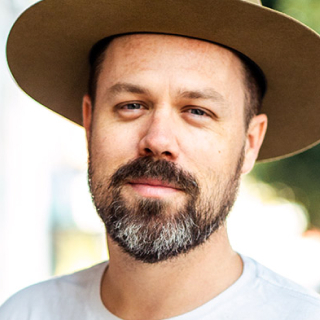
Max Baybak
Hello, hello out there. Max here, co-founder and chief growth officer at Influx Marketing, and today we're at the Aesthetic Society meeting here at the Miami Beach Convention Center. This is the annual meeting of the American Society for Aesthetic Plastic Surgery. Every year I walk the aisles, and I end up spending most of my time chatting with industry peers and marketing-minded physicians, and I always walk away really feeling like I have my finger on the pulse of what's happening in our space.
So this year I thought it'd be fun to take it a step further and have those same discussions that I always find myself having, but do it in a podcast format so that I can bring them to you at home. So if you're like me and you want to be dialed in on what's happening within the world of patient acquisition and digital marketing for aesthetic practices, follow along, and I hope to bring you some valuable insights through these conversations that you can use to take your practice to the next level.
Can't take myself seriously. All right, let's roll with it.
Okay, we're back, and I'm very happy now to tell you that I'm joined by Tom Seery, who is the founder and chairman of RealSelf. Tom, thank you so much for joining us. It's great to see you in person.
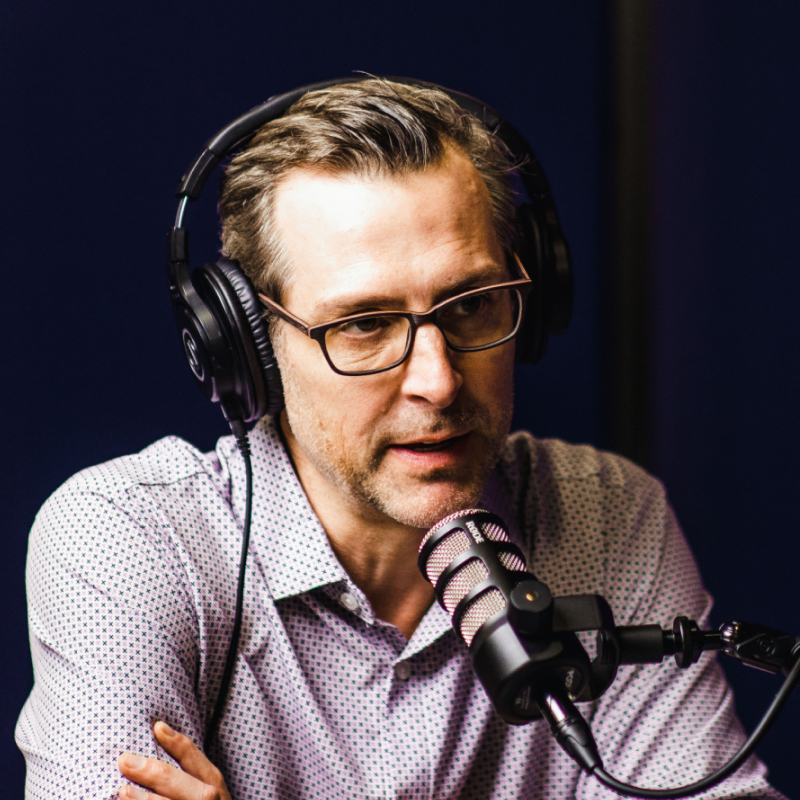
Tom Seery
In person.
Max Baybak
So what Tom is referencing here is that, when we first met, he made actually a big announcement on one of the early episodes of the Technology of Beauty, hosted by — which is, uh — we have our branded Technology of Beauty water here, a little product placement.
Tom Seery
Very happy. New Year show, I like it.
Max Baybak
Always. I do. You got to give the shout-out to Grant and T.O.B.
Tom Seery
Yeah.
Max Baybak
But, uh, you made a big announcement back then on one of the early episodes, but it was during the pandemic, and you joined us by way of Zoom. And I remember meeting you — through the little — I leaned down and introduced myself, and that's how we first met, and we talked about maybe coming on and doing our podcast at one point. Now, here, it's finally happened.
Tom Seery
We just had to let a pandemic pass by us.
Max Baybak
And a little matter where the pandemic had to get past that.
Tom Seery
That's true.
Max Baybak
But I really appreciate you taking the time to sit down with us, um, for — will you just briefly — because this is sort of going to be a truncated interview, of course, from a normal podcast episode — but will you just briefly kind of tell us a little bit about yourself and your background? And of course, uh, we know that leads to the founding of RealSelf. But abbreviated background.
Tom Seery
Yeah. I've — I, um — I'm named Seery, so I get a lot of interesting moments at check-in at hotels, like, oh — like, hey, I gotta turn my phone up — I say, "Hey Siri." But, uh, um, my, uh, background is tech. I've been in the technology innovation space for almost my entire career. I always wanted to be an entrepreneur as a kid — you know, like, you know, that kid who's always selling something on the corner or at your door, or something — just constantly trying to find a way to, you know, make a buck. And, uh, you know, whether it's a paper route or, uh, you know, a garage sale, or selling something my dad didn't know I had — offer him.
Um, RealSelf, uh, is a journey that I've been on for — well, it's been 16 years, I guess, um, which makes me feel really old. But also I'm really proud of the legacy of what we've built and the relevance it carries even today. We've intercepted over 100 million consumers last year, across 15 countries, multiple languages. And I think we still are living by what my dream was, which is to make the category of aesthetics more accessible, to make it something that wasn't stigmatized, that it empowered patients to tell stories, and doctors to have a format which elevated them and didn't drag them down into the muckraking and all that stuff.
Hard thing to pull off — it's not always perfect, but, um, I have no regrets, and I have enjoyed what it's done for me, my family, my friendships, um, and how I think I've been able to help a lot of small businesses and people get safer, better outcomes.
Max Baybak
Yeah, that's wonderful. And I would agree that it's definitely helped to popularize and broaden the awareness of the subject of aesthetics in the consumer lens, I guess.
Tom Seery
You know, when my friends saw me start this, they just thought I was crazy. They still think I'm crazy. But, um, this idea, they thought, was like — why would somebody want to share this very private, very personal decision on the internet? And now, here we are, and that seems kind of silly, right? Social media has blown that up, and, um — so we were really — and it wasn't easy. But it's kind of exciting to see, you know, that it's just collapsed this asymmetry that existed, between, you know — the only way you got information was you had to go into a practice. And it's made for smarter patients.
But it's also made for — um, Mike, we're at a trade show — it's a big industry now, and it's gone mainstream and global, and we've been at the cusp of that. It's been rewarding, but also, um, you know, it's always a learning moment for me, for sure.
Max Baybak
You were very early. And being early — timing is everything in business.
Tom Seery
It is.
Max Baybak
Uh, you were very early. But that speaks — that kind of connects right to the next thing I wanted to bring up, which is kind of the evolution of the business from then until now. A little backstory to it: I got into aesthetic marketing, uh, 12 years ago, and pretty quickly I would talk to our clients, and they were interacting with RealSelf in one way or the other, and they were definitely aware of it — whether they were paying for placements or they were answering questions. And I know the industry — I know that the business has evolved since then. I'd love to hear about that from your perspective. But I will say, whether it's email or I'm browsing around the site, it's the best content repository, or whatever you want to call it —
Tom Seery
Database, yeah.
Max Baybak
— about these procedures, all in one place, about this industry, from consumer-facing content.
Tom Seery
That's — let's make sure — thank you for that. It really is.
Max Baybak
Thank you. But I'd love to hear about the evolution, from surgeons and practice managers, and, uh —
Tom Seery
I really talk about — it's less about the evolution of RealSelf; it's more the evolution of the consumer and how they make this decision. Um, it remains a very lengthy purchase decision. Uh, our data shows over a quarter of all patients have spent more than five years considering, searching, looking. And what they're trying to find is a pathway to a doctor or practice they can trust with their body, face, or smile. And it's, uh, a thoughtful exercise, and a difficult one, because it's a very, um — it's a very strange thing to be researching for something that you don't need to be doing. You know, it's just completely optional. It's — it's, um —
So that journey, when I first started the business, was somewhat linear. You know, we've actually looked at our data, and it's like, step by step, and RealSelf was a hub, or a stopping point, or we had a big relevance point in what was somewhat more of a linear — I go from this stage to this stage — your classic marketing funnel kind of thing. But through — not RealSelf, but the fragmentation — it really goes back to the consumer, and how we, you know, get informed, how we do things like podcasts and so forth — and I actually used podcasts as an example in my talk — uh, that linear process has become just like a maze. And when we've drawn it out, it just looks like scrambled eggs, you know? Just like, things are everywhere, and the consumer is going everywhere and all over the place to find the information they need, to find that provider, to find what's right for them, to build that confidence.
And if any one entity says they are responsible for delivering patient X to their practice, I think that's a fallacy. It's not Instagram, it's not RealSelf — it's a com— it's a — it's a composition. And so, for the surgeons who still work on RealSelf today — we work with thousands — we are part of that mosaic. If they choose not to, then patients have to find them through different pathways, um, and — an absence in that one touch point doesn't mean it's the end of their practice or anything. It's just a different way to, you know — they want to reach the consumer.
And, um, the ones that work with us have tremendous success sometimes. Um, it takes dedication, it takes, uh, patience, sharing their experience with that practice. It's not just a pay-and-forget model — just like podcasting, and it's quite an investment you guys put in, um — but with that comes ROI, comes results. And, um, that's not for everyone. And so, uh, that journey — going back to your comment — of that patient, really, I think, is the way I think about the — we are evolving as fast as we can. We're working on AI, for instance, right now, um, for the reason — it's like, we need to keep up with him or her as they are in this mode of continuously finding, uh, information and engaging on that.
Max Baybak
Well, I'm really glad you brought it back, because I want to talk to you about it, and I have a specific reason. I mean, we could work that into any conversation today — but this is — you have to say AI, or —
Tom Seery
Yeah, it's obligated. It's just kind of like "the cloud," like, right? "We're in the cloud."
Max Baybak
It's really true. But I have an actual — I promise you — relevant reason to bring it up. But before I do, I just want to say: the scrambled eggs — a choice analogy. I don't know where I came back, but it is — it's just not linear anymore. People say the funnel is dead, and now it's the flywheel, and all these things. But there's an interesting aspect that maybe makes those eggs even a little bit more scrambled — or just — the patients come — basically, as I see, there's two key points in there where RealSelf becomes a part of their decision, their journey.
Because I always look at the aesthetic patient journey as first just deciding to do this procedure at all, devoid of, uh, signing on to a surgeon or a provider. Uh, first — actually backing it up — first finding out what's even possible, that it is possible, being aware of it; then, which option among these different types of solutions that might solve the particular thing I want to solve — do I want it, is it safe — all the questions. Now, of course, these two things get blended — the physician selection and the procedure choice — but they're two different parts. And so I feel like — I mean, correct me if I'm wrong — but RealSelf is very deeply embedded in both of those parts of the journey, for those patients that do come across RealSelf.
Tom Seery
I'm part of it — I'm glad you brought that up, because we're talking about the journey of her, or how we've evolved as a company. We actually spend — yes, there's a lot of that early stage, getting educated, informed — "I heard about this on some celebrity thing" — we do see a lot of traffic coming, things like "what is Morpheus," you know — "I've heard about this from some celebrity Instagram thing." Um, but if we looked at, like, 80/20 — you know, Pareto — on our business of resources, probably 80% of our energy is on that bottom of the funnel: what happens when somebody is the hand-raiser, wants to move forward — how do we make that connection as seamless and as frictionless as possible to a practice? Because that's where ROI is made. Of course, that's where business happens. And we live in that world where business is what pays for everything.
And so — in my talk yesterday, I said — while we spend a lot of energy talking about top of the funnel — getting attention, getting likes, getting love — everybody feels that sort of endorphin release when you get more listeners, or whatever it may be that you're seeking — that comes at the expense sometimes of, well, what's your front desk doing? What is that, uh, lead life cycle, and what happens when they are speaking to you? Um, and what we see in our data is 29-hour response times to the lead. We see 30 to 40 percent — I think Terry Ross talked about this too, or talks about this as well — 45% of leads get no response at all.
And I come from a place of empathy — it's not the practice's fault. They were not designed — and are designed — to scale with the way technology and digital has taken them. The patients are — it's mainstream, like I said earlier — just means a lot more people are asking direct questions. They want to have an intimate relationship — meaning a personal relationship — with the practice, and they feel, "I just have to click a little button on Instagram and then I'm in a conversation with that company." Meanwhile, this front desk person is — who knows — I, you know — a thousand activities a week that they're handling, spread thin.
So we're working on things like online booking and scheduling. We are negotiating, leading with the technology infrastructure that practices use, to open up APIs, to enable just an Airbnb experience to happen on platforms like ours. Not an Airbnb experience where, uh — call, dial — you have to call to find out if they're available. Do you remember when, like, it used to be like that — rental unit, right? Stuff — that doesn't work, right? Because we need instant gratification of knowing, "That's where we're going to stay with our family or friends," or whatever your personal travel.
So we are passionate about conversion. We are hyper-focused on what are the systems and processes that can do that — not just for RealSelf, but for practices, um — which we are doing with having a lander experience, where Instagram traffic will land on a page that we've designed to drive down to conversion. And we're seeing — what is, in many parts, again, three percent conversion to consult from their Instagram traffic — we're able to 10x that, oftentimes. And that's real money, real — you know, it's really huge. Um, but we're also working with brands, and we've made our services and software available white label, private label.
So there's a lot there — that's a lot unpacked, and probably beyond what your question was. But RealSelf is, uh, much more than just a website with .com, uh, you know, traffic. You know, it is a — we have a services side as well, and a complete alignment with our customer, basically, to make them successful. We think, at least — we're trying. We have always room for growth on that.
Max Baybak
Yeah. Well, all of that is really fascinating. I knew some of the scheduling and things that were in development — I've spoken with some of your team when they were in development — and I wish we did have time back at all here today, but — needless to — suffice it to say, it's much more than simply this educational tool, or a web sort of a — like you said — it certainly is not. There's a lot more going on there, and I would love to hear a little bit more about it, but I know we're limited on time.
I will say, it's interesting you brought up industry partners, because what I find is a big disparity between patient products and services where the patients are already kind of educated, where there's a lot of DTC spend, or when there's not. And the cost of education just goes right into the cost per lead, and it becomes hugely expensive to get the patient to understand what this even is, enough to make a decision about it. Uh, I only bring this up because I'm sure you're thinking of these — or you're already doing things around this — but I see RealSelf as an excellent tool to close that gap on education, because when we have to bear the cost of education in a marketing campaign, it shows up in the cost per lead.
Tom Seery
Amen. Yeah, it's huge. It's huge. It's something I preach about. And the other thing — I'm a passionate advocate of interoperability: no walled gardens, no dark pools, no siloed data in our industry. So I love what you said about breaking — bleeding — these — yes.
Max Baybak
It's this balkanization of this industry's tech stack that's ultimately holding it back.
Tom Seery
Correct. I interviewed on my podcast — "Hey Seery," uh — Clint Carnell, and I was like, why is this not — yeah — we're excited when we hear numbers like "15 billion dollar industry," or something of that nature. Why isn't it 150 billion? Yeah. And one of my answers for that — Clint had some very good insights, but, uh — is ultimately, um, it has to be keeping up with the consumer — going back to her or him — and the way they consume, purchase, prefer to conduct commerce. And that's, like I said, the Airbnb: easy, straightforward, got it done. So, "I want an appointment — why do I have to make a phone call? And if I make a phone call, can I do it at 8 p.m. when my kids are in bed and I have time? And can I get a response in five minutes or less?" — which is what I would expect, because you're going to treat me like a special patient.
So all these things are very hard to execute as a small, medium-sized business, um, but we want to be a partner in that. We have a lot of, uh, belief that we can break through. And I think we're going to talk about AI, but I think AI will also allow us to potentially leapfrog over some of these, um, obstacles that exist in the technology world of practices, and the cottagey software solutions that exist.
Max Baybak
Yeah. Well, we are like-minded in this, and so I'm glad to hear you say that. We need to continue to move forward in breaking those things down in this industry.
AI — I wanted to ask what you were doing, but there's a specific reason. I know from a previous conversation we had — I think that day in the studio, through Zoom — we were talking a little bit about people sort of thinking of RealSelf, in the old model, as very Google-dependent. And I know there is obviously still a search — a big search component of it — but as you said, you have a suite of tools. I know — you mentioned — because I see your email, I know you have a massive email program, and I know that's a massive part of what you do.
But if I think about search, I'm really interested to see where search is going to go. And it's interesting that Microsoft essentially controls ChatGPT through their 10 billion dollar investment into ChatGPT, and for the first time, they sort of beat Google to anything — you know, they're all in. They're all in. And now Google's got — basically caught flat-footed, struggling to kind of come out with their — to at least commercialize — they've been working on things for a long time — to really kind of bring it to market. And AI as — really, they have DeepMind — but as it relates to search, I don't really even know what the form factor entirely looks like. We see this chat interface, but what does it look like if I'm trying to find a surgeon? Have you thought about this? It's so early, but —
Tom Seery
If you're not thinking about it in a role like yours or mine — yeah — you're going to find yourself on the wrong side of history. You're going to find — there's a wrong side of the problem, which is, you know, you're going to be irrelevant. And that's why, you know, the CEO — uh, Bill Gates, uh — the CEO of Microsoft, Bill Gates, and those folks — well, you'll hear him talk — it's like, they're not just kind of dipping their toes, carefully measuring — they're all in. And they know it's going to be ugly, they know there's going to be some problems, but there is no choice. This is the future state. It's the next — you know, they almost missed the internet, right? That's just classic Microsoft, and now they're making up for it.
Max Baybak
I actually can't remember the CEO's name — the current — but he has done an incredible job with a number of acquisitions and pivots and moves.
Tom Seery
Yeah, yeah. I'm in Seattle, Washington, so I'm in the heat of all these companies. Um, Amazon's even looking flat-footed right now. Um, but that doesn't mean any one of us knows exactly what is going to manifest for our individual categories and business problems. But, you know, the things that are redundant, repeat — that front desk example — those things, you can see AI having a huge, you know, assist, no question. You and I will probably have our own agents that are — software bots, or whatever they are — that enable us to do our job faster and easier and better. No offense to your editors and so forth, but — those things —
Max Baybak
We talk about it all the time recently — how much it's going to speed up workflow.
Tom Seery
Yep. And already is, actually.
Max Baybak
Yeah. You could chop this podcast up with AI tools, and we could have little bits of it, and, you know, I'd write points — as one example — as you already know — I'm — I'm just — sorry — I'm no —
Tom Seery
No, no — but it's — it's not — trying to explain — no, you're not.
Max Baybak
And there's examples that are really relevant today, and then there's — we can easily leap out to where we're not there yet, and it starts to get murky. But it's good to point out use cases right now, today: we're going to process this audio using AI, and you won't hear most of the crowd behind us. We've been playing with stuff, and it's like — incredible.
Tom Seery
Yeah. So in a company like ours, as an example: we have a 16-year-old code base — that used to be — it's called legacy code, yeah — and it's — I don't know if we printed it out, you know how big it — it's hard to visualize how large it is — but a huge corpus of content — or of code. And other companies have the same challenge, and it's historically been just like, you need to just rebuild your whole system. But with AI, it can categorize, look through your entire code, and know exactly where you may have a flaw or a vulnerability. It can help you, as a developer and programmer, know how to basically accelerate the rate at which you can make changes.
So you're just going to see more and more innovation come into spaces where — you want an idea, like, "You know what, I want to create the new version of RealSelf" — you'll be able to tell a system to be created — in our case, the code — "We want to run an experiment on how a podcasting integration or platform, you know, elevates conversion" — it should take, like, 10 minutes, um, in the future. So those are just — maybe those are not as exciting as some of the things you hear about out there, but that's the reality — is that it's about tooling and making — it's not about essay writing in college. It's not about that.
Max Baybak
I completely agree. We've talked about that now for several months — that's been the kind of conversation and the zeitgeist today — but I think it's way more than that.
Tom Seery
Yeah.
Max Baybak
Um, I think there's a lot of reason to be maybe afraid of it — and there's valid reason — but there's also reason to embrace it. And there's things we're going to look back on, and we're not going to be able to imagine that we used to do those manually, in the tedious way, because of what AI has done. And we can think of examples throughout history where we used to do things that took us untold days, and now they happen in seconds — and that's going to happen all over again.
But we don't know the answer. And I'm very curious, because, like I said, Bing became really relevant all of a sudden in the search world — at least in the conversations; it's threatening relevance — I don't know that we're there in terms of the actual numbers — simply by saying, "Hey, we've got this integration with ChatGPT. We kind of have the advantage here." And it just got me thinking — gosh, what is going to be the future of search? It's just — it's not going to look — Apple's also big in the search right now. We don't know exactly how that's going to manifest — we know obviously it will manifest.
Tom Seery
Yeah — a Siri product, if you will. You know, Steve — I think it's Steve Jobs who was famous for, you know, "Either you get disrupted, or you disrupt yourself." Yeah — you actually do have a choice: which one do you want? And the answer should be, you disrupt yourself. So it is adaptable to a medical practice — you know, you have to make changes, you have to make them proactively, and in response to changes — or they're going to happen to you, by losing patients to somebody else who comes along and does it differently.
In our case, if we're not paranoid, losing sleep, like, assuming the whole world of search is going to go away overnight someday — of traffic from companies like Google — then we're crazy, and that's a dereliction of my duty to my shareholders. So we are a hundred percent interested in ChatGPT-4, in terms of cataloging, organizing, thinking of our content, building systems that answer questions, leverage our — like you were kind enough to point out earlier, we'd probably have the deepest reservoir of select content in this space. It's ours for the taking to be the future, um, uh, AI-driven pilot — or co-pilot — for aesthetics.
Max Baybak
I've wondered if you've even thought about building an AI-trained model off of your data set — that would be the aesthetic AI.
Tom Seery
Yeah — my, uh — if my CTO listens to this, he would kick me under the table, like — just, like, "Let's — let's get some — let's get some —" Yeah, part of the thing is getting access, you know, to the right chat systems and all that — other touches and all that. And, you know, there's a lot of, uh, data training — and we're going to hear a lot more about training of models — but also of, um, the cleanliness of the data. So with your podcasts, you know, there's some stuff that's really crisp and clean and real content, but then there's the self-promotional stuff. And that's what we've discovered — is, like, if a doctor says — which I've tried to train them over the years — "Oh, come see me, I'm the best surgeon in all of, you know, St. Louis" — that just contaminates the data, uh, and the quality of that content. So that's an example of where it gets harder — is that — I guess I would call that almost like a signal-to-noise problem, where you're getting that pollutive effect of — that's not helpful content, um, for systems that are AI-driven.
Max Baybak
Interesting. I could say I helped to clean that up, maybe, too. Yeah — when you see the same thing over and over — "come see me, come see me."
Tom Seery
Yeah, you can say, um — that's actually quite, uh — I think ChatGPT-4 will — GPT-3, we did run a, uh, hack week, uh, bot around that, and we discovered, you know, unanswered questions in our platform — we put them through there, and we did see — it's a Swiss choking — but we think, the next iteration, we're going to see — we have already seen cleaner data from some of the stuff we're doing — so, cleaner outputs.
Max Baybak
Really exciting. Yeah, I kind of had a good feeling you were going to have some exciting things to say — or at least interesting.
Tom Seery
They're not as sexy yet — because they're exciting to me — is that — yeah, I think, as a practice — you know, if a doctor's going, "Well, what does this mean for me?" — uh, Ryan Miller was the speaker in my session, uh — he talked about that. Um, I think it's, um, going to be enabling the businesses to operate more efficiently, like you said. And, um, will it be able to be, you know, a Dr. Barry DiBernardo bot, and it answers questions like he would want it? Um, yeah, of course that will happen. Um, will it replace him in the surgical theater? No. Never. Of course not.
Max Baybak
I think, uh — going back to something you said — and I'm gonna let you go here — I know you've got to get on to other things.
Tom Seery
Yeah, I'm going on a luxurious flight on Alaskan Airlines for six hours.
Max Baybak
And you're heading home. But I heard recently you'd mentioned you're moving to Spain soon — is that right?
Tom Seery
Yeah, I am. Uh, and somebody asked, "Are others involved?" I'm like, "Oh yeah, my family's coming." Okay, yeah — we're going as a family unit. Yeah. My kids are young, uh, still — 10 and 11 — it's just the right time for them to be, you know, just presented to more of a global environment, a global experience. I wouldn't mind some better weather. I love the culture. We have a business there that, um, is filled with incredibly thoughtful and hard-working people, and it just energizes me. It's like — you know, in life, sometimes you need a battery charge, or, you know, something to fill — so I find that that's going to be — my, you know — from a selfish perspective. But I do think it's going to be good for my family. I'm not so sure for my wife yet — if she's sold. Let's confirm. But we'll see.
Max Baybak
Well, it's always worth an adventure. I moved a few years ago and, um, still adjusting as well — and maybe we'll move back to Southern California, where I was born and raised. So — worth a try, though. Might as well shake it up. And, um, I wish you well in that endeavor, and thank you for sharing some of these really thought-provoking —
Tom Seery
Yeah.
Max Baybak
— insights with us.
Tom Seery
I'm so glad we got this time, finally, here — you're the one who pulled me in on this, so I really appreciate that. I hope I can return the favor.
Max Baybak
Absolutely. We'll do it again sometime, and we'll get to unpack — I have so many more questions, but I want to be mindful of your time. Thank you so much.
Tom Seery
Time — appreciate it. Safe travels home.
Max Baybak
Thank you.
Subscribe to Next Level Practices
Next Level Practices is the show where we discuss the ever-changing world of digital marketing and patient acquisition and bring you the latest ideas, strategies, and tactics to help you take your practice to the next level.