
Trends Shaping the Med Spa Industry
w/ Tyler Terry of NexTech
26 minute view/listen


Nov 2025
Available everywhere you podcast



In this episode, Tyler Terry of NexTech joins us to break down the trends he's seen that are reshaping the med spa and aesthetics space.
From the rise of hybrid wellness-med spa models to the explosive demand for IV therapy and injectable add-ons, Tyler explains how practices are expanding their service lines and creating new cross-sell opportunities. He also shares why wellness clinics are becoming med spas — and why med spas are just as quickly moving into wellness — as patient expectations shift toward convenience and comprehensive care.
We also dive into the rapid evolution of technology in aesthetics, including NexTech's AI-driven approach to improving clinical photography. Tyler walks through how AI is helping practices achieve consistent lighting, angles, and expressions in before-and-after photos without altering results — and why authentic, standardized imagery will become a competitive advantage. We also explore the industry-wide race to build the first fully integrated, end-to-end tech stack and what practices should expect as software, AI, and patient engagement tools converge. As we've to come to expect from Tyler, this conversation is packed with insights for anyone navigating the next chapter of aesthetic medicine!
Full Transcript
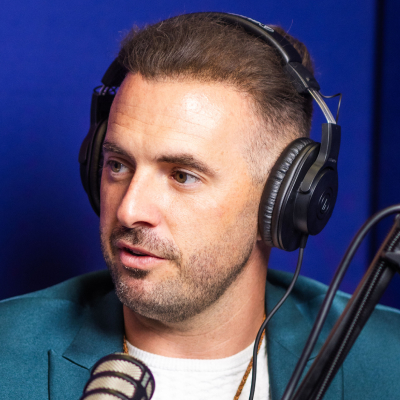
Tyler Terry
Wellness practices that are becoming med spas, med spas that are becoming wellness, IV that are becoming med spas, med spas that are becoming IV. That's a trend.
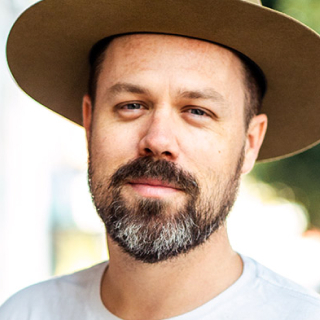
Max Baybak
We're here at The Aesthetic Meet 2025 in Austin, Texas, and I'm sitting down with my friend Tyler Terry here, who is the director of sales for the Med Spa team at NexTech. Did I get it right, Tyler?
Tyler Terry
You got it right. You got it right.
Max Baybak
Heck yeah. Thanks so much for sitting down with me again, man.
Tyler Terry
Hey, of course. Um, honestly, I appreciate your friendship. I would sit down with you anytime. So, you know, next time let's make it, uh, maybe at a baseball game, or go get some coffee or something.
Max Baybak
That's a great idea. I appreciate that. I would love to do that. I feel the same way. I appreciate the friendship we have. You're always very gracious, great energy, fun to hang out with. We don't get enough time at these things, I feel like, to, like, go break out, go to a baseball game, go to these things. We're all hustling so much.
Tyler Terry
100%.
Max Baybak
But one of these days, or if you're ever my way or I'm over in, uh— you're still in St. George?
Tyler Terry
St. George, Utah. Beautiful red rocks. It's, uh, honestly a little heaven on earth. It's gorgeous.
Max Baybak
I had some fun there one time for a cousin's wedding, and I would love to come back.
Tyler Terry
Yeah, you got to come back, man. I can show you some low-key, like, under-the-radar restaurants that are the best. Like, there's some of the best sushi, some of the best Mexican. I mean—
Max Baybak
Now you're speaking my language.
Tyler Terry
Salsa. I'm a big salsa guy. Like, uh, Angelica's. Oh my gosh, their salsa is incredible.
Max Baybak
I've never heard anyone else say they're a big salsa guy, but I agree. I'm also a big salsa guy.
Tyler Terry
Me, too. If you got salsa, I'm there. Like, that's the way to lure me in. Yeah.
Max Baybak
Hell yeah. Okay. So, um, I'm gonna kind of do a condensed interview, and we've had you on the show before, but what I'm kind of trying to do is get aggregated insights from a number of different people from their different vantage points, and we kind of stitch this together to show people what's happening right now in the space. But before we do that, I do want to get just a little bit of an update about you— so, kind of what you're doing. So, last time I talked to you, TouchMD had just— you've been with TouchMD for a long time— became a part of NexTech. Now you're the director of sales for the Med Spa team. Are you selling TouchMD, or also you sell NexTech products as well?
Tyler Terry
Yeah. So our sales teams are divided by specialty. Um, so we have an ophthalmology specialty, plastic surgery, dermatology, and now med spa. So med spa is the first new vertical that, uh, NexTech has launched. Um, and it's been over 10 years since they jumped into a new vertical. Um, and it was a natural fit. You know, after the acquisition, we had over 500 practices that, uh, were med spas who, uh, love and use TouchMD every day. Um, that was my bread and butter. I started the med spa gig, um, with TouchMD in 2017, and obviously that was the majority of our business, um, was med spa. And then after the acquisition, um, it was a natural fit after the, um, earnout year, where we, um, decided to build and grow a med spa team. So now I have six, uh, reps who are incredible, um, very talented reps on my team, who, um, eat, sleep, and breathe med spa, and, uh, they essentially sell all things that a practice would ever need, whether it's TouchMD only, or if it's our full end-to-end vertical tech stack, being NexTech MedSpa, which includes TouchMD.
Max Baybak
Awesome. That's cool. Uh, well, congrats on the expansion, personally.
Tyler Terry
Thank you. Yeah, it's been great, and love being here. We're grateful to come to ASAPS, or now The Aesthetic Meet. Um, yeah, I think the first time I came here was 2012. It was in New York City, and, um, it was actually a big deal for TouchMD. We signed up 50 practices at that show in New York. Um, but to see the evolution of the show and to kind of see it come full circle, it's great. I think this is a great spot. Austin's amazing.
Max Baybak
Yeah, this has been a really great show. The energy is really good here. I love Vancouver— beautiful city— but I feel like we're feeling like this is the best meeting.
Tyler Terry
Yeah, same. Same. Love it. Austin's incredible, and the Aesthetic Society, they've done a great job.
Max Baybak
Yeah, things are trending in the right direction, I feel like, for them. Um, what do you feel like— I'm kind of curious just to hear from your perspective if there's any trends you're seeing in the space in 2025, or let's say the last 12 months or so— emerging trends, whether good or bad?
Tyler Terry
Yeah, there's a couple things. Um, you know, practices trying to expand the services that they offer with wellness, right? Uh, whether it's IV hydration, if it's semaglutide, and trying to key in and cross-sell, upsell those different services, or provide those services to cross-sell back into surgical or non-surgical, or whatever the case may be. Um, so, you know, kind of widening the net in terms of the services that are offered. Um, wellness practices that are becoming med spas, med spas that are becoming wellness, IV that are becoming med spas, med spas that are becoming IV. That's a trend. Um, IV's big. Um, kind of seeing those cocktails paired well with services, um, and procedures.
Um, in terms of AI, you know, like, we're heavily invested in, um, launching it the right way, um, in terms of making sure that, you know, we don't just develop something and just try to release it at a show like this and not do it correctly. So we're being very mindful in terms of how we think of AI, how we integrate AI. Um, something that we were showing at this show is our new AI within our photography app, being Snap. And it's pretty next level. Um, it's not officially released— it's in beta right now— but, um, if you think of the common denominator with photography, it's consistency. Consistent backgrounds, angles, lighting, expression, devices, distance, all the things, jewelry on or off. Um, and what AI is going to do with this is ensure consistency in terms of making sure that you really do get a left three-quarter angle or right three-quarter angle for the before and after, and all those different things. So, um, instead of just using grid lines and ghosting, we're going to have some AI assisting practice.
Max Baybak
This is very interesting to me. One of the questions I had— because you kind of saw where I was going— was kind of, how do you see AI impacting the industry thus far? So it's interesting— you guys are directly looking at incorporating it, or working actively—
Tyler Terry
Yeah.
Max Baybak
—right now.
Tyler Terry
Yeah, 100%.
Max Baybak
And I couldn't agree with you more, because we build websites, right? And we help surgeons build up that digital footprint. And I couldn't agree with you more that consistency is key. Obviously, the results themselves matter maybe most of all, but if you don't showcase them well, then it doesn't— yeah. You know, and the consistency of a gallery— we've just seen the conversion difference when a gallery just has a really beautiful, consistent experience, from inside of one patient's photos and then from patient to patient, etc. Um, and there's so much to be said about what we mean by consistency, but I think people get the general idea. How do you use AI to do that? And is there, uh— how are you thinking about making sure that you don't alter the result itself? I'm curious, because that's what my mind first went to, and I'm sure that's what clients maybe ask or know.
Tyler Terry
Yeah, 100%. So we've never got into the 3D imaging or altering results, and we actually want them to be unfiltered, raw, as real and genuine as possible to get the best before and after photos. Um, in terms of, you know, what we're thinking is, we're going to be tracking the eyes and the chin and the ears, some cube points on the face, so that we know exactly, um— the app will actually know exactly when to capture the photo, when the patient is perfectly turned.
Max Baybak
I see.
Tyler Terry
And then it'll depend on, obviously, the level of the device and, obviously, the level of the patient. I would recommend the patient sitting down when taking before and afters. But, um, something that's pretty cool that, uh, Candace Crowe and I are working on— and I really need to give her credit for starting and sparking this idea— is, um, giving a score for before and after photos. So we're working on coming up with something to where we can grade, um, before and after photos so that patients know that they're raw, real, authentic. Um, and we're still determining what the grading system would be, and if there would be maybe a software, um, that we use, or a vetting system that we use, where the photos come in and we take a look, or have some type of cadence in terms of vetting the images, so that patients know that, wow, you know, on a scale of 1 to 10, these are a 9.3, and, uh, this photo was not edited at all, right? And, uh, it was taken with a certified camera or, whatever— an iPhone.
So, uh, really helping patients, uh, feel more confident and comfortable that these are real before and afters, and these aren't AI augmented or 3D, you know, visually simulated images. Um, really, really early stages there. It's something that, um, Candace and I are working on a workshop, but just know, for me, I'm heavily, um, interested and invested in trying to make sure that, you know, photography, um, continues to evolve and we have, uh, authentic photos.
Max Baybak
Yeah, that's cool. I know Candace— I know she's doing some cool things, she and her son, in this arena. And that's exactly what I was touching on, because if you're altering any portion of it— maybe even a background, or you said maybe removing jewelry— maybe— I don't know if you meant that it removes the jewelry, or simply detects the jewelry and reminds them to remove it, or—
Tyler Terry
Yeah. Yeah. There's different things. Um, when I was saying jewelry, I was just saying having consistency, in terms of— some patients, you'll see a before and after, and she has a necklace on before and then the after not. Like, if you're going to wear a necklace, wear the same necklace.
Max Baybak
Couldn't agree more.
Tyler Terry
Uh, I would recommend just take the necklace off. Let's not have any jewelry, ideally, right? But—
Max Baybak
Yeah.
Tyler Terry
Just those little things.
Max Baybak
Cool. I was just thinking, if AI augments even things that aren't to do with the result, like a background, or removes some— I thought you meant remove jewelry— but if it did something like that— you know, you have on Instagram, uh, then the note where there's, like— I forget what they call it— AI notes, or AI—
Tyler Terry
Oh, yeah, yeah.
Max Baybak
It's just the AI tag that basically says this has been edited. Well, one of the things— like, photographers, uh, initially pushed back, and I think they changed the language of the tag, because it was misleading. It says "created with AI" or something— was misleading, and it was taking something that maybe had a slight modification with AI and making people think it was entirely generated.
Tyler Terry
So that's it— and that's its own interesting thing to— subject on social media.
Max Baybak
But then, in general, we're all concerned about this, I think. How is AI— how are we going to know what's AI, what's not? But it's especially important here— grading, uh, images, or being able to certify images, a better way to say it.
Tyler Terry
Yeah. Yeah. I like certify better instead of grading.
Max Baybak
Well, it sounds like you were talking about both grading and certifying, right?
Tyler Terry
Yeah. No, no, true. 100%. Um, at the end of the day, it's more just, what is the minimum requirement to get that blue check mark, um, saying, "Hey, these are certified— that these really were organic, um, before and after photos."
Max Baybak
Okay. But right now, you guys are more using the AI to tell you if you're consistent, not to actually change the photo after you take it.
Tyler Terry
Yep. Correct.
Max Baybak
Okay. Really cool. Cuz I was thinking, man, there could be some cool uses, but all of a sudden you get really into a gray—
Tyler Terry
Yeah.
Max Baybak
Not a gray area, but you're right on the border of something that could be—
Tyler Terry
Yeah. We actually, uh, did launch a feature where we can, you know, cut out the background. So you can use any hex color, exact color, and it will take that, and you can do that pre-capture or post-capture the photo. But, um, that's just up to the practice. Like, sometimes when a med spa has mobile med spa and they're taking photos in the van— maybe it's that Mercedes van— they need something like that, where they don't have a consistent backdrop.
Max Baybak
Makes sense. Makes sense. Okay, so we talked about AI. Oh, so another thing that I always like to talk about with people on the show is— because it's a marketing show, right? And I want to talk about marketing channels. You and I are both, I think, pretty all in on podcasts as a medium. It's something we bonded on.
Tyler Terry
Yeah, 100%.
Max Baybak
And so, will you tell us a little bit about— you have a podcast, or— that you host and produce the podcast for NexTech. Is that right?
Tyler Terry
Yeah. So I actually don't do the production, but I host it, and, uh, absolutely love it. It's been, um, a privilege to be able to be the host for NexTech, who obviously have a, um, really strong brand and name in the industry. Um, Robin Ntoh and I are both the hosts, and, uh, we do about an even split in terms of, um, the podcasts that we host, and sometimes we do them together, which is really fun. But, yeah, it's been great. We launched the show last February. Um, I think we're, you know, somewhere in the mid-30s in terms of episodes. I think we're at 25 at the end of the year last year. So we do about two to three episodes a month.
And whenever you come to a show, um, if you'd like to be on the show, reach out to us. Um, we have our little podcast corner of the booth, and sometimes we have a very nice podcast setup like you do right here. Um, where we invite, whether it's clients or industry colleagues or whatever the case may be, but trying to talk about what's up and coming, what's relevant, and not really focus it too much on our software. Sometimes if that comes up, that's great, but just trying to make sure that we're, um, continuing the conversation from our vantage point, from our perspective, being NexTech.
Max Baybak
That's cool. I always like to ask, like, sort of fellow podcasters— especially, we're in a relatively niche space as it relates to podcast. I can't particularly expect this show to be, like, chart-topping on Apple Podcasts, right, because we're talking about something so niche— not only is it aesthetics, it's marketing for aesthetics, which is a niche within a niche. So I always like to pick the brain of other podcasters in niche subjects or niche markets, and you especially, being in the same niche as us. How do you think about measuring podcast results as a marketing channel?
Tyler Terry
Yeah, it's interesting, because it's almost like, uh, when you post an image on social media or reel, and you want it to get hundreds of thousands of views and you want thousands of likes, but realizing, if you kind of just pull it back and say, "Wait, what if I was just in a room of 25 people, and, uh, would that be impactful if, you know, two of them found value— or hopefully all of them, or the majority, found value?" So you kind of have to reel yourself back in and remember that all these large channels started somewhere, and your channel might not be that large. It might not bring in the revenue that you wanted to bring in, whether it's through ads or whatever the case may be.
But trying to understand that some things you can't measure, and you might not know that an episode that was valuable to a plastic surgeon, um, could have been shared through a text and a link that you couldn't track, and, uh, his best friend, who is a— well, of a practice that you were trying to hunt down and get to become a client— that because they listened to that episode, that one view, that one listen, is what got you, you know, the client that you've been dreaming of. So that's the hard part. Is, you know, of course you can measure it by the numbers, but I truly measure it more by, um, what is the conversation that we're trying to have, and are we pushing out that conversation on all the mediums, and do we think that there's value? Is there more value in the content that we're restreaming, instead of just a kind of basic image post on social? Or would we rather get a hot take from that podcast that we couldn't have gotten somewhere else?
The other part is, is people are willing to have these conversations— to have conversations that weren't had. You know, five years ago at The Aesthetic Meet, or ASAPS back then, people weren't having these recorded conversations, whereas today they are, and they're being restreamed and repurposed. And I think that's so valuable, and people are willing to jump on your show. For whatever reason, when you ask somebody to be on your show, on your podcast, people get excited. They get excited to say that they were on it. I think people have a lot to share.
Max Baybak
Yeah. And they have a lot that is of value from their unique vantage point. And now, because we're all sort of micro publishers, micro broadcasters—
Tyler Terry
Yeah.
Max Baybak
Not all of us, actually, cuz it's a lot of work. So many— there are more of us, I should say.
Tyler Terry
Yeah.
Max Baybak
And there's opportunity for people to share, and they're excited to share.
Tyler Terry
And it's fun being on the podcast. Like, it's fun having a mic in front of you. It's fun throwing the headphones on, and— if you haven't ever, you know, been on a podcast where you have headphones on and you can hear yourself in a different way, you got to try it. It's different. Like, you get into a different element, like that you and I are in right now. This vibe— it's kind of hard to describe. It's fun.
Max Baybak
Yeah, it totally is. Uh, I'll add two things really quick, if I can— forget if I remember what the second one was. One of them, I know— you made me think of something. The way I think about podcasting, and whether it's worth it as a channel— when you talk about 25 people in the room, the question I would ask is, who are the 25 people in the room?
Tyler Terry
Yeah.
Max Baybak
So, if I can get those— you know, if I'm talking to a really heavy hitter audience, or just the right people, uh, that's all that really matters. It could be two people, and at least in a B2B, uh, setting, it can be really valuable.
Tyler Terry
Yes.
Max Baybak
Uh, our director of media production, Jonathan Shartter, who's right over there, gave me this term that I like, where he says it's a dense audience. Maybe it sounds like they're stupid, like they're dense, but that's not what he meant. He meant dense, like, it's heavy— might be small, but it's potent, right?
Tyler Terry
Yes.
Max Baybak
And we have a couple different podcasts we do, and we get a really dense audience with the right people for who we're trying to reach.
Tyler Terry
Yes.
Max Baybak
And that's huge. The second point— I did remember it— is that, uh, podcast fits somewhere in the funnel. Maybe it's not top of the funnel— and it's very unlikely that it is, right? But it's somewhere in the middle of the funnel, where they get to know you, get to know your business, get to know your demeanor, get a sense of what your values are, and that's really hard to replace.
Tyler Terry
Yeah. It gives your business a voice. Um, I feel like it kind of gives your business a personality.
Max Baybak
Yes.
Tyler Terry
Um, the other part is, is I was actually doing a podcast with a plastic surgeon earlier today. She was incredible. She's from Baltimore, Maryland— Dr. Husach. And, um, she told me she has her own podcast, and, uh, what they do for educating patients before the patient comes in, is they send them a podcast on the surgical service, or the service that they're coming in to, to listen to prior to coming in. What I love— number one, I've never heard anybody do that. Number two, I think it builds trust with the patient. Um, number three, the patient certainly becomes more educated, and they get to listen to it on a medium that's easier to listen to on the go.
If somebody sends me a YouTube video— yeah, sure, if I have a premium subscription or whatever, I can listen to it in my pocket at the gym. But people are more— for whatever reason, if you send a video, you're more likely to make somebody think they need to watch it and listen. Whereas if you send them a podcast, they're like, "Great, I can listen to this in the car, at the gym, doing dishes, whatever the case may be." So I thought it was brilliant that she did that for her patients.
Max Baybak
Yeah, I only know one or two other doctors doing that. It's a great way to get to know the doctor and get a feel for that surgeon's demeanor, personality, etc. So I totally agree. Okay. I know you have a client that I think you need to go see, and I don't want to hold you up. Last question. This is a bit of an open-ended question. Where do you see the industry going? Uh, what do you see in the future for the industry? Just, again, from your specific vantage point.
Tyler Terry
Yeah, I think we're definitely going to see a lot of companies jump in and try to do AI. I don't think, uh, many of them will last. A few will succeed. They'll probably get purchased by some of the larger software companies, to, again, try to become that end to end. You know, my specialty is really, um, aesthetic software. Um, whether that be photography, practice management, EHR, in-practice marketing— everybody right now, in terms of software, is trying to become end to end, that true vertical tech stack. So trying to define that— I think that will be defined, and, uh, practices are going to want, um, deeper levels of integration. I think we will see Allē and Aspire being integrated into those companies in the future. I think all of the top patient financing companies will be integrated in the future. Um, I think— whoever can design the first true all-in-one patient app will win, in my opinion.
Max Baybak
Yep.
Tyler Terry
Like, we have RepeatMD, we have myTouchMD, we have all these different apps, but whoever can combine all of the value of those apps with e-commerce, documentation, photography, patient education— whoever gets that right wins, in my opinion.
Max Baybak
It's funny, because I'm trying to end the podcast, but you just tapped into something that I have so much to say about. So we'll do another show another time, but I couldn't agree with you more. There are many, many walled gardens in this space, uh, from a tech perspective, and interoperability is the word for me. But I believe that patients, eventually, and certain larger platforms that have enough clients or accounts to bring to bear, are going to eventually force this interoperability that's needed. And I've always said that the EMR of the future will have an app store— which there are those that do— but I mean an app store that feels like the Apple App Store today.
Tyler Terry
I love that.
Max Baybak
That's what I think the EMR of the future will have.
Tyler Terry
I love that. I've never heard of that. That's incredible.
Max Baybak
That's the way I think about it. But I think there's a long way to go, because we're dealing with patient data, we're dealing with, you know, sensitive information.
Tyler Terry
I love that. Cuz if we had our own app store, we can say, "Hey, Influx, go develop something within the NexTech ecosystem, and then, great, you want to integrate— go." Yeah.
Max Baybak
Wow.
Tyler Terry
That's the future. Let's do another show and talk about that.
Max Baybak
I would love to. I think we have a lot to talk about.
Tyler Terry
Awesome. Thank you. Here— I've got a bunch of other things. I'm like, "Dang it, I got to go."
Max Baybak
Let's take notes right after this, but I'll send you on your way. Thank you. I kept you longer than I said I would, so you're cool. Thank you, Tyler. I appreciate it.
Tyler Terry
I loved it. Always an honor and a privilege to be on here.
Max Baybak
Thank you, man. I feel the same. You, too.
Subscribe to Next Level Practices
Next Level Practices is the show where we discuss the ever-changing world of digital marketing and patient acquisition and bring you the latest ideas, strategies, and tactics to help you take your practice to the next level.