

The New Era of Wellness, Telehealth, and Patient Access
w/ Chad Sawyer of DrWell
18 minute view/listen


Dec 2025
Available everywhere you podcast



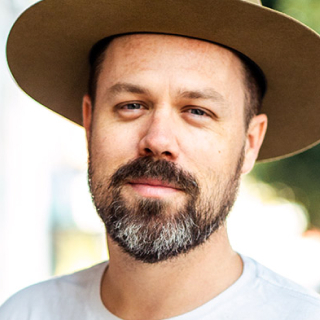
In this episode, Chad Sawyer, COO of DrWell, joins us to unpack the rapid changes happening in wellness, telehealth, and modern patient access.
Chad explains how DrWell evolved from a GLP-1–focused platform into a full weight and wellness ecosystem offering more than 200 compounded medications. We get into how patients move along their “GLP-1 journey,” why providers want to offer more longevity and wellness-focused options, and how DrWell helps practices deliver these services responsibly, without adding more work for staff.
Chad also breaks down one of the biggest shifts happening right now: the rise of asynchronous consultations. He explains how patients can now complete legally compliant intake forms online, without always needing a live visit, and why this opens the door for practices to compete with direct-to-consumer brands like Hims & Hers. We also touch on why wellness programs are becoming essential parts of aesthetic practices. This is a fascinating look at where patient care, convenience, and technology are heading next, a must listen for anyone in the aesthetics space!
Full Transcript

Chad Sawyer
Having patients be able to go online through a website, fill out a patient questionnaire, and actually qualify to receive care without needing a follow-up visit or an in-person visit, virtual visit, however you wanted to perform that. That's definitely something that we're seeing a lot of providers utilize in their practice, which has led to this influx of opportunities. You like what I did there? [laughter] This influx of opportunities coming into their practice. And it's crazy.
Max Baybak
We're here at The Aesthetic MEET 2025 in Austin, Texas, and I'm sitting down with Chad Sawyer, who is the COO of DrWell. Chad, welcome to the podcast.
Chad Sawyer
Yeah, thanks for having me on.
Max Baybak
Of course, man.
Chad Sawyer
Yeah. Excited.
Max Baybak
We've, uh, known each other through the conference circuit for a while, and I've had Jonathan, your colleague, and the CEO of DrWell, founder, CEO, on the podcast a long time ago remotely, but we've never sat down and chatted. So, this is fun.
Chad Sawyer
Yeah, this is fun.
Max Baybak
So, tell me a little bit about— just for those who don't know, we're kind of doing a condensed interview, so we'll keep it a little shorter, but tell us a little bit about what you do and what the company does.
Chad Sawyer
Yeah, so DrWell, really our mission is— if you watch TV, you see all of these direct-to-consumer platforms out there, Hims, Hers, who have, you know, done a great job at letting patients get the medication that they want to when they want to. But the challenge with that is there's not always a provider on the other end. So, what DrWell is trying to set out to do is take that popular direct-to-consumer model and do that responsibly by partnering up with world-class providers like the ones who are attending here, and allowing them to bring those style programs to their patients and make it easy for patients to get the medicine when they want to, and also allow the providers to be able to treat those patients without taking time away from the other things that they're doing in the practice.
Max Baybak
Yeah, I think it's really interesting to see how the company's evolved. I've watched Jonathan from— and we won't go into all the details here, but there's been different permutations of the company. And then I think a lot of people probably— I at least did until recently— really thought about it as a GLP-1 platform to help doctors administer those GLP-1 products, right?
Chad Sawyer
Yeah, I mean, when you look at— again, we'll keep it short— but when I first came on board, at the time it was BuildMyBod Health, and we were focused on the BuildMyBod price estimator tool. And what happened was there was this increase in excitement around GLP-1s, and Dr. Kaplan started doing that in his practice pretty successfully. And so the people who were using the price estimator tool started asking more and more questions about, "Hey, how can I recreate some of these programs in my practice? It seems like it's going really well for you."
And so it was that time where we started to pivot into what became strictly BuildMyBod Health, and then DrWell. And we were primarily focused on the GLP-1s, but we're now at a place where I think we have over 200 compounded medications available through our platform. And so it's now weight and wellness. And from a patient perspective, you start to go on this GLP journey where you start losing weight. All of a sudden, you're feeling good about yourself. You're wanting to explore other opportunities to continue on that success.
And so if you're already building a relationship with a provider and you're getting your semaglutide or you're getting your tirzepatide, there's other things now that patients are asking for. And so we're trying to make it easy on the patient to be able to get those things, and then using our platform to automate all aspects of making sure that you're getting those different medications from a quality source, tracking what dose the patients are on, making sure they're staying on schedule, and doing that, again, without having to be something that's a really manual process for your staff or yourself.
Max Baybak
Right. So you mentioned Hims and Hers earlier. So a doctor could utilize your platform to sort of recreate that for themselves. So hair loss could be one of the—
Chad Sawyer
Hair loss, sexual wellness, anti-aging, longevity. I mean, you can have a full catalog. It's up to the provider what they want to prescribe. That's the great thing about our platform, is we're not forcing anyone to offer anything to their patients that they don't necessarily believe in. But if it's something that you do think can bring value, being able to be a one-stop shop for all of your patients to get these wellness medications from you is what we're trying to do.
And if you go on to the DrWell site, you can see a scrolling list of all the different medications. So, things that are becoming popular: hormones, so testosterone specifically; NAD+, people love that. We have, I think, injections, nasal spray is really popular. So there's all these different medications that patients are asking for, and really it's on DrWell to go out and source those for our providers, make sure that we're getting high quality compounds so that when a patient says, "I want to start," they can feel confident that they're going to get taken care of.
Max Baybak
Right. So you guys basically take care of the whole process so that the practice can now become essentially a telehealth provider of those drugs.
Chad Sawyer
And you can still have patients come in too, right? So if a patient says, "Hey, I'm scared of needles," or "I'm right across the street, I'd love to come in and see you and pick up my medication if that's possible," you can do all that. But giving the patients that flexibility where maybe they don't have the ability to come in and see you— they should still have access to getting the high quality care that our providers provide. And that's where our platform comes in, and then just frees them up to really focus on the patient care elements, which is what most of our providers are more excited about than tracking down credit cards, refilling prescription orders, and the more time-consuming parts of these weight and wellness programs.
Max Baybak
Yeah, it makes a ton of sense. I really see the vision and I like it. But again, I did sort of maybe have a too narrow of an idea of thinking that it was focused on weight loss, and I know there's been a lot of changes there. Again, without unpacking all of it, how are you guys navigating the changes that are happening with GLP-1s right now?
Chad Sawyer
Yeah. So, the biggest thing right now is— and we rely heavily on our legal counsel, our compound pharmacy partners, to help us navigate this time. But when it comes to tirzepatide and semaglutide, there's a lot of new alternate formulations that have become available. And the reality is, if you find a different dose and you give a reason why, that should allow you to continue to treat that patient.
And so, as an example, the most popular version of tirzepatide that our providers are prescribing right now is tirzepatide with glycine. Glycine helps prevent the loss of lean muscle mass, which is something that patients talk about. And if you read online, you see the loss of muscle mass, which isn't unique to GLP-1s. That's any weight loss journey. If you go on any fad diet, the first thing that's going to go is the muscle mass. And so including the glycine, well, in theory, should prevent some of those things, which in the name brand medication doesn't exist.
And so prescribing, you know, what might look like a little bit of a different dose, and then an additive that's going to help them in a way that the name brand medication can't— our providers are going to continue to be able to offer those medications. Our system documents those reasons why. It allows you to get the different medications. You can move patients between different additives. If you want to try a patient one month on tirzepatide with B12 and then go to tirzepatide with glycine, combination therapies. And we have more options now on the tirzepatide and semaglutide front than we did a week ago. And I wouldn't have thought that a month ago. I would have thought we were just going to keep doing what we were doing. And now we have more options and patients are still getting the same results, if not better in some cases.
Max Baybak
That's crazy. Yeah, I wouldn't have thought that either. Well, so that's DrWell. Go check out their website, drwell.com, right? Simple and easy, because there's a lot to it. There's a lot more that I'm understanding now as of this conference. So, anyone who's interested, go check out— learn more there.
Chad Sawyer
Yeah. Check us out, please. That'd be great.
Max Baybak
And then Chad, I just kind of wanted to hear from you— just like, I'm kind of interviewing everyone from their unique perspective in the industry, what they're seeing. I'm curious, in 2025, or let's say the last 12 months, are there any trends you're seeing, good or bad, that are kind of coming into the industry? I just kind of hear from your point of view.
Chad Sawyer
Yeah, the biggest one that I can speak— and we see it on a daily basis— is this rise, and it goes back to Hims and Hers probably making this, uh, a little bit of the norm, is the rise of asynchronous consultation. So, in aesthetics, we're used to a synchronous visit, which is what you and I are doing right now. But these asynchronous consultations, which in the majority of states can actually serve as the single point of contact for a legal consultation. And you can apply that to GLP-1s, you can apply that to other medications, you can apply it to a couple different things.
And so having patients be able to go online through a website, fill out a patient questionnaire, and actually qualify to receive care without needing a follow-up visit or an in-person visit, virtual visit, however you wanted to perform that. That's definitely something that we're seeing a lot of providers utilize in their practice, which has led to this influx of opportunities. You like what I did there? This influx of opportunities coming into their practice. And it's crazy.
And originally a lot of our doctors were asking, is this— can I actually do this? What you're telling me is a patient can go online. I mean, say it— it is a little crazy. But if that's going to be how patients want to receive treatment, it's way better that they do that with you than going through one of those websites. And so we try to set them up to be able to do that. And it's going really well in terms of just lead generation, new patients, and still getting those same results that they're used to.
Max Baybak
I think that is a huge trend. I mean, telehealth, right, since the pandemic has really rapidly transformed. But that— what you guys are enabling inside of a practice to do the async consultation, um, it's really— definitely a paradigm shift.
Chad Sawyer
It is. It's so fascinating to watch. And all the people, you know— we're interacting with a lot of doctors here who use the platform, and we're getting the chance to talk to them about it in person, and they're all excited about the opportunity to be able to keep up. But it's definitely a little bit of a shift in how they're used to practicing medicine.
Max Baybak
Definitely is. Did you see the Hims and Hers Super Bowl commercial?
Chad Sawyer
I did. Yeah.
Max Baybak
It got kind of some blowback, right? A little bit.
Chad Sawyer
Yeah, it did. It did. Um—
Max Baybak
I don't know. They're running so many commercials. Uh, I call those the TV drops, right? You see them online.
Chad Sawyer
We're actually— not a spoiler, because you got to go check it out— we're running a commercial right now. We're filming it. Um, I think we're going to send it out across a bunch of the major streaming platforms. So, we're excited to see how that goes. So, if you're watching TV or Hulu—
Max Baybak
I love that.
Chad Sawyer
Yeah, it'll be— We haven't done anything like that before. Um, but we have the, uh— we have the initial footage that they're kind of going back— and we gave our thoughts around what it's going to look like, how— what should we want, what do we want to do with it. We're having fun with the project. Um, and I'm excited to see what comes of it.
Max Baybak
Well, this is a marketing podcast, so I usually ask people— even though, you know, in our B2B worlds, marketing channels are a little more limited. That's why we're at conferences, right?
Chad Sawyer
Yeah, of course.
Max Baybak
Um, it's a little harder to use some of the same paid media channels in the same way. Um, so— but sometimes I still like to ask this question and ask how do you acquire your clients. But going through TV for something— so where you need to reach doctors, I'm very intrigued by— I should say going through connected TV.
Chad Sawyer
Let me clarify a little bit. So we are running that TV ad, but our main focus is finding partners on the practice side to be able to take advantage of DrWell. But if you go check out that DrWell site, you're going to realize pretty quickly it's a patient-facing, uh, website in terms of education around and helping them connect with our providers. And so the commercial is actually going to be geared towards consumers, getting them to the doctor.
So it is the same kind of style ad as you would find with a Hims and Hers, but instead of them going through a website and building that relationship with Hims and Hers, we're going to drive them back to drwell.com where they can go build a relationship with a doctor near them and get the high quality care that they need. So that's the idea around it. We're not necessarily trying to sign up new doctors.
Max Baybak
That makes sense. So DrWell is a consumer brand, which— I think of it as a B2B brand facing doctors.
Chad Sawyer
Yeah.
Max Baybak
But that's good to know. And I mean, I just saw the new site. It's beautiful. Really does feel very consumer friendly. So now I'm starting to kind of understand the vision.
Chad Sawyer
Which— if you, again, you tie in the asynchronous piece to it. So the idea is you go online, you find a provider, and you fill out an asynchronous consultation, and then our providers actually get a notification that they have a new patient pending their approval, where they can sign them up for whatever medication they think is best for them.
Max Baybak
Yeah. And then I can see all kinds of opportunities once you guys start driving a lot of consumers in the door for your growth. Obviously I can see the vision. That's huge.
Chad Sawyer
Yes.
Max Baybak
Um, okay, I get it. We're actually in the early stages of testing out some connected TV stuff too with our clients, because I don't think people realize, like, it's basically very programmatic now to be able to select not only, of course, uh, geographic targeting, but demographic, household income data. A lot is there.
Chad Sawyer
Yeah, you would know better than me, but I would think that— you know, because we're going to go through the streaming platforms, right? The live TV, but—
Max Baybak
So there's a lot of data as to who is, you know, subscribing to those platforms, where are they watching, and so in theory that should make it a little bit easier to target. And it's not as— I mean, it's not free by any means, but not as bad as what I think we all initially thought. It's not cost prohibitive compared to— if we look at our surgeon clients and even our med spa clients, what they're spending on Google, what they're spending on Meta. And I'm only talking connected TV, not traditional TV. Connected TV— I think when you first started being able to buy ads, it was like Hulu had a way you could buy ads, 'cause they were the one that was more ad-driven, not Netflix. But it was a $50,000 minimum order, and that's dropped—
Chad Sawyer
Yeah.
Max Baybak
—by a factor of— it's minuscule compared to that, the minimum, you know, kind of ad order that you have to put in. And it's like it's almost kind of like Meta now, where you can target all this data. So, it's very encouraging to hear more companies doing it. We're playing around with it there.
Okay. How have you seen AI affect the industry thus far, or your job, your company? And is it more or less than you might have expected by now?
Chad Sawyer
Uh, it hasn't had a huge impact. We actually have— there is a component of AI built into DrWell. And so because we're connecting multiple compound pharmacies into our platform, the idea around DrWell and how we're supporting our providers is being able to allow them to submit a script, and you don't know depending on what state you're looking to ship that to. And so our system will actually automatically route the order to the pharmacy that's best suited to fill that order at that time, in the state that they're licensed in, both from a turnaround time, cost of goods. And so we've actually started to incorporate some elements of AI into our platform.
Um, I think AI in general is a tool that everyone should lean into. I use it— just basically ChatGPT. I use it almost every day, um, to help me simplify some of my own tasks, and I really like it. I think on the marketing side, there's definitely a play for it. Um, I mean, depending on who you talk to. I actually have some family who started an AI platform in the legal space. And so I'm hearing some of the ways that they're using it versus—
Max Baybak
You know, when it's—
Chad Sawyer
—what's in the public domain versus having something that's just for you. And so that— you think closed— I think closed source is the— I don't know exactly what it is. But it's just fascinating to see how people who are leaning into AI, and how really that can help support and get so much more done at a high level. I think it's great. I don't know— how does it— have you guys seen it?
Max Baybak
Yeah, similar. I think it's still early. That's why I asked, is it more or less than you expect? Because I think if you talk to people a year ago, they're like, "We're all done for." And not that people thought it would be yet, but I think they thought it would be farther along at this point.
Chad Sawyer
Yeah. I haven't— I mean, I know there's initially that, oh, anyone could go start a digital marketing company, I could just throw in "write me a content page for breast augmentation Los Angeles," throw it on a site. And that stuff doesn't do anything, really.
Max Baybak
Right. Yeah, I think it allows people to, uh, promote themselves to the higher value tasks and kind of eliminate some of those lower things. Um, but there's a lot of use cases like the one you just gave, where you're using it where it just makes things better. You know, it's still very early days. Even in marketing, where I think it's had the most impact, it actually hasn't had that tremendous of an impact yet.
Chad Sawyer
Yeah. I don't really feel it. It's not— I don't think people are getting— like you said, no one's out of a job because of AI at this point. I don't think— at least maybe that's true. Not true.
Max Baybak
Not yet. But we're going to ask this question again next year. And that's kind of the whole idea as we go with this each year, and we kind of ask similar questions and see where the trends are going, and especially how they're hitting our industry. Um, okay, my last question for you. What do you see for the future of aesthetics? That's a pretty broad, open-ended question.
Chad Sawyer
That is— that is broad.
Max Baybak
But kind of, what do you— when you look at the future, what do you think, where do you think we are in a few years, from your perspective? You know, you're— I mean, obviously you're doing health.
Chad Sawyer
From my perspective, I think right now there's definitely still— while it might seem like every single person is offering weight loss, every plastic surgery practice, every medical spa has a GLP-1 program, I actually don't think that that's true. We're talking to people all the time who have said, "Ah, I don't know if it's for me. I don't know if it fits my scope of practice. I don't know."
And so what I see is definitely having more robust wellness programs. And that doesn't mean using a platform to do it online and be shipping medications all across the country, but, you know, having a focus on the longevity and maybe treating more inside versus the outside. I can see that continue to be a trend. What happens is then patients start to come back and they feel better about themselves, and then you might be using it more as a marketing opportunity to get patients back to your practice.
And, um, one of the things that we say is [snorts] at this point we almost— there's not enough— if you just talk about the GLP-1s, there's not enough specialists to treat obesity. And so we're almost on this mission to call on practice providers to bring this in, because it's such a huge challenge that everyone faces in terms of being overweight and the health challenges that come with that, that, you know, we need more people prescribing these medications to keep up with that.
Max Baybak
That's wild to think. But I can definitely validate what you're seeing on the wellness side from our perspective. It's been going for a few years and it's only accelerating, that more and more practices that reach out to us are saying, "We're starting a spin-off brand that's wellness," or "incorporating wellness," or "we need a new website, we have to add these pages to our website." Wellness is definitely becoming, uh— the line between wellness and aesthetics is becoming, you know, more and more blurred in terms of the practice service mix.
Chad Sawyer
Yeah, it's, uh, it's fascinating to watch and, uh, see how it goes.
Max Baybak
We'll see how it goes. Thank you, Chad. I appreciate it.
Chad Sawyer
Thanks for having me on. This was a lot of fun.
Max Baybak
Yeah, we'll do it again next year. We'll see if AI has taken our jobs.
Chad Sawyer
Yeah, we'll see. I hope not. But, you know, if it does, then you won't see me.
Max Baybak
So be it. All right. Thanks, guys. [music]
Subscribe to Next Level Practices
Next Level Practices is the show where we discuss the ever-changing world of digital marketing and patient acquisition and bring you the latest ideas, strategies, and tactics to help you take your practice to the next level.