

Live at The Aesthetic Meet with Izhak Musli of Get Kudos AI | Why Patient Retention Is the Next Growth Frontier
w/ Izhak Musli
17 minute view/listen


Jun 2026
Available everywhere you podcast



Live from The Aesthetic Meet 2026 in Boston, Max Baybak welcomes Izhak Musli for a conversation about retention, loyalty, and the future of patient engagement. As the founder of Get Kudos AI and a veteran of the healthcare technology space, Izhak has spent years helping practices understand their data, optimize operations, and improve patient experiences.
In this episode, he shares why retention may be the most underappreciated growth lever in aesthetics. From understanding patient satisfaction to building stronger referral networks and loyalty programs, Izhak explains how practices can generate meaningful growth without necessarily increasing their marketing budgets.
The discussion also dives into the role of AI-powered sentiment analysis, personalized communication, review generation, and patient advocacy. Max and Izhak explore how practices can use technology to better understand what patients are actually experiencing, and how those insights can translate into stronger relationships and higher lifetime value.
Full Transcript
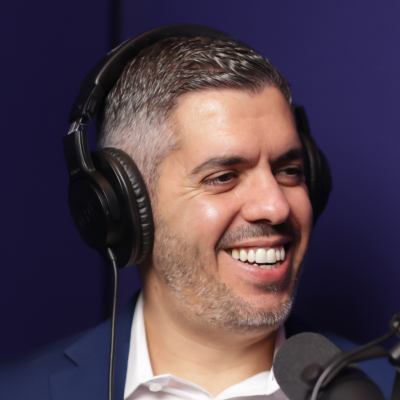
Izhak Musli
They are so obsessed with the next new patient. They are so obsessed with their marketing efforts, how much money I'm spending, and how many new patients came and how many new consultations, and they totally overlook the fact that our industry has about a 50% retention rate, which means that only one out of two patients is actually going to come back. So all those efforts that you put in— and actually, also, first visit, normally they don't even make money.
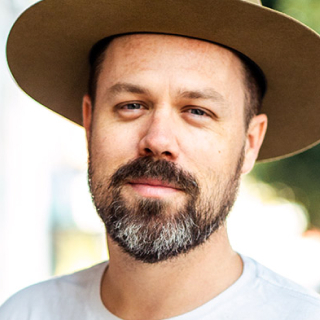
Max Baybak
We're back on the Next Level Practices podcast, and today I'm sitting down with my friend Izhak Musli. And Izhak, I've had you— we've interviewed you here on the podcast at— I don't remember which conference— multiple times, but it's been a couple years and you're doing some new things. So I'd love to catch up with you about that today.
Izhak Musli
Yeah. No, 100%. And, yeah, I think— wow, I can't even remember how many times. It's been a while.
Max Baybak
It's been a while. And it's been a few times. And I've followed your career now, because we've, you know, been in the same space together, sharing a lot of the same clients, and, yeah, and being friends, which is the best.
Izhak Musli
Exactly. Industry friends. And, um, obviously I know your family and your in-laws.
Max Baybak
Yeah. But we're getting to where we've been in this industry for a while, you and I. Yeah. And we've seen a lot of things. But okay, you're up now— what you're up to these days. I think you said your main thing is this— we were talking before and you told me this: Get Kudos AI. Will you tell us about that?
Izhak Musli
Yeah. Yeah. And, uh, maybe I'll give a little bit of background even how it came up too, right. And so you know me already from the days of, like, Atlas KPI, the dashboard, right. I think that that's really the entrance to all the rest of the businesses that I have had, whether it's the dashboard itself that gave me the access to see all the data and the operations from the back end and start to identify gaps that practices has. And so once we sold Atlas, the first business I launched instantly— actually during the due diligence— I built Medical PRM, because they realized that the gap is leads calling to the practice— if they don't schedule right there and then, nobody calls them back, and there is no ready CRM. And so nowadays, of course, everybody already have a CRM, what ones or another, right— GoHighLevel or whatever solutions they have. And, um, obviously during beta I was acquired by Symplast, which also allowed me to find more gaps in the practices and operation side.
And so post-Symplast, joined Terri Ross, right— we had the APX platform— again, seeing more of the data, more of the training issues, and I realized that one of the things that is really missing, and where practices are falling short, is retention. They are so obsessed— and even marketing, you know it more than me even— they are so obsessed with the next new patient. They are so obsessed with their marketing efforts, how much money I'm spending, and how many new patients came and how many new consultations, and they totally overlook the fact that our industry has about a 50% retention rate, which means that only one out of two patients is actually going to come back. So all those efforts that you put in— and actually, also, first visit, normally they don't even make money. They're, like, flat, because pay cost of acquisition, getting the patient, the marketing expenses, all of that stuff, just getting them to sit there— they got them converted, obviously not for surgery, but more in the non-surgical side. And then the patient leaves and never come back, and they don't even know the reason.
And when you ask them, you're like, "Oh, is— your patients are happy?" They're like, "Yeah, all of them are super happy." And you're like, "How is it possible?" And what I realized is that they relying on their front desk to ask the question of the patient when they check out. He's like, "Oh, how was your visit today?" And they all say, "Oh, it was great." But only one out of two coming back. And so that's really where the Get Kudos idea started. It's a patient retention platform. And it started by— first, the very first feature that I developed was, let's get them into a survey. Let's get NPS or CSAT score— net promoter score— kind of like, how was your experience today, or would you recommend this practice or business to your friends and family? Um, to understand what happened to those 50% that are not coming back. And so we started to draw information, and that started to roll.
And then I realized, okay, this is just one piece, right? Now I know who is happy, who is not happy— let's activate them. And so they're not happy— really putting an effort and utilizing some incentives to draw the reasons why they're not happy, how can we do better. And in businesses— and as you know, running a business as well— sometimes it's more important to understand what is not working versus what is working. So what's working is already working, and so if you don't know what's not working, you cannot fix it. And once you start to fix, you start to gain exponential growth. It's literally like that. And sometimes it's a small thing— it's waiting room, it's pain, it's, you know, not enough explanation, education, stuff like— those are the main most common things. And so, um, or Susie was just not smiling today— it can also happen, right, in the front desk.
And so we started to dig into that and start to develop incentives around that to get the people who are not super happy to come back, show them that we implemented their feedback, feel that they're being heard. And so we started to see results from that. And then we were like, okay, now the happy patients— they're already happy, we know that they're happy. How do I move a patient from being happy to become an advocate, a raving fan, right? The real win is when your happy patients start to recommend about you to their friends, their family. And once you enroll them into a loyalty, it's also happened, I'll say, almost magically. And the best example to use is, like, airlines, right? Um, once you put them into a loyalty program— the points or incentives, or it's gamifying, like the way that we do it— they start to come back a lot more often. They spend a lot more money. They all of a sudden want to try much more new services, coming to your exclusive events, show up, spend— they becoming one of your practice.
And so started to dive into the psychology a lot more, cuz one of the operational side— you start to offer those things, things are happening, and it works. And then I started to dig a little deeper, and I was like, okay, so what is really happening post the conversion? And the more you study that, you realize that there is a secondary level of conversion beyond the— they come to the consult, they convert it into a patient, they adopt it into some treatment plans, and then they try to come back— there is an emotional conversion. And I always use it in my lectures— the best example for emotional conversion is: who is an iPhone user, right? iPhone users are emotional convert customers, because it's part of your identity. Those blue bubbles on the message, all of that symbols— those are part of who you are. And when you ask an iPhone user, would you move to an Android? One out of a hundred maybe will say yes.
And so you really becoming part of it. Like, a Starbucks is a great emotional conversion type of company. And then at that point, once you gain that, pricing doesn't matter anymore. They're a lot more forgiven, and that's where you get the organic growth. So I guess it's a long-winded answer to what I'm doing nowadays, but that's a lot of what— that's what Get Kudos built for, and activates obviously with a lot of artificial intelligence in the back to help with the analysis, the sentiment analysis of the patient, the interactions with the patients— the kind of the when to give what and how. Uh, because every patient's a little bit different. You know, what ticks you may not tick me to come back again or recommend my friends or stuff like that.
Max Baybak
I have so many questions. Yeah, there was a lot in there, and that sounds like it's actually filling a great need. I agree with you about the emotional conversions, and on the Starbucks— taking that Starbucks analogy a step further, I'll say you can emotionally convert both ways, though, because I'm a big coffee guy and I'm emotionally— I will not go to Starbucks, and I also feel about that. Yeah, exactly. So it works on both sides of it. I totally understand what you mean by the emotional conversion, and I love that very much.
Uh, just to go back to what you said at the beginning, it's interesting to note that you— you're right. We met when you were doing Atlas KPI, which— KPI stands for key performance indicator. It was like a business intelligence dashboard. It's interesting, now, this many years later— ten years later— nine, ten years later, this space has now a few— I walk around, I see a lot more companies doing the data business intelligence play for this space, because it is really fragmented. It's hard to get all that data in one place. So you were ahead of your time on that. And then with Medical PRM, what did PRM stand for again? Patient—
Izhak Musli
Uh, patient relationship management.
Max Baybak
Okay. So a CRM— PRM— but it was mostly about the— you were focusing on the upfront first part of the patient journey, the lead nurturing, from they filled out a form on your website or a chat or a phone call, to getting them to come in for that consult.
Izhak Musli
Correct.
Max Baybak
And that's when you became a part of Symplast, because they acquired Medical PRM. Yeah, you were ahead of your time on all those things, and, um, so I think this is really cool. So it's called Get Kudos AI, and I understand what you're saying. What it does is it helps a person— it helps you to figure out whether clients— patients— are truly happy or not, and what you can do better, and bring them from unhappy to happy, and bring them from happy to real advocates, real ambassadors for the brand. Question: do you have a focus on only aesthetics, or only on plastic surgery, or on broader medical— where you focused?
Izhak Musli
So from the nature of things, and myself and 100% of my team, all the way from my CTO, who actually used to work with me in Atlas KPI—
Max Baybak
Oh, wow.
Izhak Musli
Um, and all the rest of the team— marketing, sales, you name it, the support— everybody came from aesthetics. And so aesthetic is our first market that we service. We live and breathe it. My other company is also in this, um, space. So it's the natural thing that we understand the need here the best. Um, with that, we also have some other clients from other verticals that have exact same challenge and need the exact same thing, whether it's a hair salon, yoga practices, stuff like that— like, uh, studios— and they need the exact same thing. So when you think about it, if you're a local business doing in-person services, so building relationship with your local clientele, and you want them to keep coming back more often, you have the exact same needs that any aesthetic practice has. And so we are not actively going after those markets, because, again, they need to educate us or help us to understand better their language and their demographics and better needs of their patients, and, uh, in aesthetics we already have it. We're fairly fluent in understanding the practice side and the patient side.
Max Baybak
So I would assume within aesthetics you're targeting more medical spas or plastic surgeons with a big non-surgical component, right? Because when we talk about repeat customers or getting a patient to come back, I imagine it would be for a lot of these non-surgical, uh, interventions that can be done.
Izhak Musli
Yeah. And non-surgical, it's the obvious one, cuz they need to come back every three to four months, where surgery you don't do as often. But on the surgery side— and that's a lot of what we teach also at the Forest Summit, right, which is the conference for really teaching practices how to make money— whether you're plastic surgeon or med spa, you don't sell them just a procedure. You sell them a treatment. You sell them a results. And results for plastic surgery always required some additional prep, post— and plastic surgeries as well as med spas, best organic growth and most effective is referrals. And so you can still get a lot of referrals, and a lot of the physician— the most successful physicians actually getting a lot of referrals from patients who had surgery and may not going to come back to have another surgery for another five to seven years from now, but will stay in contact with the practice, still going to come to do scar revision, still going to come to see stuff and do other treatments. But yes, the main core is the non-surgical, or the conversion from the surgical to the non-surgical.
Max Baybak
Okay, yeah, that's interesting— getting them to convert from surgical to the non-surgical options that are available within the practice. And then, I guess, with the surgical side, it's a different life cycle, but what you're saying is you can still understand patient satisfaction, what you can do to improve, and so forth, even on a different timeline.
Izhak Musli
Exactly. You still have the need to get the reviews. You still have the need from them to recommend their friends and family about you and just share the story. And so the way that we approach it is really, every patient that you get, our mission is to help you to try to turn it into a patient for life.
Max Baybak
I love it.
Izhak Musli
And that's the— the hard part is what you guys do, right? Getting them through the door, but then the rest of the stuff, it's really, like— it cannot be overlooked.
Max Baybak
Sure. Yeah. Well, I mean, like you said, we can do a lot of— obviously new patients are an important part of the lifeblood of a practice, but what you do with those leads once they come in the door— um, you can really— you can increase your new business dramatically without spending a dollar more by converting leads better. And then you can do the same thing again by getting your same patients back again and making sure that you're putting some focus on retention and then also on word of mouth. And so absolutely, anything you can do to drive those things— super important.
Before we wrap up here, because we're just kind of doing little mini episodes— can you walk us through, uh— and I'm sure there's so many pieces to it, but typically how does this work when you implement this in the practice? What is that experience like for a patient once you have Get Kudos AI implemented in a practice? I imagine they're getting some kind of a text follow-up after an appointment. What does that look like?
Izhak Musli
Exactly correct. It's all text based. So texts obviously have the highest open rate. And so we want to keep them engaged. We want to be right in front of them. We want them to feel comfortable, just like somebody from the practice. And so when they check out from their appointment, they scan a QR code at the very first time. They never need to do it again. And once they scan that QR code, they really getting a text message from just like somebody from within the practice, right? They put their name and the phone number. That's it. They don't need to create the username, password, download the app— none of that. We want to make it frictionless as possible, because it's all about the patient experience.
And so then they receive a message that says, "Hey Max, thanks for visiting us today. Just wondering, how was your visit today?" And it's a lot more neutral. People feel a lot more comfortable to share. We can show the data too, right? It's not just, like, great, and you never come back. You actually feel more comfortable to share: I waited a long time, I wish he was this, I wish that— or, to the most, majority people are happy. And so based on that interaction, our AI analyze the sentiments based on natural language and decide how to approach you. So if you decide that you are happy, we're going to move you forward, obviously, to the rewards, explain to you how you can start to unlock some benefits. But if you're not, or we are not 100%, then we start to own a little bit with more questions, and more human questions, right? What could we have done better? Explain it to us— the importance of it for our practice to really adopt it and improve our services for you as Max, right, what you wanted it. And so it's really— I always say to the practices, think like if you tomorrow hire a person that all their mission in life is to follow up with all your patients and make sure that everybody is happy. That's what we do.
Max Baybak
I love it. Good use case for AI, too— the sentiment analysis and then kind of—
Izhak Musli
Incentive negotiations— that's what I said before, and maybe it's, like, overlooked a little bit from the AI complexity, because it's one of the most difficult part— what ticks you to come back.
Max Baybak
Yeah.
Izhak Musli
It not necessarily—
Max Baybak
We're running out of time, but I was actually wondering, because you said it's going to do things differently. And I was actually quite curious how you tailor that to each client with AI. That makes definite sense that AI would be involved. But give me an example of what are the different types of incentives. You're also looking to get a review from them too, right? Once you get to the rewards.
Izhak Musli
Yeah, review for us is almost, like, I would say it's a sidekick. It's super important for the practice.
Max Baybak
Yeah, it is. Many other platforms do it as well.
Izhak Musli
Sure. If they don't do it as good as we do, because we continue to follow up until the person say, I left a Google review, and most other platforms are "don't forget to leave us," and they really don't maximize the opportunity. We ask after every visit, and we confirm if we weren't sure if you did or did not, because we analyze your sentiment after every visit.
And so the way that it's work, the AI customize itself based on the patient responses. People respond in a different way that reflects their personality. So on the back end, we start to create personalities for every single patient in the practice, and we start to communicate them the way that they communicate. And the same way we do to the practice as a whole— we start to define what is the practice really brand position, how do they want to present themself to the patient. Some practices really like to speak funny, some other practices are more official or casual, and so we approach their patient initially like that. But if the patient start to answer very casual, we're adopting to the patient as well. And so that's how we start to understand whether you're male, female, what services you had— what will, like I said before, what will, um, approach you in a better way, what will appeal to you better to come back or collaborate or continue to respond to us. Versus, you respond one thing and it sounds very mechanical or technical or super official and you're, like, very casual— then there is a gap over there.
Max Baybak
That's cool. Yeah, I have so many questions, like, even what is incentive negotiation, but we're running out of time. So people listening probably have so many questions too. Maybe we'll leave them hanging with the questions so they have to call you. So where do they go if they have more questions?
Izhak Musli
GetKudos.ai— it's clearly the name— or just Google Get Kudos AI. It'll be the first one to use.
Max Baybak
Okay, perfect. So you know where to go now to check it out. I think it's super interesting, Izhak. I love what you're doing, and, as usual, it's great to see you, and I'll see you at the next one, I'm sure. But thanks for taking some time to sit down with us. Appreciate it.
Izhak Musli
Thanks for having me. Of course.
Subscribe to Next Level Practices
Next Level Practices is the show where we discuss the ever-changing world of digital marketing and patient acquisition and bring you the latest ideas, strategies, and tactics to help you take your practice to the next level.