
Inside a High-Performing Ad Account: What Worked & What Didn’t
With Erica Crawford, Dr. Johnny Franco, and Amy Anderson
1 hour 18 minute view/listen


Jan 2026
Stop guessing with your marketing budget. It’s time to see exactly what works in aesthetic advertising right now.
We are pulling back the curtain on a real, high-performing ad account.
Join Influx President Erica Crawford for an exclusive live webinar featuring Dr. Johnny Franco of Austin Plastic Surgeon and practice growth strategist Amy Anderson of ACG Practice Partners.
We aren't just talking theory. We are diving deep into actual campaign data to show you the unfiltered truth about scaling an aesthetic practice.
We’ll cover specific campaigns that drove ROI and outline the precise strategy shift that turned clicks into booked consultations.
If you want to scale your aesthetic practice in 2026, you cannot afford to miss this honest, data-driven teardown.
Full Transcript

Erica Crawford
Hello everybody. We're gonna get started shortly, but I'm just gonna let everybody come on in.

Dr. Johnny Franco
It was funny, we were almost late because we were chatting, we were so exciting topic stuff. So I think it's gonna be exciting. We're already trying to talk Erica into doing a part two to this, 'cause I think we're gonna be left in the middle of conversations by the end of it. And I was personally trying to pick Amy's brain on a few freebies of how to update our flow chart. So we'll see if we can get some more pearls out of her at the end.
Erica Crawford
Absolutely. All right. Welcome everybody. We're gonna started shortly, I think we should be two more minutes just to come on in. In the meantime, we could all introduce yourselves.
How about that? So I'm Erica, I'm the president of Influx Marketing. For those of you who don't know me, go ahead Amy.
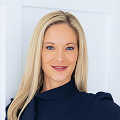
Amy Anderson
Hi, I am Amy Anderson. I'm a practice management consultant. I'm the CEO and founder of ACG Practice Partners.
Erica Crawford
Incredible practice consultant. I just wanna say that she's been around for a very long time, has consulted so many of our practices. We love working with her. Anyway, go ahead, Dr. Franco.
Dr. Johnny Franco
And then I'm Dr. Johnny Franco here in Austin, Austin Plastic Surgeon. And I've actually had the pleasure of working with both Erica and I don't even know if Amy remembers me when I first was picking her brain.
This was, gosh, probably before I started my current practice. And I was thinking about leaving a big derm practice and we actually had a couple conversations way back when with Karen Zupko. And then she told me, you need to talk to Amy about this.
And so, gosh, maybe I don't wanna age either 20, maybe 10 years ago.
Amy Anderson
Maybe not quite well, about 2017, maybe. 2017, 2018.
Dr. Johnny Franco
Couldn't have been any later than that. Somewhere around there. So super exciting to spend so much time with all you guys.
Erica Crawford
And Dr. Franco. What, didn't you start your practice?
Dr. Johnny Franco
Well after the phone call with Amy.
Erica Crawford
Exactly. So that's like what...
Dr. Johnny Franco
So my practice is seven years old, so you're right. It wasn't 10 years. So it was right about seven, eight years ago.
Erica Crawford
Seven years. And how many plastic surgeons do you have at your practice right now?
Dr. Johnny Franco
So We have four plastic surgeons, a couple injectors, estheticians, wellness department, about 80 employees. Maybe a topic for another day 'cause be careful what you might wish for.
Definitely has had some challenges adding a lot of personnel, definitely a topic for another day. Amy and I have talked about this. You know, I think sometimes you grow for the sake of growing and just because you're generating a lot of revenue doesn't mean that you're making your profits a lot bigger.
I think it's how do you make that efficient. I think some of the time changes, technology has made some of that stuff hard. Definitely the more people you have, the more things you need to track.
Been a big move for us for 2025 and kind of interesting to see where, what things are really doing really well. And sometimes things that are doing so well can sometimes even mask areas that maybe are struggling more than you realized.
Erica Crawford
Yeah, for sure. That's so impressive. I mean, we're seven years. I mean, that's a pretty large practice.
And I wanted to ask, because I wanna give a little context because Dr. Franco has so graciously agreed to let us share all of his ads accounts with you. Like we're, that's why we're all so excited about this webinar is that we are actually sharing his metrics.
I'm gonna be sharing his campaigns, the ones that worked, the ones that didn't work, and kind of define what went into it because we had our work cut out for us when we started working together. I kind of want to show you the process because I think that's the most educational way.
A lot of people, I feel like give different talks and they say different things. Like they'll be throwing out numbers, but at the end of the day, you should be running ads, and those ads should be generating new patients for you and a good ROI.
Right? And I kind of wanna show you how we got there with Dr. Franco and the things, mistakes we made along the way, the things that we did that were successful and just sort of like unveil the curtain and share all that with you.
So I'm gonna start off with going over just his ads accounts and what everything from them. And then we're gonna kind of talk about the sales side of things and sort of all the workflows that Dr. Franco put into his practice to really capitalize on those leads.
Amy has a lot of knowledge in that area, so we'll start off with just sharing how we ran the ads themselves and then afterwards how we took all those leads from those ads and actually turned them into patients. So we want you to ask a lot of questions.
We're gonna be answering them towards the second part of the talk when we're done going over the ads. But put them in the chat, put them in the Q&A, please ask them along the way, and we're gonna get to all of them towards the end. So right now, I'm just gonna go ahead and start sharing my slides and we're gonna kinda cover these ads accounts.
Dr. Johnny Franco
I think this is so key. The reason I was so excited about this is that it's really, really hard to know when you have a marketing company, whether they're doing a good job, whether or not, sometimes you don't even know what to ask.
It was really hard to find out from people what a true, like good ROI on a Google ad versus meta ad and then following them and cost per click, but is that person actually converting and so forth. We'll talk about some of our conversion rates since influx took over early this summer.
Erica Crawford
Yeah. Okay. Perfect. All right, we're gonna get right into it. We've already introduced ourselves, so we're gonna get into it. So this is, we're sharing real data, real ad accounts, real spends, real outcomes, what worked and what didn't work.
First I wanna define a couple words because I'm gonna be talking about it throughout this talk. One is cost per click, which is what you pay for each click. Everybody who engages and clicks on an ad, it doesn't mean that they fill out a lead form or they do anything after that.
They're just clicking on the ad. Cost per lead, CPA cost per acquisition, is what it costs to generate a real inquiry. Meaning somebody clicked on the ad and then they filled out a form, they filled out a chat, or they called into the practice, but they actually submitted an inquiry of some sort.
Conversion rate, in this particular definition and as it has to do with ads themselves, has to do with the percentage of clicks that become leads. Meaning the people who click on the ad and then actually fill out a form, not necessarily those leads that came into bookings.
That's also conversion rate. That's a different definition than what we're talking about right here. And then impression share. This is not talked about enough, but it's how often your ad shows versus how often it could.
I think a lot of people think that when they submit an ad, it's showing a hundred percent of the time on page one, and that's not the case. We're gonna get into that in a little bit. So those are the main things you need to know when it comes to Google and meta ads.
And just in case you don't know, Meta is the parent company for Instagram and Facebook. So when I say the word Meta Ads, I'm really talking about those sponsored Instagram ads that you see when you're scrolling.
Okay, so here are some of his figures from either last month or the month before. This is for Google, just so you get some of his actual numbers. So his cost per click was $7.65. He spent 16 grand total.
This was the number of clicks: 2100. His cost per conversion is $155. I should state that these are surgical Google ads, which I'm gonna break into a little bit further and conversion rate, almost 5% number of impressions, the number of total conversions, the leads he got.
So he got 105 leads from that. That gives you an idea of one month of his actual Google ads figures.
First let's talk about impression share. So this shows how much demand that you're actually capturing. If you have a low impression share, let's say your ads only showing 5% of the time or 10% of the time, you're not really going to get enough conversions.
And this is a tricky thing because this is really mostly about how the ad is created. If it has a low quality score, meaning Google goes, this isn't a good ad, so we're not gonna show it a lot, is a big factor of it.
But the biggest factor of it is budgets. If you have too low of a budget, you are not gonna have your ad show up because it's a bidding system. So let's say you're a plastic surgeon and you wanna run a breast aug campaign.
And in your city there are 30 other plastic surgeons also running a breast aug campaign, you have to have a high enough budget to get your ads shown more than theirs, or at least at a similar competitive amount. And this is something that not everybody understands.
So sometimes people come to me or a company and go, Hey, I wanna run an ad for a thousand dollars or $1,500. And they're in a competitive city. That's not enough budget for a high search, for high ticket procedure to get the impression share that you need to actually get your ads seen.
And so you're kind of setting yourself up from failure from the beginning because you don't have the right budget. If you don't have a big budget at all, I'm all about putting it into one or two campaigns.
If your total budget is three grand, then put it into one campaign so that you get the impression share that you need to actually get the engagement with your ad. This is his actual impression share.
When we first started, the impression share was lower. It was around 20, 15%. And over time with working with him and increasing budgets, which we're gonna get into, we got it closer to the 45, 50% range, which is exceptional.
I don't expect that for every practice, just for full transparency. You'd have a very large budget to make that happen. But still getting it out of that 15, 20% range, even if you're in the 30, 40% range, you'd be in really good shape.
But this is one of the most important Google metrics that people don't talk about. As part of this, one of the things I wanna show you is that everybody assumes that when they run an ad, it's gonna show up here. They're gonna go, yes, I'm running an ad right now, this is for Google so that I can show up at the top of page one.
But that is not true necessarily. If you don't have the impression share, you're gonna show up maybe on page two, maybe on page three. You really want the ad, if you really are covering everything, to show up at the top of it.
And you also want it to show in multiple places on page one, if you have impression share, you might have it like here, it's kind of under the some of the Q&A and the AI. So it's showing up again here.
But if you don't have impression share, you might be running a Google ad that doesn't show up till page two or three, which kind of defeats the whole purpose, right? So that's impression share and why it's so important. And one of the things that you should be asking about the most, I actually consider it one of the most important metrics outside of the cost per lead cost per acquisition.
Targeting: let's talk about this next. A low CPA does not mean high quality leads. Sometimes people come and they're going, I want my CPA below a hundred dollars for a mommy makeover campaign.
I kind of get worried about that because the truth is that a good CPA in a competitive city sometimes is around that 200 mark. Sometimes it's 250. It kind of varies depending on a number of factors which we'll get into.
But what you don't wanna do is target a bunch of bad keywords and get a really low CPA that then has poor quality leads. When we started working with Dr. Franco, his CPAs were actually really low for a lot of the ads he was running.
But when we looked into the keyword targeting, they were low because these were the type of keywords that were being targeted. It was like cheap breast implants, cheap plastic surgery, insurance plastic surgery.
You see, what happens is that when you run a Google ad, you have an option to opt into Google's automated system. Many companies and many ad specialists decide to opt into it because it's easy.
Google does the ad for you. You don't really have to put work into it. You don't have to manually add keywords and manually add negative keywords. Negative keywords mean saying if people are searching for this, don't show my ad.
Google will do it all for you. The problem is that Google doesn't know aesthetics like we do. And unless you have the lowest prices in town, you don't want bargain shoppers as your leads.
Those are poor quality leads. So you cannot use Google's automated system. You need to manually put in the keywords that you wanna target and then you have to manually add in the negative keywords.
So we took these keywords that they were targeting and we actually flipped them and made them negative keywords. Meaning if people are searching for these terms, we don't want them to see the ads.
So that's a huge part of the process is adding keywords and taking away keywords. Make sure that you don't get people who are just price shopping on Dr. Franco's ads. We don't have any discounts on them.
They're not for bargain shoppers. That's not the price range of his practice. So we don't want those people.
It's really important that while you don't want the CPA to be too high, you are also willing to let it be a little bit in that higher range sometimes to get the quality you need, which will inevitably give you a better ROI because you're gonna convert more of those leads to patients. So that's really important: who you're targeting and making sure that whoever's running your ads is doing a manual approach and is not using any of Google's automated building system, especially not their broad match strategy.
This is actually what we had to do in the beginning. His budget was really high when we started working with him. And then we started running ads around like June, July.
We actually turned off a bunch of the campaigns and we restarted everything from scratch. So what we actually did was we reduced his budget in order to start getting, we kind of started from scratch and you start with the lower budget and you work your way up, which I'll talk about in a second.
So we started from scratch and then we slowly rebuilt the budget back up as we had strong performing campaigns that were bringing in those high quality leads. That was our strategy here so that we could focus on quality.
Dr. Johnny Franco
And probably the first marketing company to say, spend less money with us than in my career.
Erica Crawford
Yep. Like, are you sure? Like, yes, trust us right now. The problem isn't quantity, the problem is quality. And that was our big thing to focus on.
First off, creative and landing pages matter. Your creative sets expectations before that click, right? You have the conversion rate, which is the click to an actual person submitting a lead form.
A lot of people don't understand this, but never run ads straight to your website. You should always, always, always have a landing page. It's different. It's not the same as a procedure page on your website.
First off, Google tells you to do that. Every Google how-to run ads educational thing out there says you should have a dedicated landing page. It should exist on a subdomain of your website, but it's not the same.
Your breast aug procedure page and your breast aug landing page are two different things. Whoever's doing your ads for you needs to make a dedicated landing page for every single procedure. If we're running five different campaigns, every single one of them has its own landing page.
The reason it's different is that landing pages, first off, they have to match the intent, right? The person's looking for tummy tuck, it needs to go straight to the ability for them to convert.
Landing pages generally have a lot more CTAs, meaning calls to action, meaning they'll have a lot more options on the page for a consultation and for a phone number and for a web chat. They push a person to convert a lot more than a procedure page does.
Procedure pages typically are a bit more educational, right? Where a landing page is gonna have a lot of before and after and a lot of great photos and they're gonna be a little flashier because you only have a split second to get that person to decide to actually fill out a lead form.
So they are a little bit more, for lack of a better word, salesy, but doesn't mean you have to have discounts on them, it's just they're more sales forward than a procedure page is. Also just as an additional thing, a lot of you have other procedures in your practice.
You guys might have different peptides or other what's considered experimental procedures. If you use landing pages, you won't get your ads flagged, right? Because they stand alone.
So if you send everybody to your website, you're like, what's going on? I'm just running a tummy tuck ad except it's getting flagged because they're seeing that you have PRP on your website. So that's a whole other thing. But always use a landing page.
Here is an example of a landing page, right? It has schedule your consultation right on top, it instantly credentials them with news outlets and magazines. And it shows photos and shows experience.
There's a before and after gallery right away. It talks about the benefits and what's included in it. It's testimonials. It looks different than a procedure page.
It's a little bit more in your face and it's getting the person to convert. So this is how a landing page should look. And if you do have a discount and that is something that you do operate in your practice, it's very much depending on your practice model, you would put it right up at the top of it so that it's also a bit more sales forward.
The next thing is really important: Google ads need time. When you launch a Google ad, it takes time for Google to crawl the ad and push it out. Google ads learn from conversions, meaning it's a learning process.
And when it sees that a certain number of leads or certain type of person converts, it will then help push it out to similar types of people. It learns from where it's converting, it learns from the times it's converting at, it learns from the placements it's converting at, it learns from the whole process.
That's why it's really important to have conversion tracking. You actually have to track. That's why we're a big fan of call tracking 'cause you need to see what calls came from the ad so you could feed that data back into Google so it optimizes better.
Web chats, you need to have conversion tracking there and on the lead forms conversion tracking there. But it needs three months. Every campaign needs three months before you make any decision about it.
And I think you need to go into it going, Hey, for the first three months I might be burning my money but it's okay 'cause you're gonna make it back. But this is not something an agency can promise you is gonna suddenly be faster.
Sometimes it is faster, but it's about Google. Google needs the time to push out that ad and there's not really a way to fast track that. I'm gonna show you this so you see it.
So this is a tummy tuck first month, it was at $600. Then it finally went down. You could see it started going down to like 250 and it started going a little bit lower.
And then by month three, bam, it's around a hundred dollars CPA and then it kind of stays there. It levels out and with some seasonality to it. It's not always gonna be the exact same, but now it's in a low range; at the highest it's 150 but it's between a hundred dollars to $150 a month.
But you could see that's the three months. Here it is again. Now we're gonna go mommy makeover. Very similar.
This is a newer campaign, it's a higher ticket item so it's gonna be a little bit more higher CPA than tummy tuck. But it started really high and then it went below a little bit. About 200, it'll probably get a little lower 'cause it's only been running for three months.
Another similar one, breast aug: it went down, up, down. But once again, three months just like clockwork, right? Starts high and then boom, it gets into a new low range around a hundred dollars.
So you do need to think with this because it takes three months to it. It's also where your expectation of when you're really starting to get new patients should be. So don't make a decision until you've had this three-month timeline.
Sometimes it could be faster, particularly in a smaller city like he's in Austin, which is the 10th biggest city. So it is competitive. Sometimes in a smaller city it could go a little faster 'cause there's less people competing and less people bidding on the ads.
But as a general rule of thumb, give it three months before you make any decision on what to do with that. This is how we did this budget. This is just for one campaign, I believe this is the breast aug campaign, right?
We started with what we considered the lowest viable budget to get the impression share in Austin, which was $3,000. And as the CPA went down, as you saw from the earlier graphs, then we increased the budget. We kept the budget as low as possible in the beginning to fine tune the ad.
And then when we said, okay, this ad is good, the CPA is consistently low and it's bringing in quality leads, we are now gonna increase the budget and that's what it should look like. So you start with what the lowest amount is to give you a good impression share and then you increase the budget over time as you optimize the ad and the CPA is in an acceptable range.
That's how you do it. You don't just throw all your budget at it at once. You start slow and then you move your way back up.
Okay, just a few different things. Google ads are not for everything. Some searches are informational, exploratory, or trend-based. And sometimes Google is not the right platform.
There are some channels that are better. Sometimes you put things on SEO with social media, you do it with blogging. Ads are for high intent procedures. They're not just for curiosity.
And that's important because we tried a couple ads that didn't quite work out for us. We did an ad for Allocate and we did one for breast preservation, but there just wasn't enough search traffic in Austin to give us really any sort of eyes onto the ad.
So the CPAs were high, they weren't generating a lot of leads. So we ended up turning them off and instead Dr. Franco went heavier on social media for it and got a bunch of leads that way.
And maybe in six months or a year or when there's more search traffic specifically on Google, we would circle back and try that ad again. But as of this right now just didn't make sense. So we turned them back off.
Dr. Johnny Franco
And Erica, on those, you guys even expanded it beyond Austin and it still didn't increase the traffic.
Erica Crawford
Yeah, I think we did all of Texas just to try to get, but there just was so little. This is Google trends. This gives you an idea of how much search traffic there is for something like this over time, monthly and a comparison, right?
The top is breast aug and there's allocate. Here's another one: breast aug. You can see some months there's no searches for breast preservation, which is funny 'cause sometimes you think something buzzes so much on social media that it would translate to Google.
It's just not always that way. But similar, just really low. So just didn't have enough traffic for an ad to make sense in that area.
Okay, perfect. So now we're gonna get into meta because we're obviously running meta campaigns as well. One really important thing to know about Meta is it's not intent-based.
When you're running a Google ad, somebody's actively searching about that procedure. When you're running a meta ad, you got somebody who's scrolling on their phone and then boom, they're having an ad thrown in their face and you're trying to target the person you think would be interested, but they're not actually at the point of intent.
And that matters a lot. In meta, the creative matters almost more so than the targeting. Whereas in Google it's the opposite: the targeting matters more than the creative.
I'm not saying the creative's not important or the targeting's not important—both are. But for meta, the creative is really important because you are targeting the same people over and over again.
Let's say you're doing a certain age and income bracket, all these different things, you are sending the same people the ads over and over again. So you have to have a variety of creatives because you're sending it to the same person to eventually get them to convert.
And that's not a problem that you have on Google. In Google, they're most likely gonna see your ad once. So you have to have really good creative. These are just some of the examples. He has some surgical ads running. These are some of his creative.
Just take a look at them. They're all videos, they're all interactive. It doesn't always have to be a video, but they're interactive. And then here's some non-surgical ones.
And just for context, he has over 40 different creatives running for his meta ads. 40 different creatives across several campaigns. But every single one of those campaigns probably has six, seven, or eight different creatives just for that one campaign so that there's no ad fatigue.
So that maybe we're targeting somebody but they're seeing a different ad every time and then they're gonna eventually convert. So that's really important when it comes to meta. So you can't just, if somebody's running your meta ads, you need to be part of it.
You need to be providing them creative, you need to be providing them videos and photos and things that they should be doing. And that will help them a lot because if you don't give them that and they just have to use stock images, then you're just setting yourself up and the meta ads for failure.
So how meta fits into the funnel: as I said earlier, meta interrupts, people are not actively searching. So that's important. It generates instantly. That does happen.
It does happen where somebody is like, "oh, that's so funny. I was just thinking about getting filler and here's the ad, I'm gonna click on it," and boom, instant lead. But that is not the main job of meta.
This is important to talk about because in Google it's so much more transactional. It's really easy to see: like Google, they're at the point of intent. They submitted a lead, good, they convert. Here's the math on it. It's really black and white.
Meta is not that black and white because it's about awareness and education and trust building and retargeting. And I'll explain how that works. I'm gonna give you a real example, personal example.
I think it'll make it easy. So when I was pregnant with my daughter, years ago, the second I got pregnant, Meta realized I was pregnant and started sending me ads on different pregnancy items.
And one of the items it sent me on was just a really bougie crib camera, right? Like one of the ones where you see the baby's breathing and all the things, right? But I was like six weeks pregnant and I didn't need that camera yet.
But then fast forward, I remember when I was in my third trimester, I was "okay, time to pick a camera for my crib." And I remembered that ad because I had seen it like eight times and I thought it looked cool and I put it onto my registry and somebody bought it for me.
And guess what? That poor company or poor person who ran their meta ad will never know that that ad is the reason that I bought that camera. And I think that's important to talk about because meta does work that way.
Yes, you have metrics from the leads that you get right from meta, but some of the metrics like that you're getting from your organic, that you're getting from your social media, that you're getting even to your Google ads might have come from meta because meta's about repetition and getting in their face so they don't forget about you, but they're not always at that point of decision.
So when you're evaluating how your meta ads are doing, yes, look at your instant leads, but also look at other things. How is your website traffic doing? Is your Google ads even better since you added meta on?
Are you seeing more patients? You have to take a step back and look at the big picture because meta is about awareness and brand education and all of that. And to make sure that they're familiar with you because it often takes many impressions to get a patient to convert.
They're never just going to one place. They're gonna see you on meta, on your organic social. Maybe they'll check you out on an AI chat, like ChatGPT. They go to many places.
So you can't always follow them. But it might have all started from that meta ad. So make sure when you evaluate how meta works, do look at your instant leads, but also look at the big picture and take a step back to evaluate how your meta's doing.
So here are some of his overall Meta metrics, just so you could see them. I'm gonna kinda just go through these laptop slides quickly so we can get into some of the Q&A and talking with Amy and Dr. Franco.
But here are some of the meta figures. Tons of clicks, huge impressions for meta. For meta, some of the important figures here which I'm gonna talk about. Obviously you have your conversions.
Similar here: we had a problem at the beginning where his conversions—this is like his CPA, right, cost per lead for his conversions—actually it was really low, but once again it had really broad targeting like people who had no business, who were never gonna be a patient.
So we actually brought that number up again, focused on targeting higher quality leads. And then we brought it back down again. So similar problem to Google here where the targeting was too off and we actually had to make the CPA a little bit higher.
And then we got lower again. But because we enhanced or improved the targeting to get quality leads. Kind of discussed that here.
So the problem actually Dr. Franco had here was too much budget. Here we go again, Dr. Franco, for his meta budget. His Google Ads budget wasn't too big, it's just we had to bring it down and we eventually brought it back up to where it was before.
It just was too big for the type of campaigns he was running. We had to fix it. His meta budget was too big, period, because once again, you do have a limited audience.
So if you're serving them the same ad too many times, that's gonna be a problem and people are gonna get ad fatigue. And then you have these high costs, you get a lower click-through rate because they've already seen your ad a million times.
In this case, his budget was too high and we had to fix it. So this is his meta budget. It started way up here in like $31,000.
And then we brought it down closer to around 20, 21, 22. And that's permanent. We're not gonna go back up there again anytime soon because it was just too high and people were getting ad fatigue.
Now funnily enough, you're like, "okay, well you knocked 10 grand off the budget. So what happened?" This is what happened. His click-through rates all got way higher. This is a surgical ad click-through rate.
So way more engagement. Matter of fact, it was twice that. Engagement non-surgical click-through rates once again got way higher. We doubled the click-through rate here.
So way more engagement 'cause people aren't getting ad fatigue and his cost per clicks went way down. So he actually ended up getting more leads, better quality.
That's once again all about the quality by making all of these changes. So we're gonna talk about ROI and then we're gonna get into it.
Here are my expectations for paid ads. Three to one is a minimum target. If you've done your three months, you're on month four and you're like, "should I keep this ad running?" The question is on month four, are you getting a three to one?
Yes, five to one is ideal. That's the busiest place of it. That might be once you've been running it for a little bit longer and it's doing really well, but that is great. Anything above that is exceptional.
Now, in order to get these sort of numbers, you have to give feedback on it. You have to keep a CRM, which we're gonna get into a little bit. You have to be giving an idea of what converted, how we're gonna track the ROI, and what revenue is made from each procedure.
If you don't put the amount that it converted to... Now, I'm gonna say this: a lot of practices, matter of fact, the vast majority of practices I work with are absolutely terrible about going back into the CRM and writing down what that patient paid.
So if you have that problem, you should preload estimate value. So if you know your breast augs are between six and 10 grand, just preload it for eight. It will give you averages; it's gonna be close enough.
And even better if your staff will go in and put the actual amount—that's great—but it's better than nothing. So if you do have that issue, do at least put estimates. You can even put your lowest estimate.
But do put estimates in there because how are you supposed to see what campaigns are actually bringing in new patients if you don't put this information there. So that's just really important.
And of course what you've all been waiting for: this is his ROI. This is a 7.4 to one ROI. That's what he gets. Which is, as I mentioned earlier, way above industry standard.
So all of that work is what put this here. What, about seven or eight months later after all the work I just went over with you. And I think that's pretty much it.
So we're gonna talk about drip campaigns. I already talked about that a little earlier, but I'm just gonna gloss over this 'cause we're gonna get into it. But leads don't always convert day one.
You have to have really good drip campaigns. Really, really important before doing all the work I just went over there, you have to take care of your leads afterwards. So that's my section of it.
If you want more information from influx, you could scan this. And I'm gonna put this back on the screen actually in a little bit because I want to give a chance to have Amy and Dr. Franco talk, but this is with Amy at CG practice partners.
But I'm gonna stop screen sharing and I'll put this up again at the end. But if you wanna get more information, just scan these codes and reach out to us. But now let's get into it.
Dr. Johnny Franco
Erica, I just wanna circle back to the point of the number of leads. I know this can sound bad, but it was almost like there were too many leads and it was really hard for the office because they were getting so many leads trying to follow up with them.
We all know that speed to response is hugely important. No question. You can do some of the AI stuff that we'll probably jump into a little bit.
But it's hard to really spend time on the leads that were super valuable and we're stretching our team really thin. And so then what do you do? Do you hire more people for those leads?
But if they're not converting, then you've increased your infrastructure cost to do that. So being able to reign that in, have a much higher—we may talk a little bit—but our surgical booking rate actually went up with this.
So it's not only that we were generating all these leads, but to your point, it's another way to measure whether these are quality leads, right? If our surgical booking rate from that thing goes up, it just shows that those were high quality leads.
I think that was huge. This is why there's a big push and you've seen it and we were talking about it before: SIMPL and a few of the other EHRs are actually building in some of these CRMs to help do some of that work for you that you're talking about in terms of calculating ROI because it is hard.
Either to build it in or to go back and manually try and match some of this up becomes a huge undertaking, especially the bigger your practice is. And so a lot of that is being built in currently, which is super, super exciting. Something that we're working on and doing in our own practice too.
Amy Anderson
Awesome. Well, Erica, I thank you so much for taking us through that. I learned a few things and I think one of the biggest takeaways is about the budget and that more is not necessarily better.
Dialing that in and working with a good partner like you is so essential. And then I think where we work so collaboratively is you've done all of this work on Dr. Franco's campaigns to dial in the leads, to increase them, but to increase quality leads.
And then I look at what happens next, right? We successfully got people that click on the ad to contact the office. And so often what we see is practices completely drop the ball at this point, right?
And then they come back to you and they're like, "where are all my consults?" And it's somehow your fault. Or they wanna spend more ad budget to just generate more leads that are getting fumbled.
So I wanna spend a few minutes talking a little bit about some of the most important things that a practice can do when that lead comes in, and how do we do this practically in a practice. Dr. Franco, you already mentioned that term "speed to lead."
We know there've been studies that have produced all kinds of evidence about how quickly we respond to leads. And frankly, we're at a point that you just can't respond fast enough. It needs to be practically immediate at this point.
So what I do tell... at a minimum, we are talking same day, right? We need somebody in the practice that is reaching out same day that that lead comes in. But really the gold standard is within five minutes.
Within five minutes. Now, I know that is almost impossible for a human to do. And so as we talk about CRMs and technology, this is where we can use technology to help us with that.
Immediately send a text message, auto-call the practice when the web form is filled out, things like that so that we can respond quickly. But so often practices don't have these features turned on and staff are frankly kind of lazy about it, and they'll just call when they get around to it.
And if it's the next day, just consider it lost, right? You've lost that patient. I am always assuming that they're putting in leads for multiple websites, they're contacting other surgeons, and whoever is fastest is most likely to convert them to a consultation.
And let's talk about overnight and weekends. We know a large percentage of leads are coming in as people are sitting on their couch at night, sitting in front of the TV, scrolling, right?
That's when those leads come in. And so that's when we really do need to utilize technology to help us with that. So, Dr. Franco, walk us through what happens in your practice when a lead comes in through the website.
Dr. Johnny Franco
Yeah, I think, and you've both mentioned it a couple times, I think you have to have some platform to manage it: a CRM, client relations management software.
Something that you should look into for sure. Simpl is our EHR, so we do our CRM through Simpl 'cause it's made it much easier. We've used other good systems in the past, but to be able to do everything in one system, our team said thank you.
So you don't have people crossing through. But you'd be surprised how many people visit our office, to your point Amy, and say "how much should I spend on Instagram ads or Facebook ads, where would you put this money?"
But then I ask them your question: "well, how are you recording these? Or where do they go after they get a lead?" And a lot of times like, "oh, I have an MA that when a lead comes in, they have this spreadsheet that they'll add 'em to."
It's such an antiquated type thing. Right now with the CRMs, the things that are great is I can look on any time. And kind of like any old school general surgeon on the call will know: you never let the sun set on a bowel obstruction.
You never let the sun rise on one. Same thing with a lead. Same thing that we've been taught.
But you can actually see on there how long it takes your practice. If your team says, "oh, we respond right away," you actually know how long it took you to respond to that lead. Super easy.
It's the top of your dashboard: "this is how many, this is how many are pending." So for us, we've set up with Erica's team and our website and so forth, everything from any source that we may get, whether you use Wheel, your website, whatever you're doing, all goes into this one CRM.
And then we've built out our platform. We actually use an app called Lucid, where we've just mapped out that entire journey so everybody knows: this is the expectation.
And then in the CRMs, you can label these, right? First touch, second touch, third touch, people that have specific questions, needs to touch base with surgeon, needs clearance, whatever it might be in your workflow.
Everything comes into that first touch. We have it set so they get an automatic response right away from the AI agent. Our team pulls 'em in, reaches out to them.
If they don't reach, contact or schedule them, they pull them into second touch. But that way it's not like if Erica reaches out and then they're like, "okay, follow up with me on Thursday," but she's off Thursday, it just sits.
It's already tagged into the task list. So then whoever's doing leads—and in our practice, we have three dedicated people that just do leads, calls, sales—that's their only responsibility.
So they're away from the front desk, they can respond all day. We still don't reach that five minutes, if you were to look at my dashboard right now, but we're working on it from the human touch.
We definitely do, obviously from the AI, but still a work in progress in terms of that. And then we've mapped it out so that we can touch them throughout this and move it and make it more meaningful.
About that too: it's not only just touching them, but it's making sure that it's an educated interaction. We've actually made a provider cheat sheet: kind of fun facts about each provider, what makes them stand out, what makes them unique.
Because to Erica's point, if you're in Austin or Dallas... I mean here in Austin there's so many great providers, great surgeons that I would send my own family to. So there's no shortage of providers.
When somebody calls, it has to be meaningful, it has to be impactful, but it has to also be efficient, right? Most people, you don't want your staff on the phone for 45 minutes, which sometimes happens.
And then moving them... getting to the point and then asking for the appointment at the end, which is something that we're still working on. A lot of the recorded calls, we do pick calls to re-listen to. I'll tell you, re-educating staff and re-training is a nonstop process for sure.
Amy Anderson
It is. And Dr. Franco, you just led directly into my next point, which is the quality of that conversation. And you just explained how crucial that is.
We get the lead to come in, we actually get them on the phone because we responded quickly, but the quality of that conversation is so important and nobody just comes out of the womb knowing how to have this phone call.
I just see such a lack of training across many practices. We just sit them in front of the phone and say, "I don't know, just answer their questions." And then we're frustrated when they're not any good at it.
I love what you said about a cheat sheet of your provider talking points. It's credentialing: one of the goals of that first phone call is to credential our provider and assure them why they absolutely called the right place and start building that value and expectations about the experience.
And so don't leave it up to them to make up those talking points. Give them to them. Develop exactly that scripting, those words and phrases you want them to use to describe you and the other providers in your practice.
Dr. Johnny Franco
I love that Amy. We actually have kind of a script cheat sheet, which is also a fine balance 'cause you don't want them to feel like they're reading something.
I think most of us are Alex Hormozi fans. I think I saw David make a reference to him on one of the questions on here. But he talks about conviction and I tell our team: if you're not excited about them getting a procedure—most of our staff have had some treatment in the office, if not 10 already—why are they gonna be excited to come in?
Why are they gonna be excited to pay 30,000, especially if you're not the cheapest practice in town? You gotta be excited and super confident about it, and you almost gotta be unapologetic about what you're doing.
Somebody will be like, "oh, you guys are the most expensive." "Yeah, we are." And we're not the most expensive in Austin, but we're up there. You gotta be confident, but you gotta make sure that you've had those conversations with your team about it.
One of the things that's been super helpful in our practice: we do a Tuesday huddle meeting where we actually cycle through the providers, and the providers will do a 10-minute talk on whatever their favorite passion project procedures are so the team hears it straight from the provider.
"Hey, this is BBL, this is why I love it." They get excited because not only are you educating your team, but you're also the cheerleader for them.
You've gotta get them excited. "Hey, yeah, Dr. Franco's super excited that he trains around, he teaches at ASAPS," all these types of things that are super impactful, but they have to truly believe it.
And I think that's the second part that's challenging. If they're nervous, it doesn't come across confident.
Amy Anderson
Right. You know, I had the privilege of spending all day today with Karen Zko, who we all know and love and I think consider the godmother of patient care coordinators.
We had a long conversation about what makes a good PCC. And Dr. Franco, to your point, they're excited. They love to talk about aesthetics.
They don't pick up the phone going, "ugh, the phone's ringing again." It's like, "oh, great, somebody else is interested. I can't wait to talk to them about this procedure."
And so if that's not how you would describe the person who's responding to your leads, you have the wrong person handling these calls. That excitement, that conviction, that confidence absolutely needs to be there.
Dr. Johnny Franco
We also point out: make sure that you're checking these, whether you have a consultant like Amy that's listening to 'em. If you're gonna listen yourself, just spot check a couple.
When I walk my Frenchie in the evening, I'll listen to one or two calls and it doesn't take very long to hear a theme. So just do it.
It has to be... if it's not you, it's gotta be somebody in the office that's checking these and listening for opportunities to improve.
Amy Anderson
That's right. So just another point on that initial phone call: this is when we are starting the relationship with the patient.
We always caution that we shouldn't just launch into the "tell" and talking to them and telling them all about the procedure. It should start with asking questions, really getting to understand: who is this person?
Why did they call today? How did they find out about you? What's their motivating factor? What's their timeframe for surgery?
All of these things that help us start qualifying them. Now we know that as a practice matures over time, we become more selective about who we actually even allow onto the consultation schedule.
Dr. Franco, I imagine when you first started your practice, you swung open the doors and said, "put 'em on. Just bring everybody in, get 'em on the schedule. I just wanna see patients."
And now you're at a point where you are enjoying a much fuller schedule, and I'd be willing to bet you have some more strict criteria about who gets a slot on your consultation schedule. Can you share a little bit about that?
Dr. Johnny Franco
No question. And we have kind of some general practice guidelines for us because—and think about it—it's not just protecting your surgeons, but you don't wanna waste the patient's time either.
And so there's ways to adjust this, right? If Erica calls and says, "Hey, I wanna get my calf implants, I have a wedding in May, I need to get in over the next three or four weeks. I've already got my labs," but I don't have another surgery date for three months, it doesn't make sense to put them on my schedule for a consultation.
Because that person's gonna be frustrated and upset. You'd say: "Hey, I know you'd love to see Dr. Franco. You're telling me your timeframe is a wedding."
"This is super important to you. You picked our practice, the best. His partner, Dr. Reese, will have one opening at the end of February that'll fit your timeframe. Why don't I sneak you in for a consult to see him?"
But if you didn't even ask the questions, like Amy said, you don't even know that that's what their issue is. And so they left, either didn't make an appointment or don't book the surgery, and you don't even know why, but because you never asked the question.
For us, it's a couple things. We definitely have a strict BMI rule for us and medical history. And some of it may not be an absolute no, but it's like, "Hey, let's get these things started and we'll send 'em to our triage nurse first," who will help with this.
Or maybe their first consultation is with one of our wellness providers to get them into a good BMI. So they're still in the system before they actually see one of the surgeons and kind of moving through that.
We definitely even block because, for us, we know here's the X amount of surgeries I wanna do per month. I know that we book at a 70% booking rate once I've seen them.
So I can math into how many consults I need to do because I know my average surgery length is this. I know I wanna do this many hours of surgery per month.
So you can math into how many people you need to see. And then you can block your schedule in terms of that to get that set so that you can protect the schedule for certain things.
'cause it can get filled up with not only bad consults but unnecessary follow-up things that maybe your team could help with. And just different things that eat up your time overall.
I definitely recommend for people to back into that number. 'cause then you can even work with your marketing team to be like, "Hey, I wanna do, let's just say 30 surgeries a month."
It's gonna vary whether you're doing facelifts or breast augs. That's just a rough number depending. That's why I love hours: how many hours of surgery you're gonna do and then backing into it.
But 30 surgeries a month... you know if you book at 50% and you're trying to do 30 surgeries, if you're not seeing 60 consults, you can't be surprised when you're not doing 30 surgeries a month.
But if you're only seeing patients two days a month and you only wanna see 10 people a day, you haven't even set your coordinators up for success because the math doesn't map.
And I'd be surprised how many people sabotage themselves from the get-go. I know I'm going on a tangent, but I'm super passionate about the numbers: they have to play out and you've gotta do that whole spectrum.
Amy Anderson
They do. I couldn't agree with you more. I love looking at hours per surgery because cases are not one-for-one equal.
I wanna be mindful of the time and make sure we have a chance to get to our questions. So one other point I just wanna make: when that lead comes in, we've made that first attempt, hopefully within five minutes, but we don't always reach them.
And so we have to actually make multiple attempts to get in touch with them. And I know, Dr. Franco, when you and I first spoke and I said it's six to seven attempts, you're like, "oh my goodness, Amy, I don't know that my team's doing that."
I wanna quickly say that's not necessarily six to seven phone calls, and that's not necessarily six to seven human touchpoints. It can be. There's an immediate text message, we make a phone call, and then we send another text or email—that's three to four contacts right there.
So it's really over those first few days, making multiple attempts. Not just having this mindset of, "well, I called once. When she's ready, she'll call me back."
You're losing that potential patient to your competitor if you're not actively making multiple attempts to follow up with them and get them pre-qualified for that consultation.
Dr. Johnny Franco
And this is where the CRM is huge, right? Especially for like the meta ads that need time.
Because even if they don't book after these initial touches, they go into our long-term nurture campaign. So they still get their birthday list, they still get on the email list, and so you're still there when they're ready.
And then you can even pull those people. For National Cellulite Day, one of our nurses went into our CRM and pulled everybody that we had tagged for cellulite or anything that felt in that category.
She was able to pull that list instantly and then we sent a blast to them. She booked 10 oli treatments in one day at $4,000 a piece.
And then we did a promo and she upsold them on a quantum treatment for that. So it ended up being each person was at a value of almost 7,000, and she sold 10 in one day.
Amazing. Just leads that were already in the CRM. But if you don't have a way to pull those instantly, I mean, that's a massive undertaking. If you're trying to go through an Excel sheet or go through your schedule trying to find one of your notepads with hand chicken scratch on it, that's impossible.
Amy Anderson
Yeah. I know we've talked about CRMs a lot. This whole webinar was not intended to be about CRMs, but clearly, we're all passionate about it.
I think one of the amazing things that Influx does with any of their clients with a website: they're gonna give you a CRM on go high level. If you don't have another one, do not take that for granted.
That is like the most powerful system out there, so definitely utilize it. It's the same backend platform that Simpl, CRM next, to CRM add Vital, you know, some other ones that are out there.
It's a great tool. I always emphasize it's a tool; it does not replace training or strategy. Your team has to use the tool. You have to set it up and configure it for your practice.
But there's some powerful tools that really help give you an edge in all of this. And one of the reasons I'm so big on using it and using the automations where they make sense is that I wanna save the human element for the part that only humans can do, which is really that conversation.
So if I can automate texts and emails and other things going out behind the scenes so that my people can do what they do best—and that's connect with potential patients on the phone—that's really where that CRM comes into play.
So I just wanna make sure everybody knows that we're not saying let's replace all of our staff with a chat bot or something. That's the opposite of what we're saying. We just wanna take away those low level tasks where necessary so that we can save our people for making those connections.
Erica Crawford
Just add...
Dr. Johnny Franco
I was just gonna say: there've been a couple questions about content, especially for meta ads and so forth. Short answer, and Erica will jump in: we do all of our own content inside.
I just think across the board content is king, whether you're talking about ads or social media. I was on one of the residents' calls with maybe Erica or Amy, and somebody said if you're a new resident starting out and you could buy one device, what would you buy?
And I said an iPhone, because you can just make a massive amount of content over and over. And then you can repurpose this. Gary V's got a great book, Day Trading Attention, which I recommend to anyone kind of starting their practice or trying to grow.
We actually did it as a book club. But you can just... one, you can be passionate about it. You can remake that content, you can repurpose it so you can reuse it on different platforms.
You can reuse it for the same kind of reposting in different formats. But then you can also use it for these ads. Remember, your own social media is a great preview of what's gonna resonate with people.
And the way it worked for our ads is they said: "Hey, we're gonna do these things. Here are some vague topics." We sent them a bunch of content and they're able to try these and see which works well and which doesn't and say: "Hey, this type does really well. Send us some more of these."
So we save all those videos that we make so we're not making everything from scratch. I personally think content, especially if your providers can do it themselves, is huge because it's super passionate.
You'd be surprised how many people come in and say, "I've been following you for years." It's just amazing because you can make that emotional attachment. And I think that's huge because then they put a face, they put a name.
I absolutely hate stock images. My team knows if they put a stock image on our Instagram feed, I lose my mind. It's just... everybody can do that. So why are they gonna stop scrolling? Just my thought.
Erica Crawford
Yeah. I'll just add a few things on top of that. He gave us the library to his raw files. I think this is really important.
It does not work... there are regulations on meta. He has pretty incredible staff that we get to work with as well. And we'd go: "send us the videos that follow these guidelines," and we set the guidelines.
Because there are certain things about how zoomed in certain things are. It's very specific; it's too much to go over here. But about syringes and certain angles...
With aesthetics, there's just a bunch of do's and do nots. So there's a lot of content that works on organic social that unfortunately can't be repurposed. Some of it can, but some can't.
So we would send these regulations and then he'd go: "okay, good." He would dump his whole library, which is what we want: we want a bunch of videos to crawl through.
We'd be like, "send us more, dump your library." But then we do have to edit them, which we do all in-house because everything has to have captions and CTAs. So there is a process of taking all of those videos and then making them into a meta ad.
There is nothing that could be just put as-is. And sometimes there's suggestions. I think just today I sent over to your team that there was a "this or that" video that I wanted for surgical or non-surgical faces.
So sometimes it'd be, "yeah, here's some ideas." And then sometimes his team would have the ideas. It's a very collaborative process.
But yes, at the end of it, there are rules of what you can't do in terms of certain videos or images. And then it does need to be given in a raw form because it will need to be edited for the meta ad itself every time just to make it perfect.
Dr. Johnny Franco
That's important, right? Because a lot of people... it goes both ways. Practices are like: "oh, my ad team never checks in with me except every quarter whenever I do this or when I stop paying my bill."
And then on the flip side, a lot of ad companies are like: "Hey, we keep asking for this content." But if you don't give them any content for these ads, you can't be upset when they don't work or you haven't sent them any new content in four months.
And so you've run the same ad for four months on meta. That's gonna be really, really challenging to be successful.
Erica Crawford
It is. That's why you have to give the content and also be mindful. One thing that Dr. Franco's team does well is they give us a ton of videos.
If they give us a one-hour video or five different ones... there's an editing process. They luckily give it to us in a way that needs the least amount of editing.
So be mindful of that: film your video with the thought process, "I'm gonna give this to my meta team." Because if we then have to spend 20 hours editing it instead of 20 hours creating multiple creatives, that's a problem.
This is why we have 45 creatives on meta, which is great. It's probably one of the highest that we have because there's this collaboration.
Dr. Johnny Franco
Awesome. No, thanks for having me. I appreciate you guys.
Amy Anderson
Yeah, thanks everyone. You guys are the best.
Erica Crawford
Thank you.